Friday, February 14, 2014

The Truth About St. Valentine


By Nancy Bilyeau

Believe me, I would like to be able to deliver a sweet and touching historical anecdote. I tried. I really did. But you don't find hearts and flowers when you get to the beginning of the story of Valentine. You find martyrdom, imprisonment, plague, and death by clubbing. It's hard to conceive of anything less romantic than death by clubbing.

The Catholic Church distanced itself from St. Valentine's Day a while ago, and not because of any sort of distaste for chocolate hearts or hand-holding. The evidence that there really was a person who committed acts worthy of sainthood is fragmentary. Valentine is one of the "saints whose cult is larger than themselves, so to speak," according to Richard McBrien's Lives of the Saints. In 1969, the Pope quietly dropped Valentine's Day from the official calendar of saints' days.

The consensus seems to be that Valentine is based on a Christian priest of that name who lived in Rome when the official religion was still pagan, during the reign of Claudius Gothicus, from 268 to 270 AD. 

This was not a proud time in the history of the empire. Rome did not decline steadily from the glorious reigns of Julius and Augustus Ceasar to the crumbling under Honorius in 423 AD. There were peaks and valleys. This was a valley. Emperors rapidly succeeded each other through assassination in the mid-Third Century. There was death by poison, death by strangulation, death by hanging, death by being dragged naked from the back of a chariot through the streets. The year 238 AD saw six different emperors.

Claudius Gothicus
Claudius Gothicus, the Ceasar who would, legend has it, confront Valentine, was born a peasant in what is now Bosnia and rose rapidly through the ranks of the army. He was popular with the soldiers, a very tall man who liked to fight. His specialty was knocking out the teeth of an opponent, including, once, an opponent's horse. He played a key role in the assassination plot that eliminated Emperor Gallenius in Milan. The Rome that Claudius took charge of was near-bankrupt, with rebel populations causing lots of trouble in German and France in the West, and Syria in the East. Claudius desperately needed more soldiers in the Army, and he tried to officially discourage men from marrying. 
Valentine and the Virgin

As the story goes, Claudius heard that the  priest Valentine was busy marrying Christian couples, in defiance of the emperor, and ordered him arrested. Pressure was put on Valentine to abandon his faith; he refused. The emperor decided to visit Valentine in prison. During this meeting, instead of being meek and obliging, Valentine tried to convert Cladius to Christianity. Disgusted, the emperor ordered his execution. Valentine was clubbed to death and then beheaded.

Lupercalia
Three centuries later, long after Claudius died of the plague, a pope declared February 14th Valentine's day. One theory is that the Catholic leaders really wanted to banish the mid-February fertility celebration of Lupercalia. (What happened during Lupercalia? Let your imagination run wild and you still haven't come close.) Naming the day in honor of the martyred Valentine seems a wee random today. Nonetheless, the new holiday stuck, and in medieval times, all sorts of romantic stories were told. 

Shrine in Dublin
Did any of these sweet tales have anything to do with the Third Century Valentine? Only one--that the night before the rebellious priest was to be executed, he wrote a letter to the daughter of his jailer, and signed it "Your Valentine." The first Valentine's Day card was born.

To see some interesting images from history on St. Valentine, check out my board on Pinterest: http://www.pinterest.com/tudorscribe/historical-images-of-st-valentine/

Tuesday, January 14, 2014

The Secrets of the Westminster Gatehouse Prison

I had one of my research "Aha!" moments while chasing down facts about Westminster Hall and Whitehall Palace, where my Joanna Stafford spends pivotal chapters in The Covenant.


I learned that in the reign of Edward III a gatehouse quite close to Westminster Abbey was converted into a prison. I couldn't stop reading about the people who were kept there, from Sir Walter Ralegh and Samuel Pepys to a Catholic-leaning dwarf to a brazen woman bigamist. The more I dug, the more stories I discovered.

To read about this fascinating prison, go to my blog.

Wednesday, December 4, 2013

Celebration: My Second Novel Appears in Germany


I'm very proud that Germany made a multiple-book deal, and on Dec. 4, 2013, my second novel was published by DTV. The name of the book is not "The Chalice" but "The Prophecy of the Nun." I like that title, just as I liked "The Last Nun" instead of "The Crown." But then again, "The Last Nun" was my original title for my first book. It was changed after I sold it.

The cover of the German book is also quite interesting:


I'm told that the German market for historical novels set in England is strong. So let's hope that "The Prophecy of the Nun" finds its way into a lot of homes!


Monday, December 2, 2013

Hans Holbein: Artist as Politician


What if your livelihood--if not your life--depended on pleasing a vain king who was the essence of mercurial? Such was the predicament of Hans Holbein the Younger in the court of Henry VIII.

Read my blog post on English Historical Fiction Authors to learn more!


Go to: http://englishhistoryauthors.blogspot.com/2013/11/hans-holbein-politics-of-art-in-court.html?spref=tw


Tuesday, November 26, 2013

Blogging About the Tudors


I wrote a guest post about my nonfiction writing for the wonderful people at QueenAnneBoleyn.com. This is part of raising awareness for the new anthology, Castles, Customs and Kings: True Tales by English Historical Fiction Authors. Many of the writers who contribute to the group blog at English Historical Fiction Authors pitched in with chapters for this book, which stretches from the age of Boudicca to that of Downton Abbey. I wrote six chapters on Tudor England myself.

To learn more, go to:
http://queenanneboleyn.com/2013/11/18/blogging-about-the-tudors-by-nancy-bilyeau/


Wednesday, October 9, 2013

"The Paranoid State of Tudor England"


By Nancy Bilyeau

There is an incredible sentence in the respected UK book site Crimereview: "No-one reflects the paranoid state of Tudor England better than Nancy Bilyeau."

What an honor!

UK Orion Books' cover of The Chalice
The review, published last week, begins this way: 

"Joanna Stafford, niece of the disgraced and beheaded Duke of Buckingham, herself of royal Plantagenet blood and maid of honour to Queen Katherine of Aragon, became my favourite heroine when she made her debut last year in Crown.
"Now the beautiful half-Spanish former novice nun is once again caught in the bitter web of internal and international politics that is the England of Henry VIII, where a careless word can send earl or bishop, lord or commoner to torture, the execution block or the stake. Thomas Cromwell, acting on behalf of a king increasingly desperate to sire a son, completes his ruthless destruction of the monasteries, earning the hate of both the Pope and the Catholic sovereigns of Europe who would use their religion to mask territorial ambitions." 

To read the full review, go to http://www.crimereview.co.uk/page.php/review/176


Sunday, September 29, 2013

Nancy Bilyeau Historical Fiction Giveaway


I'd like to give away one of my books in this fun historical-fiction hop!

I'm writing a suspense trilogy set in the 16th century, published by Touchstone/Simon & Schuster in North America and Orion Books in the United Kingdom. The fictional protagonist is Joanna Stafford, a daughter of an English aristocrat and Spanish lady-in-waiting who is drawn to the spiritual life and becomes a novice at the only order of Dominican nuns in England, just as the religious orders of England face a violent destruction. Each novel tells a suspenseful tale, with the backdrop of the harrowing Dissolution of the Monasteries-- from a point of view rarely seen in fiction.

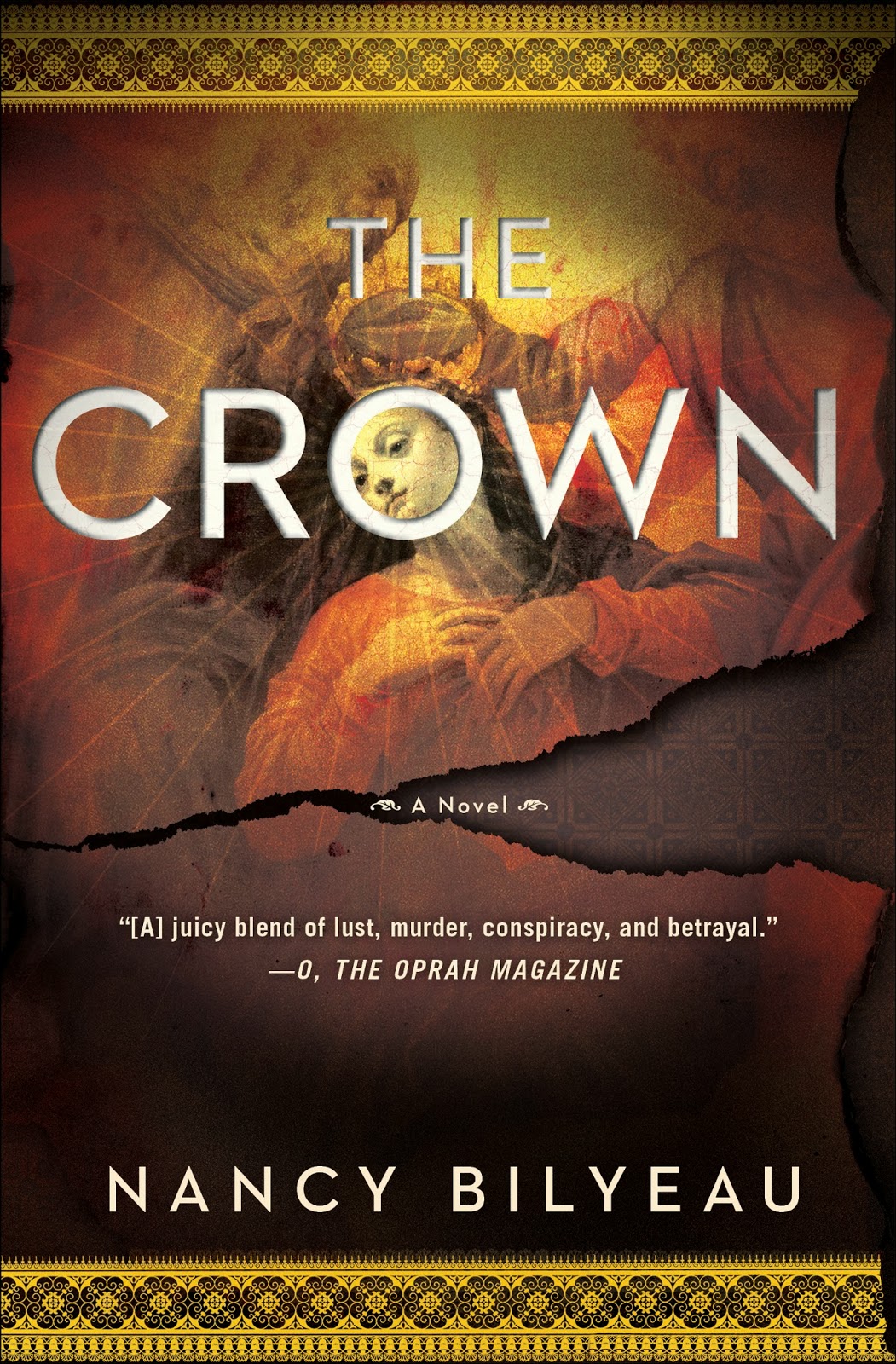
The Crown takes place in 1537 and 1538, when Henry VIII's break with Rome throws hundreds of monasteries and convents into turmoil. To save her father and her way of life from destruction, Joanna is forced to find a mysterious relic but then must decide who can be trusted with its powers.

The Chalice covers 1538 to early 1540, when Joanna along with thousands of other men and women  expelled from their orders are struggling to find a place for themselves. In this book, a traumatized Joanna discovers she is part of a prophecy about the fate of the kingdom, and she must decide between her conscience and a violent act that could bring back her beloved way of life.

The Covenant, which plunges Joanna into the court of Henry VIII during one of his most lethal years, 1540, will come out in 2014. I'm finishing it now. :)

I will share a few reviews of the first two books:

The Crown:

“Bilyeau deftly weaves extensive historical research throughout, but the real draw of this suspenseful novel is its juicy blend of lust, murder, conspiracy, and betrayal.” – O, The Oprah Magazine

“An engrossing thriller…[the] extensive historical research shines.” – Entertainment Weekly

“Bilyeau weaves her breathtaking story though a string of events to a pleasing conclusion while giving the reader a more thorough understanding of a complicated bit of history. Historical fiction as it should be.” – Florida Times-Union

The Chalice:
"English history buffs and mystery fans alike will revel in Nancy Bilyeau's richly detailed sequel to The Crown." -- Parade

“Bilyeau continues from her first novel the subtle, complex development of Joanna’s character and combines that with a fast-paced, unexpected plot to hold the reader’s interest on every page . . . history and supernatural mysticism combine in this compelling thriller.” -- Historical Novel Society

“The novel is riveting, and provides fascinating insight into the lives of displaced nuns and priests during the tumultuous Tudor period. Bilyeau creates fully realized characters, with complex actions and emotions, driving the machinations of these historic personages.” -- RT Book Reviews (Top Pick))
-----------------------------------------------------------------------------------------------

For this giveaway, I will send a signed paperback of The Crown or a signed hardcover of The Chalice to anyone in North America. To enter, see below!


a Rafflecopter giveaway