Showing posts with label Tudor England. Show all posts

Thursday, November 21, 2019

Tudor to Georgian: When a Novelist Jumps Centuries

By Nancy Bilyeau

Sometimes an idea for a new novel is part of a carefully worked out strategic plan, and sometimes it pops into your brain seemingly out of nowhere. In the case of my historical novel The Blue, it was the latter.


While touring Hillwood Estate in Washington D.C. with my sister in 2013 and gazing at the spectacular 18th century porcelain collection, I heard the guide say, "Porcelain was very competitive in Europe--during this time it was like the Space Race." I was excited at the thought of writing a spy thriller set among the porcelain workshops of the 18th century.


Before I knew it, I was creating characters. This meant making some big changes in my writing. My novels The Crown, The Chalice and The Tapestry take place in Tudor England. For my new book, I plunged forward into the era of Rococo art and Enlightenment thought, of war and revolution. This was the Georgian period.


When it came to my protagonists, I exchanged a Catholic novice for a Huguenot artist. And since I like to weave "real" people from history into my plots, I read up on the monarchs, artists, and scientists of the 18th century. The similarities and the contrasts were highly interesting. Allow me to share a few.


Henry VIII to Louis XV


King Henry VIII is one of the most famous kings of England--or any European country for that matter. He was of course married six times and the monarch who broke ties with the Pope, which led to the English Reformation. In his time, Henry was also known for being extremely handsome--over six feet tall, with red hair and glowing skin--and accomplished, but the latter part of his reign was marked with tyranny and sudden, fatal reversals of favor. No one was safe, not his wives nor his ministers.

Since the main character of my trilogy is Joanna Stafford, a Dominican novice fighting for her way of life, Henry VIII is an ongoing source of fear and frustration. But Joanna is from an aristocratic family related to the royals, so at times she is pulled into the court, particularly in the third book, The Tapestry. Her talent with tapestries wins the admiration of her cousin the King, ironically. My research confirmed that Henry Tudor was a dedicated, if not obsessed collector of Renaissance tapestries. He spent the equivalent of a warship on one series of tapestries in the early 1540s.


Louis XV, "The Beloved"

In most people's minds, Louis XV is overshadowed by his predecessor, his great-grandfather Louis XIV, and his successor, his grandson, Louis XVI. Yet during his long reign, he was often regarded as the most powerful man in the Western world. Few celebrate that reign today, though. His inability to curtail spending or to deal with famine and poverty set France on the road to revolution. He led his nation into expensive wars. His most famous words are "Après moi, le déluge."

While his character was reserved and melancholy, Louis, like Henry VIII, was outstandingly handsome, and many of the women in his court were eager to be his mistress. He is famous for his taste and is not given enough credit for his role in supporting architecture, art, and music.  In the 1750s, the time of my novel The Blue, France was considered superior to England in art, fashion, science--and, most significantly, porcelain. Louis was obsessed with France being the creator of the most beautiful porcelain in the world.


If some people think Henry Tudor is over-represented in books and films and television (he's been played by everyone from Richard Burton to Damian Lewis), Louis XV shows up almost nowhere. He's perhaps most familiar to audiences as played by Rip Torn in the 2006 Marie Antoinette movie starring Kirsten Dunst.


My main character, Genevieve, is a Huguenot, part of a French Protestant community that the Catholic kings hated and successfully drove out. Her family took refuge in England--the word "refugee" was coined to describe the French Protestants flooding London. Genevieve despises Louis XV and fears him, knowing that if England were to be invaded by France, as threatened to happen in 1758, it would not be good for her.


Anne Boleyn to Madame de Pompadour


All of the wives except Jane Seymour and Catherine Parr appear in my trilogy. Fifth wife Catherine Howard has the largest role in my novels, but in my opinion there's no question but that Wife Number Two, Anne Boleyn, was the most significant to English history. My personal sympathies may rest with the wife she dislodged, Catherine of Aragon, but Anne was the love of Henry VIII's life and a woman of remarkable intelligence, style, and taste.


Louis XV was the opposite of Henry VIII when it came to women. He married once but had many, many mistresses. His court was dumbfounded when he slept with four sisters in the same family, one after another over a period of years. But then came Jeanne Antoinette Poisson, known to history as Madame de Pompadour. She was the love of Louis XV's life. For almost twenty years, she was his cherished companion, even after the sexual part of their relationship faded. 


I like to think that Anne Boleyn and Madame de Pompadour would have been fast best friends. They were both sexy and smart, leaders in art and style, Anne being musical and Pompadour being a talented actress who loved performing in small productions put on for Louis. But neither woman was popular beyond a small circle of loyalists. This contributed to Anne Boleyn's downfall; as for Pompadour, being surrounded by people who hated her eventually wore her down. She died of illness at age 45.

In films and TV, Anne Boleyn has been played by a staggeringly long list of talented actresses: Merle Oberon, Vanessa Redgrave, Genevieve Bujold, and Natalie Dormer, among many others. But what about Madame de Pompadour? Like Louis XV, she's been seen onscreen comparatively rarely.


Hans Holbein to William Hogarth


Art plays a crucial part in my fiction. In the Joanna Stafford trilogy, the tapestries the sisters weave are important to plot and character. The Blue revolves around the creation of porcelain--and the longing of my main character, Genevieve, to become a real artist. I am fascinated by the lives of artists of the past, and I placed both Hans Holbein and William Hogarth in my books.


Hans Holbein

Holbein, court artist to Henry VIII, was the ultimate survivor. A German, he came to England under the sponsorship of Thomas More. When that man was beheaded, he switched over to Anne Boleyn and Thomas Cromwell. Holbein was sent to paint Anne of Cleves when a widowed Henry VIII was looking for a new wife. He decided to marry her based on the portrait--and was furious and upset when he met the "real" woman, saying, "I like her not!"


It's in the lives of the artists that the difference between the 16th and the 18th centuries is most pronounced. Holbein must have been nervous of Henry VIII, along with everyone else, and certainly painted him with flattery.


But that was hardly the career course pursued by William Hogarth.


William Hogarth
Coming for a lower-middle-class family, Hogarth, a painter and printmaker, used his talents to make blistering comments on English society, even those at the top.  Many of his works are satirical caricatures, showcasing the greed and heartlessness of the ruling class. Some of his work attacked politicians for their corruption and the aristocracy for making loveless marriages purely for money.

After Hogarth's death, the actor David Garrick composed this for his tombstone:


Farewell great Painter of Mankind
Who reach'd the noblest point of Art
Whose pictur'd Morals charm the Mind
And through the Eye correct the Heart. 
If Genius fire thee, Reader, stay,
If Nature touch thee, drop a Tear:
If neither move thee, turn away,
For Hogarth's honour'd dust lies here.

In The Blue, Genevieve's admiration for Hogarth--and her determination to use her talent to show society with all honesty--is what sets the entire plot in motion.:)


I could go on, but you get the picture. (So to speak.) Whether it's the 16th or the 18th centuries, these are fascinating people. I loved researching them and working them into my fiction.


Reviews for THE BLUE:
Ian Rankin: "Fascinating."
Kate Quinn: "Definitely a winner."
NB magazine: "Fast-paced and highly engaging historical thriller"
E.M. Powell: "Transports the reader into the heart of the 18th century porcelain trade—where the price of beauty was death."

Follow Nancy on Twitter and Facebook, and sign up for her author newsletter to read nonfiction posts about history and get the news first on novel giveaways and chapter extras.

Sunday, October 28, 2018

Mary, Queen of Scots' Castle Prison, Rediscovered

Queen Elizabeth I kept her cousin, Mary, Queen of Scots, a prisoner in England for almost 20 years before finally ordering her execution in 1587.

The physical and psychological toll that years of imprisonment took on Mary are well known; the entire time she furiously protested that as an anointed queen of Scotland, she was not a subject of England and should be freed.

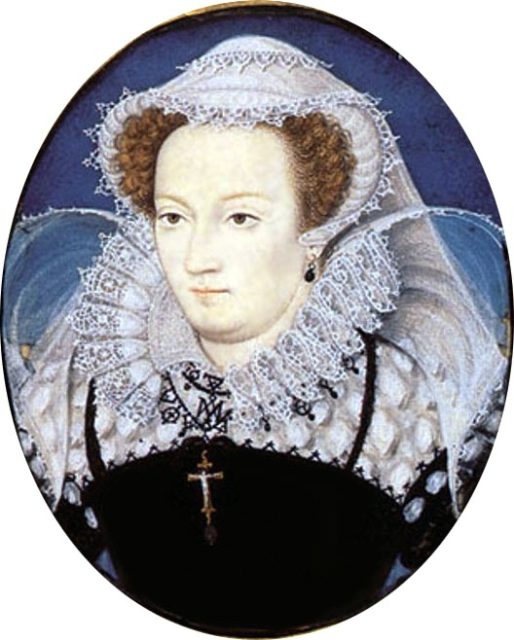
Mary in captivity, by Nicholas Hilliard, c. 1578.

Now, thanks to an ambitious excavation and research project launched in the late summer of 2018, a virtual model has been created of one of Queen Mary's castle prisons in the 1500s.

Viewing it brings into focus Mary's daily existence as Elizabeth's rival and enemy for 14 years at Sheffield Castle, once one of northern England's most impressive castles but destroyed by Oliver Cromwell's parliamentarians in 1646.

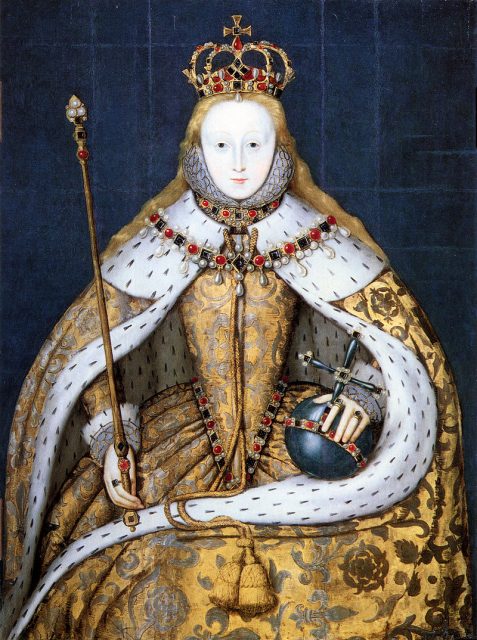
Elizabeth I in her coronation robes, patterned with Tudor roses and trimmed with ermine

Ron Clayton, of the Friends of Sheffield Castle group, told The Guardian in August he was delighted that work finally got underway. “In its day, Sheffield castle overlooked the village of Sheffield. This has seen the thunder of war, the rattle of the drum, the blast of the cannon; people have been killed fighting to take possession of this castle,” he said.

“It’s a great day,” Clayton said. “This is going to give Sheffield a whole new identity in the 21st century.”

The new virtual model was developed by creative agency Human and by computer scientists from the University of Sheffield.

Sheffield ruins


Professor Dawn Hadley told the BBC: “Sheffield Castle was almost completely destroyed during the English Civil War and most of what does remain of its original structure has been hidden away from the public for hundreds of years.”

The large castle's remains were covered by an indoor market in the 1960s, but it closed five years ago.

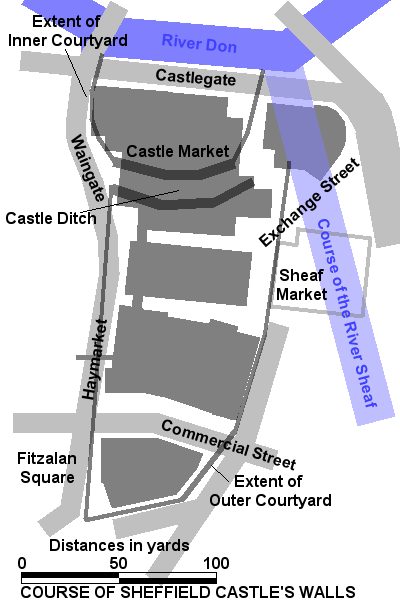
The plan of Sheffield Castle in relation to current buildings. Photo by Gregory Deryckère CC BY 2.5

Professor Hadley said, “The castle and its history are largely unknown. But now we hope that with the creation of this augmented reality experience people will be able to see the castle in all of its glory and learn more about its fascinating history.”
 
Mary, Queen of Scots was confined at Sheffield Castle between 1570 and 1584, as the “guest” of one of Elizabeth's leading noblemen, the Earl of Shrewsbury.

During that period, Mary was waited on by her ladies, gentlemen, and servants and insisted on a cloth of state being mounted. It is clear that her imprisonment, all things considered, was a comparatively comfortable one.

Mary was driven out of her kingdom by an army led by her disaffected Scottish nobles.

She was accused of having been part of the murder conspiracy to eliminate her second husband, Henry, Lord Darnley. Some of the nobles who accused her had in reality been deeply involved in the murder of the widely hated Darnley, the father of James VI of Scotland and eventual James I of England. Mary's involvement in her husband's death has been hotly debated for centuries. His house was blown up with gunpowder, and he was found, strangled, near the smoking ruin.

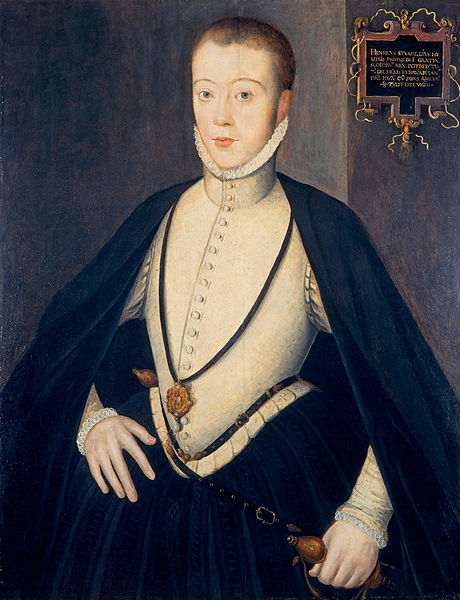
Lord Darnley
            

Mary's hasty marriage to her third husband, the swaggering Earl of Bothwell, definitely one of the circle who killed Darnley, did nothing to support her claim of innocence.

After losing a battle in 1568, Mary decided to go south to seek support from her cousin, Elizabeth, in retaking Scotland. But to Protestant Elizabeth, the Catholic Mary had long been a focus of disaffected Catholics in her own kingdom, and she was reluctant to put her back on the throne.

Instead, Elizabeth cut a deal with the nobles and supported the reign of the very young James.
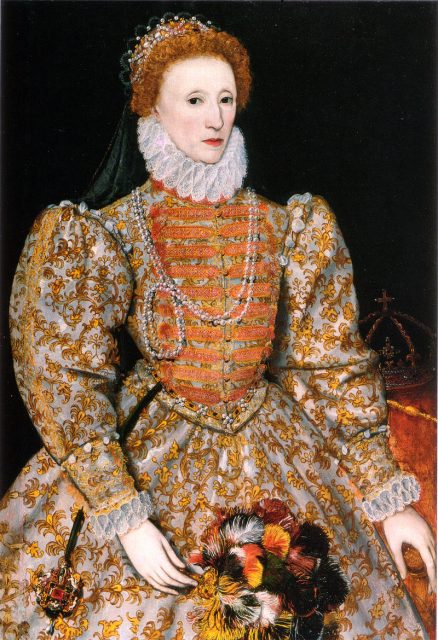
The Darnley Portrait
                =

Plots were bubbling for years aimed at freeing Mary from Sheffield, with some of them ousting Elizabeth and putting Mary on the English throne. The Earl of Shrewsbury was often berated by Elizabeth for lax security measures, while he protested he did his best.

During her years at Sheffield, Mary's health deteriorated, caused by lack of exercise due to escape fears and the damp environment inside the castle walls. The queen suffered from severe rheumatism, arthritis, and “dropsy.”
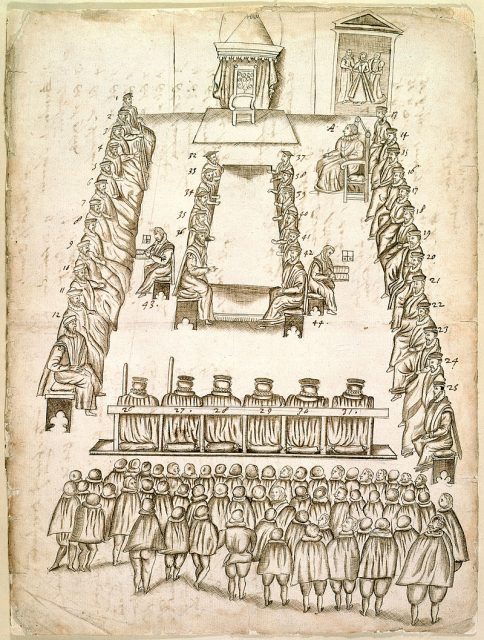
Drawing of the trial of Mary, Queen of Scots, October 14–15, 1586.[/caption]

The Earl of Shrewsbury's high-tempered wife, Bess of Hardwick, volleyed between being friends with Mary, and joining her for daily gossip and embroidery, and accusing her husband of having an affair with the still-beautiful queen of Scotland. Such accusations were denied by both parties. As treasonous suspicions darkened around Mary, she was removed from Sheffield for castles with stricter security, and harsher jailers as well.

After a trial during which she claimed innocence, Mary was executed at Fotheringay Castle. The nervous headsman required three blows of the ax to sever her head. For a number of minutes, her lips still moved, traumatizing the noblemen who witnessed her death, including the earl of Shrewsbury, who burst into tears.

It is a death that centuries later affects us still. 

-----------------------------------------------------------------

Nancy Bilyeau is the author of a trilogy set in Tudor England, The Crown, The Chalice, and The Tapestry, available in nine countries.

Her new historical novel, The Blue, is a thriller set in the 18th century world of art and porcelain.
 

Saturday, November 5, 2016

Tudor England and Halloween


I published the following story on English Historical Fiction Authors:


I have a passion for 16th century England. My friends and family, not to mention my agent and editors, are accustomed to my obsession with the Tudorverse. Namely, that for me, all roads lead back to the family that ruled England from 1485 to 1603. Could it be possible that Halloween, one of my favorite days of the year, is also linked to the Tudors?

Yes, it turns out, it could.

The first recorded use of the word "Halloween" was in mid-16th century England. It is a shortened version of "All-Hallows-Even" ("evening"), the night before All Hallows Day, another name for the Christian feast that honors saints on the first of November.

But it's not just a literal connection. To me, there's a certain spirit of Halloween that harkens back to the Tudor era as well. Not the jack o' lanterns, apple-bobs and haunted houses (and not the wonderful Christopher Lee "Dracula" movies that I watch on TCM network every October, two in a row if I can). It's that mood, frightening and mysterious and exciting too, of ghosts flitting through the trees; of charms that just might bring you your heart's desire; of a distant bonfire spotted in the forest; of a crone's chilling prophecy.

The Oxford Astrologer
In pre-Reformation England, the Catholic Church co-existed with belief in astrology and magic. It was quite common to attend Mass regularly and to consult astrologers. "The medieval church appeared as a vast reservoir of magical power," writes Keith Thomas in his brilliant 1971 book Religion and the Decline of Magic. Faithful Catholics tolerated the traditions of the centuries-old Celtic festival of Samhain ("summer's end"), when people lit bonfires and put on costumes to scare away the spirits of the unfriendly dead...


To read the full post, go here.http://englishhistoryauthors.blogspot.com/2016/10/the-truth-about-halloween-and-tudor.html

Sunday, December 13, 2015

When January 1st Wasn't the First Day of the Year

By Nancy Bilyeau


In less than two weeks it will be the first day of 2019. Time to hang your freshly bought calendars and write a new year on your checks.
         But strange as it may seem, January 1st did not always signal the beginning of a new calendar year. Up to 1752, the two were separate things in England and its colonies. Until that point, people began each calendar year on March 25, which was Annunciation Day—or Lady Day. This was the day the Angel Gabriel appeared to the Virgin Mary to deliver the news that she had conceived and would give birth to Jesus in nine months.
         
        
It took an 18th century act of Parliament for England to officially begin each new calendar year on January 1st. The centuries of discrepancy cause lots of headaches for historians and genealogists. There’s no question that it’s strange, not least because England lagged behind much of the rest of Western Europe. Why did this Protestant nation cling to Annunciation Day—by its very definition a day revolving around the Virgin—as the time to change the calendar when most Catholic countries had already shifted to January 1st in the 16th century or 17th century?


         The reason for the January 1st controversy has a lot to do with England’s refusal to take orders from a pope after Henry VIII’s break from Rome in the 1530s. It was Pope Gregory XIII who replaced Julius Caesar’s calendar, devised in 45 BC, with a new one in 1582—and it’s the Gregorian calendar we all use today.  Reform was unquestionably needed. There were too many days in the year; the equinoxes were out of whack; the Julian calendar had strayed 10 days from the solar calendar.

         Among other things, the pope’s new calendar established that each calendar year begin on January 1st. Once it was issued, Italy, Spain and Portugal instantly adopted the Gregorian calendar, followed by France and the other Catholic countries of Europe. But England, Germany and the Netherlands refused. So for centuries, there were two calendars in Western Europe. It wasn't a strictly religious-led decision either. In Protestant Scotland, they changed to the Gregorian calendar in 1600. But England stubbornly refused.


         The first step to understanding this furor is to realize that Pope Gregory XIII was not simply someone who cared about calendars. Born in Bologna as Ugo Buoncompagno, he was a transitional pope. Certainly not as venal and corrupt as the Borgias a century earlier, he was a gifted teacher and administrative talent who nonetheless had an illegitimate son before marrying and really liked to spend money. 

         Once he became Gregory XIII, he spent huge sums on not only Catholic colleges but also displays such as the Gregorian Chapel in St. Peter’s. To pay for all this, he resorted to papal confiscation. Most relevant to our story, he supported the overthrow of Henry VIII’s Protestant daughter with Queen Anne Boleyn, Elizabeth I.


         Gregory’s predecessor, Pope Pius V, had already excommunicated Elizabeth and declared her a usurper in 1570. During his papal office, Gregory put intense pressure on the Spanish king, Philip II, to invade and dethrone England’s queen. Gregory personally financed an armed force of 800 men to land in Ireland to join a Catholic rebellion against Elizabeth (it fizzled). Moreover, a Jesuit led the papal commission to devise the Gregorian calendar—and the Jesuits were the religious order specifically created to fight the Protestant Reformation. This all fueled Elizabethan England’s refusal to accept anything that originated in the Vatican.

         The fierce clashes between Catholic and Protestant in the 16th century are the tumultuous background of my historical thrillers. The heroine of my novels, The Crown, The Chalice, and The Tapestry, is a novice in the Dominican Order at Dartford Priory, outside London. But it’s not just the Christian splintering in early modern Europe that fascinates me. I also love studying what came long before the Renaissance.

         One October, as Halloween approached, I researched the roots of the holiday’s celebration in Tudor England and made some discoveries. I learned that the roots of Halloween reach back to the Dark Ages Celtic festival of Samhain (“summer’s end”), when people lit bonfires and put on costumes to scare away the spirits of the unfriendly dead. All-Hallows-Even, which was shortened to “Halloween” in the 16th century, was a complex blend of Celtic and Catholic customs. After all, the holiday was the run-up to All Saints’ Day on November 1st, an occasion to venerate all the Catholic martyrs. Not surprisingly, the Protestant Reformers took a dim view of Halloween, but its popularity was so great that they were unable to stamp it out.

         My  blog post on Halloween (http://englishhistoryauthors.blogspot.com/2011/10/truth-about-halloween-and-tudor-england.html) stirred up so much attention that it made me want to keep reading about the distant and complex roots of what we celebrate today.

         I began thinking about the origins of Christmas and New Year’s Day the morning of December 20th one year, when I stood outside my apartment building with my son, waiting for his school bus to arrive. Although it was 7:15 a.m., dawn had barely broken; the Christmas lights that the superintendent had strung over the bushes glowed yellow in the purplish-gray light. A hazy fullness hung in the air—and it seemed to carry a strange potency. Almost like something magical. I had no idea as I stood there that what I sensed would connect to January 1st and the fascinating furor over when to begin the calendar year.


         I snapped a photo and posted it on my Facebook page, along with sharing a description of the strange feeling all around me. A high school friend, D.K. Carlson, offered an explanation: “The solstice is almost here.” It made me shiver to think it was the power of the winter solstice that touched me that morning: the approach of the shortest day of the year, the moment when the earth is in a point of its orbit farthest away from the sun. I find it very interesting that Julius Caesar established December 25th as the date of the winter solstice. It was—you guessed it—Pope Gregory XIII who made the adjustment to December 21st.

         Long before the time of Julius Caesar, man honored the solstice. Bronze Age archaeologists have uncovered symbols and signs that reveal awareness of the shortest day of the year. The monuments of Stonehenge and Newgrange in Ireland are believed to have solstice alignments. In 2000 BC, people may have gathered at Stonehenge in mid-December to pray for the sun to return again, the source of all life.
        

         Again and again, in many societies and religions, the solstice has great meaning. For the Druids, it was Alban Arthuan, the Light of Winter. As part of the celebration, priests cut the mistletoe that grew on winter oaks and blessed it. Germanic pagans launched the tradition of burning the Yule log and decorating a home with clippings of evergreen trees.

         In Rome, not surprisingly, the celebrations became more debauched. Saturnalia, which took place in mid-December, ran the gamut from heavy drinking to gambling to reversing society norms, with masters waiting on slaves. Lighting candles was very important. So was the tradition of children going house to house, offering small gifts, such as wrapped fruit, in exchange for other tokens.

Saturnalia was so popular that not even the Fall of Rome could kill it. It morphed into the Feast of Fools, celebrated from the Fifth Century until the Renaissance in much of Western Europe on January 1st. The servants became the masters, with a lower-echelon “Lord of Misrule” chosen to preside over all drunken festivities beginning in late December and concluding on the first of January.
  
         Not surprisingly, the early Catholic Church did not look kindly on the parties--stimulated by the winter solstice--that marked January 1st. The church leaders didn’t want something as important as beginning a new year to take place on that same day. In 567 AD, a Council of Tours decreed that the first of January was abolished and the blameless Annunciation Day was chosen. It took a while for this to be accepted, but by medieval times, people in England looked on March 25th as the beginning of the year. And this tradition stuck through the Plantagenets, the Tudors, the Stuarts, and into the time of the Hanoverians.


         Until finally, in 1751, in the reign of George II, England—and its colonies in the Americas—gave in and made the change, moving from the Julian Calendar to the Gregorian. Parliament passed An Act for Regulating the Commencement of the Year; and for Correcting the Calendar now in Use. To make this work, 16 days were dropped from 1751, and January 1, 1752 was officially deemed the beginning of the year.

----------------------------------------------------------------------------------

 Nancy Bilyeau is the author of the new bestselling historical thriller The Blue, a spy story set in the art and porcelain worlds of the 18th century.

Monday, September 14, 2015

My Love of Atmosphere

It always makes my day when a reviewer, whether it's a professional book critic or a reader sharing thoughts on amazon and goodreads, remarks on my love of creating atmosphere in my books. I do aim to immerse readers in the sights, sounds and smells of Tudor England. I almost feel like the mistress of a time-travel machine. The next stop is 1540. :)


From the respected website crimereview.co.uk:

"In this final chronicle of the Joanna Stafford trilogy, Nancy Bilyeau’s vivid prose, mastery of atmosphere, a deft and pacey plot involving two kings, greedy and ambitious barons and bishops, influence seekers, religious fanatics, spies and killers, set against a background of Europe-wide uncertainty, dread and oppression, bring the Tudor period to thrilling life."

For the rest of the review, go here


Saturday, April 25, 2015

The Nun Who Stood Up to Cromwell


Historical fiction set in the Tudor era, whether it's a novel like Wolf Hall by Hilary Mantel, or a mystery like Dissolution by C.J. Sansom, depicts a Catholic kingdom riven by monastic corruption, a system dying out as it pleaded for reform. In my years of research into the Dissolution of the Monasteries in order to write my trilogy of books, I came to different conclusions. Yes, there were cases of fraud, such as a phial said to contain Christ’s blood kept at Hailes Abbey, in Gloucestershire. But overall, I discovered a rich, vibrant world of people deeply committed to a spiritual life, some of whom wanted to withdraw from society to devote themselves to prayer and study. I focused on the nunneries, since I’d decided on a protagonist who was a Dominican novice. 


Approximately 1,800 nuns existed at the time of the destruction of the priories, out of 9,300 monastics total. We know of the fates of a handful of women, those considered of enough interest for the ambassadors or politicians to write about. The sisters left behind a few letters and wills, that’s it. The priories themselves are rubble or, at most, fragmented walls and spires of ghostly beauty. “In lone magnificence, a ruin stands,” sighs the poem by George Keate, “The Ruins of Netley Abbey.”


I created a heroine, Joanna Stafford, who was the daughter of a Spanish maid of honour to Catherine of Aragon and a younger brother of the Duke of Buckingham. Her priory would be real, however.


I selected the sole Dominican priory in England, in the town of Dartford, in Kent. I traveled to Dartford to deepen my research in 2011. A small museum devoted to the town’s history helped a great deal. Walking around, I found echoes of the past: signs for “Priory Road” and “Priory Shopping Centre.” On the site of the convent stands a gatehouse and garden built directly after the nuns’ time—it’s a popular place for wedding receptions, ironically.

All that physically remains of the grand priory buildings themselves is a stretch of low stone wall along a busy road. “What happened here?” I said out loud as I stood on the cracked sidewalk alongside those walls.

Of all of the victims in the struggle over religion, the nuns were, as a group, the most tragic, I believe. The displaced monks and friars could serve the new church as chantry priests or hold some other spiritual office. They could become clerks or apothecaries or tutors.

But the displaced nuns had far fewer options. The abbeys fell in the mid to late 1530s. Many of the prioresses and nuns received pensions but they were small and the inflation of the 1540s and 1550s diminished their value. There were no professions open to unmarried women of the period, apart from court service at one end of the spectrum and prostitution at the other. 


However, these women could not marry. A law passed Parliament in 1539, the Act of Six Articles, forbidding those who had taken vows of chastity from ever marrying, on pain of death. Introduced by the Duke of Norfolk, the act had the support of the king, who for reasons unknown was intent on ex-monastics being celibate. During the reign of Edward VI, the law was repealed. But under Mary I, the marriages of ex-nuns was forbidden again—only to be permitted once more by Elizabeth. By that time some of the nuns were dead; the youngest ones at the Dissolution were well into their forties. In all of my research I found only two references in the contemporary records of nuns’ marrying.

But in that same research I learned some illuminating details of the stories of women who courageously faced destruction of their way of life in the 1530s. One of them is Florence Bonnewe. She does not appear in my books. But her fate haunts me all the same.


In demolishing the abbeys, these houses of distinctive architecture, some of them containing beautiful books and stained glass, we lost buildings that were centuries’ old. The Benedictine convent of Amesbury, in Wiltshire, had been founded before the arrival of William the Conqueror. The historians give the year as 979 and the motive of its creation as guilt over the murder of King Edward the Martyr the previous year.

The convent wasn’t large or particularly prestigious, but it kept going. More than five centuries later, 34 nuns lived at Amesbury. The head of the house was Florence Bonnewe, of whom nothing is known before she leaps into history in 1539 as a woman who stood up to the king.

All of the smaller monasteries and a growing number of the larger ones—possessing vast tracts of land and valuables—had been dissolved already. In most cases the property and buildings were turned over to families loyal to Henry VIII. The valuables were pillaged. What the king’s commissioners tried to do was persuade the abbots and priors and prioresses to surrender their religious houses to the king. If so, the helpless and frightened monastics living there would receive those annual pensions. The grisly fate of those who refused to submit to the king and Thomas Cromwell—not only Sir Thomas More and Cardinal John Fisher but dozens of defiant monks and friars—was instructive. Few refused.

At the end of March three royal commissioners—John Tregonwell, William Petre and John Smyth--arrived at Amesbury with the goal of securing "surrender." 


Florence Bonnewe had other ideas. 


The men wrote to Cromwell: 

“We yesterday came and communed with the abbess for the accomplishment of the king’s highness’ commission in like sort. And albeit we have used as many ways with her as our poor wits could attain, yet in the end we could not by any persuasions bring her to any conformity. At all times she resisted and so remaineth in these terms: ‘If the king’s highness command me to go from this house I will gladly go, though I beg my bread; and as for pension, I care for none.’ In these terms she was in all her conversation, praying for us many times to trouble her no further herein, for she had declared her full mind, in the which we might plainly gather of her words she was fully fixed before our coming.”

Months of pressure followed. Florence stood firm. At some point the most senior commissioner in charge of dissolving nunneries, a priest named John London, entered the picture. It is worth pausing in the story of Florence to consider “Dr. London.” Archbishop Matthew Parker would call Dr. London a “stout and filthy prebendary.” In his visitations to the nunneries he was charged with improper behavior at Chepstow in 1537 and Godstow in 1538. Dr. London was first dean of the Diocese of Oxford in the early 1540s and there forced to perform “open penance” after adultery with an Oxford mother and daughter. He was caught up in a failed conspiracy against Thomas Cranmer in 1543, sent to Fleet Prison and “died of shame and vexation.”

James Gardiner, the 19th century editor of the towering Letters and Papers of the Reign of Henry VIII, wrote of Dr. London’s actions in 1539:


 “When we think of the shame in which Dr. London ended his days, a few years later, committed to the Fleet for perjury, not to mention other stories against him; and when we consider that Cromwell himself, the year before this, had been obliged to pay some regard to the abbess of Godstow's remonstrance against his conduct towards her and her companions, it might seem strange that the task of suppressing nunneries should have been more specially committed to him than to any other. But perhaps indelicacy was rather a recommendation for the kind of work that was to be done.”

Florence begged to be “left in peace,” but the demands only increased. The royal commissioners secured letters from Cromwell and even Henry VIII insisting that yes, the surrender of the nunnery must take place.

In August 1539 Florence finally submitted the resignation of her position in the following letter to Thomas Cromwell:

“I humbly recommend me unto your good lordship and have received the king’s gracious letters and yours, touching the resignation of my poor office in the monastery of Amesbury….I have resigned my said office into the hands of the king’s noble grace, before the commissioners thereto appointed; trusting that the promises of said commissioners have made unto me for assurance of my living hereafter shall be performed.”

Florence was swiftly replaced by a nun named Joan Darrell who was “very conformable” to Cromwell’s wishes. Dr. London arrived to oversee the official surrender of the convent in 1540. Joan Darrell was awarded an annual pension of one-hundred pounds, the largest amount given to any prioress in the kingdom, even though she’d held the position for a few months. 


And what of Florence? She received absolutely nothing. The commissioners broke their promises.

One source writes that she died “almost immediately after.” According to contemporary historian John Stowe, “10,000 people, masters and servants, had lost their livings by the putting down of these houses at that time.” A number of them—no one is sure how many—could find no employment and roamed the country, homeless. Ambassador Eustace Chapuys wrote: “It is a lamentable thing to see a legion of monks and nuns who have been chased from their monasteries wandering miserably hither and thither seeking means to live.” Florence Bonnewe was spared that, at least.

Twenty-one Amesbury nuns were still receiving their pensions as of the year 1556 and one as late as 1605. As for the buildings and land of Amesbury, they were given to Edward Seymour, Earl of Hertford, brother of the king’s third wife. The church was preserved, but most of the buildings were ordered demolished, stripped of lead that could be sold. Some of the stone was used to construct a manor house. 


The Seymour family held the Amesbury estate for over a century. In 1660 a larger house was built there for the handsome William Seymour, the grandson of Catherine Grey, husband of Arbella Stuart and second duke of Somerset. After changing hands many times, it is now a nursing home.


-----------------------------------------------------------------

Nancy Bilyeau is the author of a trilogy of historical thrillers. The third novel. The Tapestry, is on sale in North America and the United Kingdom, and will be published in Germany in 2016. It is discounted to £1.99 on amazon UK until May 2nd.


Sunday, April 12, 2015

"Entirely Beloved": My Review of Wolf Hall, Episode 2

The second episode of Wolf Hall, the Tudor drama on Masterpiece Theatre, aired tonight. Medievalists.net posted my recap of the series on Thomas Cromwell and his rise in the court of Henry VIII.


"In this recap, I will try to unravel some of the complexities of the relationships in the court of Henry VIII, which are shown onWolf Hall without much effort to explain. While such a sophisticated script yields rich rewards, it assumes a certain working knowledge of 16th century power players. The courts of the Tudor monarchs were unlike those of their Plantagenet predecessors. Nor does the 16th century heart of power resemble the regimes of the latter Stuart monarchs and succeeding Hanoverians. There is a highly personal nature to ruling the kingdom—and with that comes deadly risks to those who seek favor and influence..."
To read the full recap, go here.

Wednesday, April 8, 2015

THE TAPESTRY on InStyle's Bookclub List for April

I'm ecstatic that InStyle magazine picked The Tapestry for its April book club. Other novels include Sara Gruen's At the Water's Edge and Hallie Ephron's Night, Night, Sleep Tight.

Says the magazine:

"Fans of the Tudor era, you’re in for a treat. In the third installment of Bilyeau’s dramatic trilogy, we once again meet Joanna Stafford, a former nun who is determined to protect both her beliefs and her friends from the dangerous politics that surround King Henry VIII’s reign...."


To read the full review and see all seven recommendations, go here.

Monday, April 6, 2015

Recap of Wolf Hall, Episode 1, "Three Card Trick"

"Wolf Hall" has come to Masterpiece Theater, following a much-talked-about run on British television. This is a stellar adaptation of the historical novel by Hilary Mantel that delves into the darkest side of Tudor England.

I think the series is brilliant, with performances by Mark Rylance, Jonathan Pryce, Claire Foy and Damien Lewis that can be studied for a thousand nuances.


When the show ran in the UK, there were some complaints about the time jumps and flashback, especially in Episode 1: "Three Card Trick."

In my recap, posted on medievalists.net, I explain the timeline and supply some historical tidbits at the end too.

For the recap, go here.

Friday, April 3, 2015

The Mysterious Life & Lonely Death of Elizabeth Boleyn


On Lambeth Road, on the south bank of the River Thames, is the elegant Garden Museum, offering visitors lush gardens to walk through and an array of horticulture tools to examine. The shop sells books, kits, soaps, embroidered bags, and thumb-pot waterers. Somewhere beneath the shop floor—no one knows exactly where, since there are no markers or plaques—lies the body of Elizabeth Boleyn, the mother of Henry VIII’s second queen and grandmother of one of England’s greatest rulers, Elizabeth I.


Her present obscurity is not a shock; there is no irony to this. Instead, her unmarked grave is the outgrowth of a life remarkable for its silence amid the noise–the style, the wit, the fiery ambition and brilliant allure of the Boleyn family.


How did Elizabeth Boleyn feel about her striving husband, Thomas; her notorious daughters, Anne and Mary; her erudite son, George? Was she proud to be mother-in-law of Henry VIII—and did that emotion flip to outrage and grief when Anne and George were beheaded in 1536, among the charges being that they committed incest? Or, perhaps, like her spouse, the Earl of Wiltshire, Elizabeth was grateful to survive the brutal coup that destroyed the Boleyn faction and even willing to court the king’s favor once more.


We don’t know as much about Anne Boleyn as we think we do. The movies and miniseries and novels and articles and twitter handles create the impression of a certain kind of woman: beautiful, witty, and bold. Someone who could steal a king from a prestigious first wife of many years’ standing. But there are surprisingly few authenticated likenesses or letters of Anne Boleyn’s, and many descriptions of her behavior come to us from the pens of her enemies.


Anne Boleyn, National Portrait Gallery. It was painted after her death.


If the facts about Anne Boleyn are minimal, they are fragmentary for her mother. One assumption is that most women’s lives from this period are not recorded. But other mothers of Henry VIII’s wives come into greater focus, with one sad exception. Queen Isabella of Castile is of course a famous figure of history; the other royal mother, Duchess Maria of Cleves, comes through in her religious choices, her relationships with her husband and children, her loyalty to her homeland. Jane Seymour’s and Catherine Parr’s mothers are present in history; we can feel their care taken for their families. Only Joyce Culpepper, wife to that ne’er do well Edmund Howard, is more of an enigma than Elizabeth Boleyn, and that is because she died before Catherine Howard reached the age of 10.

But Elizabeth Boleyn outlived Anne. She was there, in the courts of Henry VII and Henry VIII, the daughter, wife and mother of prominent courtiers. So how can there be so few mentions?


Elizabeth Boleyn does play a part in an unsavory scandal. There was a rumor that Henry VIII had an affair with her when he was young, before his marriage to Catherine of Aragon. Supposedly a gentleman said to the king about his planned marriage to Anne that it would be a blot on his conscience, “It is thought that ye have meddled both with the mother and the sister.” The king replied, “Never with the mother.” And Thomas Cromwell leaped in, “And never with the sister.” (Cromwell’s attempt to clear his master’s reputation notwithstanding, Henry VIII’s affair with Mary Boleyn is accepted by historians.)


Elizabeth Boleyn was at least 11 years older than Henry VIII and giving birth to nearly a child a year during the last decade of the reign of the old king, Henry VII. The prince was kept under close watch by his father; he married at the age of 17. So any adulterous affair between the two seems improbable.

Henry VIII, as a young man


But then the Boleyns were the subjects of many scurrilous rumors. Elizabeth Amadas, wife of the royal goldsmith, is supposed to have said, “that the king had kept both the mother and the daughter” and that Thomas Boleyn “was bawd to his wife and two daughters.”


One of the worst of the anti-Boleyn rumors was that Henry VIII fathered Anne and thus he married his own daughter. Since Anne Boleyn was born most probably in 1501, when Henry Tudor was 10 years old, this is officially ludicrous.


We do know that Elizabeth and Anne Boleyn were fairly close. Anne was sent to the Low Countries and then France when very young, to receive a fine education, but that doesn’t rule out a strong bond. Lady Boleyn sometimes accompanied Anne as chaperone when her daughter was the beloved of Henry VIII. And when Queen Anne was in the Tower of London in 1536, under arrest, alternately stunned and hysterical, she said her mother would “die of sorrow.”


Two years later, Elizabeth Boleyn died. Was it of sorrow? The answer is … perhaps.


In the beginning and in the end, Elizabeth defined herself not as a Boleyn, but as a Howard. That could be the key to understanding her.


Anne Boleyn’s aristocratic blood comes from her mother’s family. Elizabeth was the granddaughter, daughter and sister of a duke of Norfolk. The Howards are considered one of the “old” families of Henry VIII’s court, but in fact theirs was not ancient nobility. Richard III raised John Howard to the dukedom in 1483, as reward for loyalty during his struggle for the crown. John was a knight’s son and, through his mother, the grandson of a duke.


John Howard died at Bosworth alongside Richard III. His son, Thomas Howard, the earl of Surrey, was imprisoned and his lands were taken. He spent years proving himself to the Tudors and buying back Howard property. This all took place during Elizabeth’s childhood. The Howards were a close-knit family, and probably the struggle to survive royal suspicion brought them even closer.


The poet John Skelton, while a guest of the Howards, wrote a poem in tribute to several young women, including Elizabeth. The poem suggests she had a potent allure. Based on the outstanding attractiveness of Anne, Mary, and George Boleyn, it seems safe to assume that their mother was lovely.


Elizabeth married Thomas Boleyn when she was 17 or 18. He was intelligent and determined—ferociously so. He set himself to climb the ladder of Tudor society: courtier, knight, ambassador, earl, all the way to Lord Privy Seal. Elizabeth gave birth to perhaps seven children (four died young) and ran his households. She may have served both Elizabeth of York and Catherine of Aragon at important occasions, but is thought to have mostly resided in the country, in Norfolk or Kent, at the family‘s castle of Hever. Although the couple must have lived apart for long periods—Thomas Boleyn traveled to France and Burgundy repeatedly for the king—there is no impression of estrangement. Many 16th century marriages worked this way.

Hever Castle


“Most historians have felt that Anne’s father personified all that was bad about the court,” writes Eric Ives in The Life and Death of Anne Boleyn. Yet Thomas Boleyn shifts from hard to like to actively repugnant after the killing of Anne and George. He did not defend his children; in fact, he offered to serve on their jury. He left court after their deaths, yet wrote sycophantic letters to Cromwell. He lost the office of Lord Privy Seal but retained his earldom and seat on the king’s council. Incredibly, he attended the christening of Prince Edward, the child of Anne’s replacement, Jane Seymour, in 1537.


Thomas Boleyn died on March 12, 1539. He was buried in Hever Church, and King Henry VIII ordered that Masses be said for his soul. But Elizabeth was never laid to rest with him. She in fact pre-deceased him by a year; one court paper said she was “sore diseased with the cough” as early as 1536. Perhaps her children’s murders robbed her of the strength to recover and she suffered a slow decline.


Still, it was in her choice of where to die that Lady Boleyn’s voice can perhaps, finally, be heard.

She died on April 3rd, 1538. A nobleman wrote in a letter: “My lady Wiltshire was buried at Lambeth on the 7th… She was conveyed from a house besides Baynard’s Castle by barge to Lambeth with torches burning and four banners set out of all quarters of the barge, which was covered with black and a white cross.”


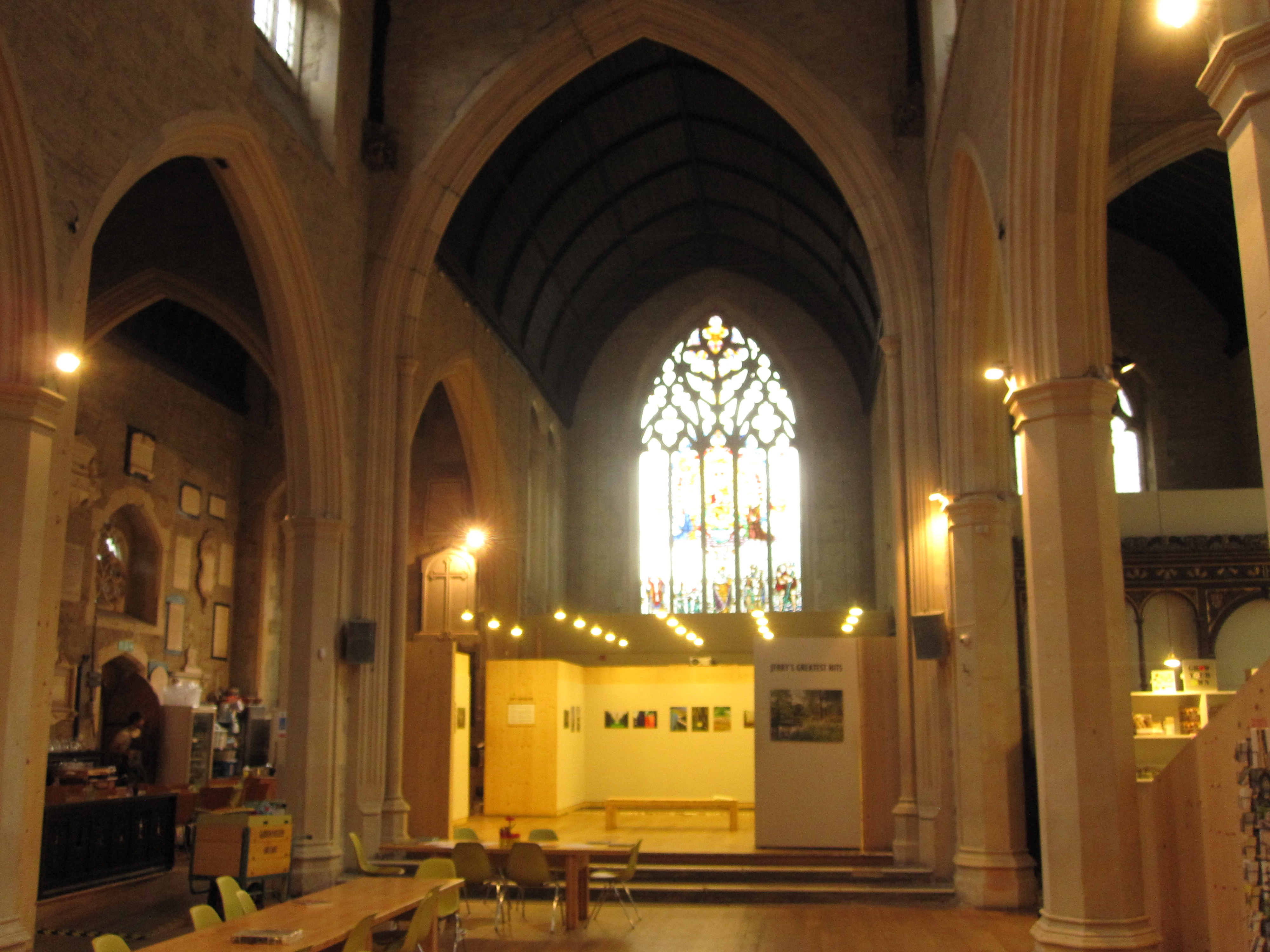
The Garden Museum is based in the deconsecrated parish church of St Mary-at-Lambeth. Photo by Mike Glaeser.


Before it was the Garden Museum, the building on Lambeth Road where Elizabeth Boleyn was buried was the Church of St. Mary’s. The church was abandoned in the 1970s, and sponsors moved forward to transform it into a museum. One person who was buried beneath its floor was John Tradescant, a famous gardener of the early 17th century. Before Tradescant lived and died, the church was the chosen resting place for some of the Howards.  It was very near to the family’s manor house of Lambeth. A memorial plaque, now lost, honored Thomas Howard and his wife, Agnes, Elizabeth’s parents. At least one of her sisters rested beside her.


Even more significantly, Elizabeth did not die at Hever, her husband at her side.  Seriously ill, she left Kent and traveled to London. Elizabeth Boleyn spent her final days in the home of Hugh Farringdon, the abbot of Reading, near Baynard’s Castle, not far from Lambeth.


Who was the abbot of Reading? Born Hugh Cook, he was a Cluniac monk who took the name of Farringdon and became abbot in 1520. Reading was one of the wealthiest abbeys in England. King Henry was the abbot’s guest in January 1521, and Farringdon later became a royal chaplain. The abbot took the king’s side during the Great Divorce, signing the Articles of Faith that acknowledged the supremacy of Henry VIII over the pope. In 1532, the king gave the abbot a New Year’s gift of twenty pounds.


Reading Abbey


It seems probable that Abbot Farringdon was known to Queen Anne Boleyn, and thus to her mother. Perhaps some sort of friendship sprang up between them and, for whatever reason, Elizabeth Boleyn turned to him when she was dying.


Certainly the other members of the Boleyn family would not have turned to a monk in their final days. Anne Boleyn, her brother and her father were all fervent supporters of church reform. The tenets of such reform were a direct connection to God in faith, without the intercession of priests, monks, and abbots. But did Elizabeth in her heart agree with this? It is possible that she did not find comfort in the church that her onetime son-in-law had created.


There is a final chapter in the life of Abbot Farringdon, and not a pretty one. Although he had conformed to the king’s will for years—unlike other monks and abbots and friars who chose martyrdom—in 1539, just after his abbey had closed, he was charged with high treason. The abbot was accused of giving money to the rebels of the Pilgrimage of Grace. This rebellion took place in 1536 and 1537, and it is inexplicable why no steps were taken against him for so long a period afterward.


Abbot Farringdon was entitled to be tried by Parliament but his death sentence was passed before trial began, by order of Thomas Cromwell. On November 14, 1539, Hugh Cook Farringdon was hanged, drawn and quartered before the gatehouse of his own abbey.

So ended the life of Elizabeth Boleyn’s friend, yet another victim in the brutal and capricious reign of Henry VIII.


------------------------------------------------------------------

Nancy Bilyeau is the author of 'Dreamland' and 'The Ghost of Madison Avenue,' set in Gilded Age New York. She is also the author of a trilogy of novels set during the reign of Henry VIII: 'The Crown,' 'The Chalice' and 'The Tapestry,' published by Simon & Schuster in North America, Orion in the United Kingdom, and seven foreign countries. 

Her novel 'The Blue' is a thriller set in the 18th century world of art and porcelain.