Showing posts with label Elizabeth I. Show all posts

Saturday, November 22, 2025

Tudor History Podcasts: Hits and Misses on Elizabeth I

History Podcasts on the Tudors   

My Substack about these podcasts got such an enthusiastic response, I wanted to share that section here on my author website blog.


After enjoying two episodes from different podcasts on Henry VIII in recent weeks, I was excited to see that the long-running podcast The Rest Is History was releasing a series of episodes devoted to Elizabeth I. I’ve enjoyed the witty and erudite talks by Tom Holland and Dominic Sandbrook, especially their mini seasons devoted to Lord Byron and the French Revolution. 


This is why I was dismayed to hear so many mistakes and misinterpretations in “Elizabeth I: The Fall of the Axe,” the episode about her parents. After beginning reasonably well on the background of Henry VIII and his first marriage, I’m told that Elizabeth I’s mother, Anne Boleyn, “was not even really an aristocrat.” 

Oh?

She was the granddaughter of the Duke of Norfolk and spent her childhood and teenage years as a maid of honour at the courts of Brussels and Paris, two of the most prestigious in Europe. No other Englishwoman in the early 16th century had such a heady start. 

We’re also told that Anne’s father, Thomas Boleyn, was a country squire who loved horses, akin to Major Ferguson, Sarah Ferguson’s father.
 
What?

Boleyn, proficient in Latin and French, was England’s ambassador to France, nothing like the “galloping major.”

 Things got worse. They say Anne Boleyn miscarried of nearly a full-term son in 1534, Henry VIII formed a liaison with Jane Seymour in 1534, and Henry Norris, executed for adultery with Anne in 1536, defended her on the scaffold. The historical record does not support any of these “facts.” 

 What makes it so baffling is that in the YouTube version, you can see the men reading from notes. Where on earth did they get these notes? It’s not as if the life of Anne Boleyn is obscure! The Tudors and The Other Boleyn Girl get more history right than this. I’m baffled. 


 Nonfiction Book to the Rescue 

I don’t think I will be listening to the rest of The Rest of History’s episodes on Elizabeth I. Which is a shame, because it feels like these days historians are putting the Late Elizabethan court under greater scrutiny than the usual “Armada-Shakespeare-James I Succession” golden haze.

 Five years ago, I was drawn to the end of Elizabeth’s reign and wrote “Elizabeth I: The Final Days of the Great Queen” for English Historical Fiction Authors. When researching it, I felt like Elizabeth’s naming of her successor, the Scottish king who was her first cousin twice removed, carried the whiff of the apocryphal. Supposedly, while dying and unable to speak, she pointed to her head when James’ name was spoken.  But I wasn't aware of anyone challenging it. Until now.

 I have just finished reading a full-length book that delves deeply into this fascinating subject: The Stolen Crown: Treachery, Deceit and the Death of the Tudor Dynasty. The author is Tracy Borman, Chief Historian for Historic Royal Palaces, the charity that manages Hampton Court Palace, the Tower of London, Kensington Palace, Kew Palace, and more. Borman’s research makes a strong case that Elizabeth I never named James; instead, Elizabeth’s closest counselors engaged in a dangerous conspiracy with James, up in Scotland, to smooth the way for him to succeed. Years after he took the English throne, James was so sensitive on this subject that he pressured William Camden, writing a book about Elizabeth I, to distort the tale of the succession sequence. Borman reports that examining Camden’s handwritten manuscript proves that key passages were pasted over and rewritten to make James I look better. 

 James I is very much a mixed bag. Undeniably intelligent, he was obsessed with a fear of witchcraft and personally wrote Demonology, a treatise meant to justify witch trials and executions. Elizabeth’s councillors were taken aback to realize that, unlike the last Tudor monarch, he was not interested in hands-on running of the country or financing world explorers. When not ranting about witches, he wanted to go hunting and have affairs with beautiful young men. The miniseries Mary & George depicts an ambitious woman from a second-rate gentry family, played memorably by Julianne Moore, scheming to get her handsome son, played by Nicholas Galitzine, into the bed of the new King of England. 

One bone I have to pick with Borman’s book is the title. James “stole” it from…who? He had no serious competition for the English throne. That's one of the chief reasons the Tudors were followed by the Stuarts. His tragic first cousin, Arabella Stuart, seems to have struggled with severe emotional problems and behaved erratically, Borman writes. Other relatives with a strain of Tudor or Plantagenet blood were not persuasive candidates. He was the strongest in a weak field. 

While she took great pains not to name him officially, Elizabeth maintained a steady correspondence with young James, giving him a “master class in monarchy” that, in a pique of misogyny, he ignored his whole reign, Borman writes. James didn’t want to work with Parliament or create a majestic presence that the public could admire, as the Virgin Queen had done. Instead, he was obsessed with the “divine right of kings,” a concept unconnected to leadership, which he unfortunately instilled in his son, the future headless Charles I. 

The Stuart father and son’s conviction that God had put them on a higher plane than mere mortals didn’t go down well in the 17th century. Today, reading about disgraced Andrew Windsor-Mountbatten’s demand that he be given a cook, housekeeper, gardener, and a butler before agreeing to hide himself away on the vast Sandringham estate, you have to wonder what delusions of innate superiority are still being inculcated by the royal family. Can a more severe punishment be imposed on Andrew? This isn’t the 15th century, when Edward IV could order his brother, the duke of Clarence, to be drowned in a barrel of Malmsey. As Tina Brown pointed out in The Interview, released yesterday, it’s risky to make Andrew and Fergie’s lives so horrible that they have nothing left but to sell their secrets...

---------------------------------------------------------------------------------------------------------------------

If you want to read more of my reviews of historical podcasts and nonfiction as well as historical fiction, subscribe to my new, free substack, "History, Horror & Headlines."


Sunday, October 28, 2018

Mary, Queen of Scots' Castle Prison, Rediscovered

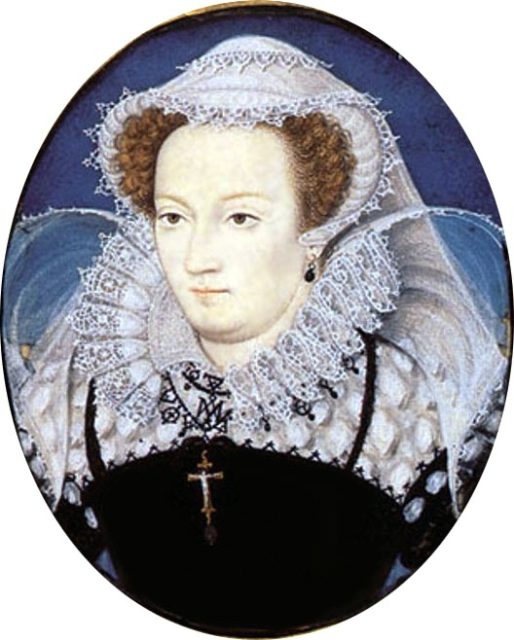
Queen Elizabeth I kept her cousin, Mary, Queen of Scots, a prisoner in England for almost 20 years before finally ordering her execution in 1587.

The physical and psychological toll that years of imprisonment took on Mary are well known; the entire time she furiously protested that as an anointed queen of Scotland, she was not a subject of England and should be freed.

Mary in captivity, by Nicholas Hilliard, c. 1578.

Now, thanks to an ambitious excavation and research project launched in the late summer of 2018, a virtual model has been created of one of Queen Mary's castle prisons in the 1500s.

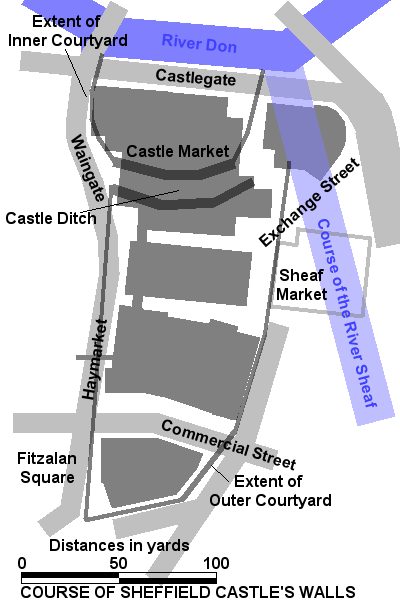
Viewing it brings into focus Mary's daily existence as Elizabeth's rival and enemy for 14 years at Sheffield Castle, once one of northern England's most impressive castles but destroyed by Oliver Cromwell's parliamentarians in 1646.

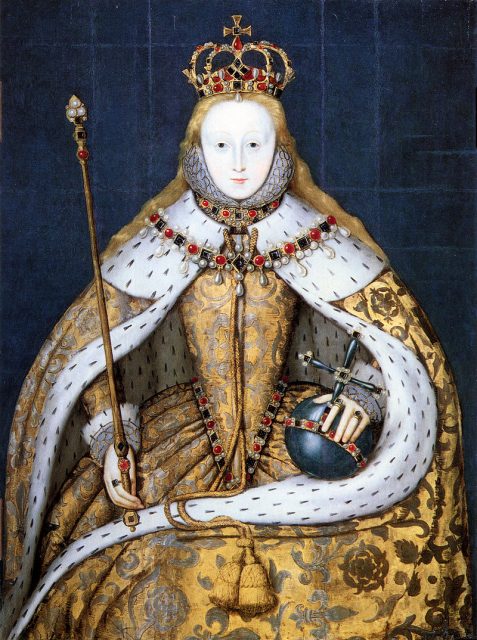
Elizabeth I in her coronation robes, patterned with Tudor roses and trimmed with ermine

Ron Clayton, of the Friends of Sheffield Castle group, told The Guardian in August he was delighted that work finally got underway. “In its day, Sheffield castle overlooked the village of Sheffield. This has seen the thunder of war, the rattle of the drum, the blast of the cannon; people have been killed fighting to take possession of this castle,” he said.

“It’s a great day,” Clayton said. “This is going to give Sheffield a whole new identity in the 21st century.”

The new virtual model was developed by creative agency Human and by computer scientists from the University of Sheffield.

Sheffield ruins


Professor Dawn Hadley told the BBC: “Sheffield Castle was almost completely destroyed during the English Civil War and most of what does remain of its original structure has been hidden away from the public for hundreds of years.”

The large castle's remains were covered by an indoor market in the 1960s, but it closed five years ago.

The plan of Sheffield Castle in relation to current buildings. Photo by Gregory Deryckère CC BY 2.5

Professor Hadley said, “The castle and its history are largely unknown. But now we hope that with the creation of this augmented reality experience people will be able to see the castle in all of its glory and learn more about its fascinating history.”
 
Mary, Queen of Scots was confined at Sheffield Castle between 1570 and 1584, as the “guest” of one of Elizabeth's leading noblemen, the Earl of Shrewsbury.

During that period, Mary was waited on by her ladies, gentlemen, and servants and insisted on a cloth of state being mounted. It is clear that her imprisonment, all things considered, was a comparatively comfortable one.

Mary was driven out of her kingdom by an army led by her disaffected Scottish nobles.

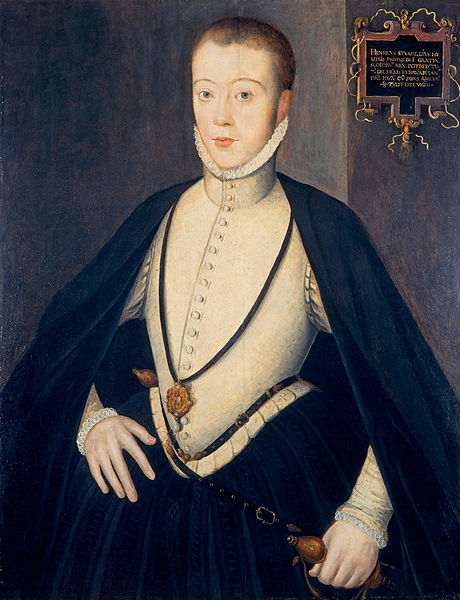
She was accused of having been part of the murder conspiracy to eliminate her second husband, Henry, Lord Darnley. Some of the nobles who accused her had in reality been deeply involved in the murder of the widely hated Darnley, the father of James VI of Scotland and eventual James I of England. Mary's involvement in her husband's death has been hotly debated for centuries. His house was blown up with gunpowder, and he was found, strangled, near the smoking ruin.

Lord Darnley
            

Mary's hasty marriage to her third husband, the swaggering Earl of Bothwell, definitely one of the circle who killed Darnley, did nothing to support her claim of innocence.

After losing a battle in 1568, Mary decided to go south to seek support from her cousin, Elizabeth, in retaking Scotland. But to Protestant Elizabeth, the Catholic Mary had long been a focus of disaffected Catholics in her own kingdom, and she was reluctant to put her back on the throne.

Instead, Elizabeth cut a deal with the nobles and supported the reign of the very young James.
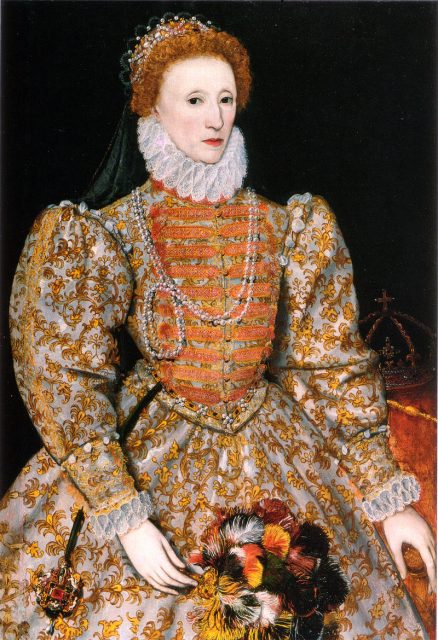
The Darnley Portrait
                =

Plots were bubbling for years aimed at freeing Mary from Sheffield, with some of them ousting Elizabeth and putting Mary on the English throne. The Earl of Shrewsbury was often berated by Elizabeth for lax security measures, while he protested he did his best.

During her years at Sheffield, Mary's health deteriorated, caused by lack of exercise due to escape fears and the damp environment inside the castle walls. The queen suffered from severe rheumatism, arthritis, and “dropsy.”
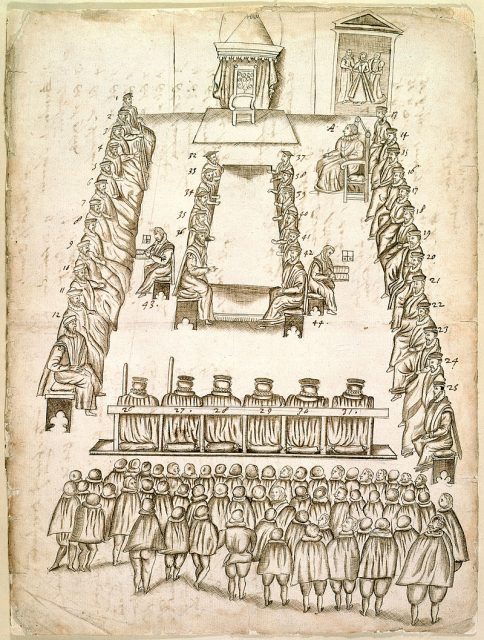
Drawing of the trial of Mary, Queen of Scots, October 14–15, 1586.[/caption]

The Earl of Shrewsbury's high-tempered wife, Bess of Hardwick, volleyed between being friends with Mary, and joining her for daily gossip and embroidery, and accusing her husband of having an affair with the still-beautiful queen of Scotland. Such accusations were denied by both parties. As treasonous suspicions darkened around Mary, she was removed from Sheffield for castles with stricter security, and harsher jailers as well.

After a trial during which she claimed innocence, Mary was executed at Fotheringay Castle. The nervous headsman required three blows of the ax to sever her head. For a number of minutes, her lips still moved, traumatizing the noblemen who witnessed her death, including the earl of Shrewsbury, who burst into tears.

It is a death that centuries later affects us still. 

-----------------------------------------------------------------
Nancy Bilyeau is the author of a trilogy set in Tudor England, The Crown, The Chalice, and The Tapestry, available in nine countries.

Her new historical novel, The Blue, is a thriller set in the 18th century world of art and porcelain.
 

Saturday, May 19, 2018

Earl of Sussex: "Right trustie and right well beloved cousin"


With Prince Harry and Meghan Markle taking the titles of Duke and Duchess of Sussex, it made me think of a person who bore the title of Sussex and played a crucial part in the life of Elizabeth I.

His name was Thomas Radclyffe, and he was the third Earl of Sussex.


Throughout her whole life, Elizabeth turned to and trusted the relatives on the side of her mother, Anne Boleyn. Thomas Radclyffe was part of the Howard clan. Anne Boleyn's mother. Elizabeth Howard, was his aunt. 

Although Sussex signed the document agreeing to the accession of Lady Jane Grey, which was what Edward VI wanted, he was one of the courtiers who broke away early on and rode to the camp of Princess Mary, Henry VIII's oldest daughter, to offer her support in taking the throne. Mary made him her commander-in-chief during the time when it looked as if she would have to wage a battle. Sussex had Catholic sympathies and Mary's efforts to return the country to the Old Religion must have appealed.

Sussex, at that point 28 years old, became an important councilor to Mary after she'd officially ousted Jane Grey. But it was after the Wyatt Rebellion, when those who opposed Mary's marriage to the Catholic Prince Philip, that Sussex's loyalty to his cousin Elizabeth became clear as well. Elizabeth was arrested under suspicion of conspiring against Mary, and a deputation of lords that included Sussex came to take Princess Elizabeth to the Tower of London on Saturday, March 17.

Elizabeth protested being taken to the Tower, asking to see the Queen, her half-sister. She was told no. She then asked to write a letter to the Queen and that too was refused. Elizabeth was by all accounts very upset. 

But it was at that point Sussex came forward. 

Sussex fell to his knees before Elizabeth and said, "You shall have liberty to write your mind and, as I am a true man, I will deliver your letter to the Queen and beg an answer, whatsoever comes there of."

Elizabeth wrote a pleading, eloquent letter, protesting her innocence, which Sussex then took to Queen Mary. She was enraged that Elizabeth was allowed to write to her and said, "Such a thing would never have been allowed in my father's time!"

Elizabeth survived her ordeal in the Tower, when she came closest to execution than any other time in her life, and it was in part due to the intervention of Sussex. There was no hard evidence against Elizabeth, and a leading nobleman in the realm being willing to risk the Queen's wrath to support her sister may well have slowed down the movement to proceed against Elizabeth.

Sussex continued to support her throughout Mary's reign, and when Elizabeth I became Queen in 1558, he was one of her most important courtiers. Sussex always distrusted Robert Dudley, earl of Leicester, but even though he vigorously opposed her marrying Dudley and criticized him at every turn, Elizabeth never punished him for it.

In her letters to him, Elizabeth addressed Sussex in a 1570 letter as her "right trustie and right well beloved cousin," and he was a key councilor for the rest of his life.

Sussex is without a doubt an admirable title.

Sunday, April 10, 2016

Henry VII and the Danger of Prophecy

By Nancy Bilyeau

The Yorkists were a hard-headed lot, basing their right to rule on bloodline. When their last king, Richard Plantagenet, was slain at the Battle of Bosworth on August 22, 1485, his devastated Yorkist supporters--as well as the rest of the country--waited to hear what claim to the throne the victor, Henry Tudor, earl of Richmond, would put forth.

It was a delicate question.


Henry VII
Tudor was the leader of the Lancastrian house, but strictly by default. Stronger claimants had been mown down a while ago. Yes, he'd won the crown in battle but there were laws in England. To hold the crown, he'd have to convince everyone he was the legitimate king. Tudor's father, Edmund, had not a drop of English royal blood; he was the son of French Queen Dowager Katherine of Valois and her Welsh servant, Owen Tudor. (And so half-brother to the last Lancaster king, Henry VI.) Through his mother, Margaret Beaufort, Henry Tudor had a stronger claim, as she was in direct descent from Edward III, but the Beauforts were barred from the succession.

We can imagine there was a certain level of suspense as the country waited. Most assumed that the newly declared Henry VII would swiftly marry Elizabeth of York, oldest living child of the dead Edward IV, and attach his weak claim to her greater one. But he did not marry her right away--it was important to him to claim the right to rule on his own.

When he invaded England with French-financed troops, Tudor had marched through his family stronghold of Wales, gaining support and men, under the banner of the red dragon: the battle standard of King Arthur and other Celtic leaders. Now it was announced that Henry Tudor was descended from Arthur himself through Cadwaladr and the Welsh chieftains who were ancestors of Owen Tudor. Genealogists had confirmed this, the skeptical court was informed. Henry's ascension was the fulfillment of prophecy.

Despite such grandiose claims, Henry married Elizabeth of York. But he did not drop the Arthur business. Far from it: He insisted that his first child be born in Winchester, sometimes identified as Camelot in legend. And when that baby boy was born, he was named...Arthur.


Le Morte D'Arthur
What could not be accidental is that in 1485 something else happened in England besides Bosworth. The first printing of Le Morte d'Arthur appeared, a compilation of tales by Sir Thomas Malory of Arthur and Guinevere, Launcelot, Mordred, and the magician Merlin. The tales were so popular, they were reprinted.
Henry VII would not be the first ruler to seize on the romance of Camelot to bolster his regime.  But the direct connection of his legal claim to rule England to a work of mythic entertainment is bold indeed. It was as if, in 1977, the year  "Star Wars" hit theaters, a president appeared who announced himself descended from Luke Skywalker.

But there was a darker element to this claim to Camelot. In legitimizing a mystical prophecy, Henry VII was unleashing a certain kind of power that would reach across the entire 16th century and into the 17th, bedeviling his great-great-grandson. Rebels against various Tudor regimes would repeatedly use their own prophecies to rally support. They effectively co-opted Henry VII's modus operandi, down to the symbolic banners. A frustrated Henry VIII sought to ban prophecy from his kingdom after he was nearly engulfed by seers, witches, and necromancers spouting predictions, many of them derived, allegedly, from Merlin and yet coded and obscure, open to many interpretations. The prophecy whispered in the 1530s was "When the cow doth ride the bull, Then, priest, beware of thy skull." To those obsessed with wizards' predictions, this "ancient" bit of wisdom foretold the rise of Anne Boleyn ("the cow"), whose domination of Henry VIII ("the bull") spelled doom for the Catholic priests.

The Pilgrimage of Grace, and its many banners
"The craving to gaze into the future arises naturally in times of great danger and distress," said Madeleine Hope Dodds in the paper "Political Prophecies in the Reign of Henry VIII." It would be hard to imagine more distress caused than the Reformation and Dissolution of the Monasteries. Some of the rebels who rose up in the Pilgrimage of Grace spouted the "wisdom" of Merlin to lead them. Henry VIII was certain it played a part in the rebellion. In the same letter in which he ordered the Duke of Norfolk "you must cause such dreadful execution upon a good number of inhabitants, hanging them on trees, quartering them, and setting their heads and quarters in every town, as shall be a fearful warning," he commanded the duke "send to us the Witch of York."

Again and again, strange prophecies emerged in times of political distress in the Tudor era. After a young nobleman named Anthony Babington was arrested for a treasonous conspiracy to murder Elizabeth I and replace her with Mary Queen of Scots, a book of Merlin prophecies was found in Babington's London home.


John Dee and Edward Kelley
More than any other Tudor ruler since Henry VII, Elizabeth tried to harness prophecy, to understand it through her consultations with Dr. John Dee and his colleague, the bizarre necromancer Edward Kelley. She is the hard-headed queen, the ruler who said she had no desire for a "window into men's souls." However, she picked her coronation date based on what Dr. Dee told her to do.

It is with James VI that the brew of prophecy and the occult overflows. James was a Stuart king of Scotland, but part Tudor too, descended through both his parents--Mary Queen of Scots and Henry, Lord Darnley--from Margaret Tudor, the oldest daughter of Henry VII. 

Scotland was already a place uneasy with such fears before James VI was born. The Act of 1563 forbade anyone to use witchcraft, sorcery or necromancy or to claim any of its powers, the penalty for both witch and client being death.


James VI overseeing witch trials

As a young man, James VI became convinced that witches were trying to kill him, specifically creating storms to drown him and his bride, Anne of Denmark, as he tried to bring her to Scotland. Afterward he oversaw witch trials, ordering torture of suspects, that led to a flurry of executions. In 1597 James personally wrote an 80-page book called Daemonologie expounding on his views on the dangers of sorcery and magic. Shakespeare drew from it when writing Macbeth, considered by many a tribute to King James, with its three witches spouting eerie prophecy that would change men's destinies.


The witches in 2015 film of  Macbeth

In the speeches of the witches of Macbeth, the ideas of both King James VI and Henry VII can be seen. One witch is angry at the wife of a sailor and her friend says, "I'll give thee a wind." But the most damage they do is telling Macbeth his future: All hail, Macbeth, thou shalt be king hereafter!

His entire life, James VI was tormented by fears of a violent death. He waited for "something wicked this way comes." In the end he died in his bed, the king of England and Scotland. But fears of prophecy and of witchcraft, which he'd done so much to whip into a frenzy, did not die with him; instead, the frenzy led to the deaths of more English victims, and traveled to America with the Puritan settlers, before finally loosening their hold.

-------------------------------------------------------------


Nancy Bilyeau is the author of the historical mystery trilogy The Crown, The Chalice, and The Tapestry, set in Tudor England and published in nine countries. The Crown was an Oprah pick for 2012 and was shortlisted for the Crime Writers' Association's Ellis Peters Historical Dagger Award.


For the month of June, The Crown is discounted 70 perecent on amazon and Barnes & Noble. Go here.

Anne of Cleves is a character in The Chalice and the third book in the trilogy, The Tapestry, which was published by Simon & Schuster in March 2015. The Tapestry is a finalist for the RWA Daphne du Maurier award for Best Historical Romantic Suspense.


Sunday, December 13, 2015

When January 1st Wasn't the First Day of the Year

By Nancy Bilyeau


In less than two weeks it will be the first day of 2019. Time to hang your freshly bought calendars and write a new year on your checks.
         But strange as it may seem, January 1st did not always signal the beginning of a new calendar year. Up to 1752, the two were separate things in England and its colonies. Until that point, people began each calendar year on March 25, which was Annunciation Day—or Lady Day. This was the day the Angel Gabriel appeared to the Virgin Mary to deliver the news that she had conceived and would give birth to Jesus in nine months.
         
        
It took an 18th century act of Parliament for England to officially begin each new calendar year on January 1st. The centuries of discrepancy cause lots of headaches for historians and genealogists. There’s no question that it’s strange, not least because England lagged behind much of the rest of Western Europe. Why did this Protestant nation cling to Annunciation Day—by its very definition a day revolving around the Virgin—as the time to change the calendar when most Catholic countries had already shifted to January 1st in the 16th century or 17th century?


         The reason for the January 1st controversy has a lot to do with England’s refusal to take orders from a pope after Henry VIII’s break from Rome in the 1530s. It was Pope Gregory XIII who replaced Julius Caesar’s calendar, devised in 45 BC, with a new one in 1582—and it’s the Gregorian calendar we all use today.  Reform was unquestionably needed. There were too many days in the year; the equinoxes were out of whack; the Julian calendar had strayed 10 days from the solar calendar.

         Among other things, the pope’s new calendar established that each calendar year begin on January 1st. Once it was issued, Italy, Spain and Portugal instantly adopted the Gregorian calendar, followed by France and the other Catholic countries of Europe. But England, Germany and the Netherlands refused. So for centuries, there were two calendars in Western Europe. It wasn't a strictly religious-led decision either. In Protestant Scotland, they changed to the Gregorian calendar in 1600. But England stubbornly refused.


         The first step to understanding this furor is to realize that Pope Gregory XIII was not simply someone who cared about calendars. Born in Bologna as Ugo Buoncompagno, he was a transitional pope. Certainly not as venal and corrupt as the Borgias a century earlier, he was a gifted teacher and administrative talent who nonetheless had an illegitimate son before marrying and really liked to spend money. 

         Once he became Gregory XIII, he spent huge sums on not only Catholic colleges but also displays such as the Gregorian Chapel in St. Peter’s. To pay for all this, he resorted to papal confiscation. Most relevant to our story, he supported the overthrow of Henry VIII’s Protestant daughter with Queen Anne Boleyn, Elizabeth I.


         Gregory’s predecessor, Pope Pius V, had already excommunicated Elizabeth and declared her a usurper in 1570. During his papal office, Gregory put intense pressure on the Spanish king, Philip II, to invade and dethrone England’s queen. Gregory personally financed an armed force of 800 men to land in Ireland to join a Catholic rebellion against Elizabeth (it fizzled). Moreover, a Jesuit led the papal commission to devise the Gregorian calendar—and the Jesuits were the religious order specifically created to fight the Protestant Reformation. This all fueled Elizabethan England’s refusal to accept anything that originated in the Vatican.

         The fierce clashes between Catholic and Protestant in the 16th century are the tumultuous background of my historical thrillers. The heroine of my novels, The Crown, The Chalice, and The Tapestry, is a novice in the Dominican Order at Dartford Priory, outside London. But it’s not just the Christian splintering in early modern Europe that fascinates me. I also love studying what came long before the Renaissance.

         One October, as Halloween approached, I researched the roots of the holiday’s celebration in Tudor England and made some discoveries. I learned that the roots of Halloween reach back to the Dark Ages Celtic festival of Samhain (“summer’s end”), when people lit bonfires and put on costumes to scare away the spirits of the unfriendly dead. All-Hallows-Even, which was shortened to “Halloween” in the 16th century, was a complex blend of Celtic and Catholic customs. After all, the holiday was the run-up to All Saints’ Day on November 1st, an occasion to venerate all the Catholic martyrs. Not surprisingly, the Protestant Reformers took a dim view of Halloween, but its popularity was so great that they were unable to stamp it out.

         My  blog post on Halloween (http://englishhistoryauthors.blogspot.com/2011/10/truth-about-halloween-and-tudor-england.html) stirred up so much attention that it made me want to keep reading about the distant and complex roots of what we celebrate today.

         I began thinking about the origins of Christmas and New Year’s Day the morning of December 20th one year, when I stood outside my apartment building with my son, waiting for his school bus to arrive. Although it was 7:15 a.m., dawn had barely broken; the Christmas lights that the superintendent had strung over the bushes glowed yellow in the purplish-gray light. A hazy fullness hung in the air—and it seemed to carry a strange potency. Almost like something magical. I had no idea as I stood there that what I sensed would connect to January 1st and the fascinating furor over when to begin the calendar year.


         I snapped a photo and posted it on my Facebook page, along with sharing a description of the strange feeling all around me. A high school friend, D.K. Carlson, offered an explanation: “The solstice is almost here.” It made me shiver to think it was the power of the winter solstice that touched me that morning: the approach of the shortest day of the year, the moment when the earth is in a point of its orbit farthest away from the sun. I find it very interesting that Julius Caesar established December 25th as the date of the winter solstice. It was—you guessed it—Pope Gregory XIII who made the adjustment to December 21st.

         Long before the time of Julius Caesar, man honored the solstice. Bronze Age archaeologists have uncovered symbols and signs that reveal awareness of the shortest day of the year. The monuments of Stonehenge and Newgrange in Ireland are believed to have solstice alignments. In 2000 BC, people may have gathered at Stonehenge in mid-December to pray for the sun to return again, the source of all life.
        

         Again and again, in many societies and religions, the solstice has great meaning. For the Druids, it was Alban Arthuan, the Light of Winter. As part of the celebration, priests cut the mistletoe that grew on winter oaks and blessed it. Germanic pagans launched the tradition of burning the Yule log and decorating a home with clippings of evergreen trees.

         In Rome, not surprisingly, the celebrations became more debauched. Saturnalia, which took place in mid-December, ran the gamut from heavy drinking to gambling to reversing society norms, with masters waiting on slaves. Lighting candles was very important. So was the tradition of children going house to house, offering small gifts, such as wrapped fruit, in exchange for other tokens.

Saturnalia was so popular that not even the Fall of Rome could kill it. It morphed into the Feast of Fools, celebrated from the Fifth Century until the Renaissance in much of Western Europe on January 1st. The servants became the masters, with a lower-echelon “Lord of Misrule” chosen to preside over all drunken festivities beginning in late December and concluding on the first of January.
  
         Not surprisingly, the early Catholic Church did not look kindly on the parties--stimulated by the winter solstice--that marked January 1st. The church leaders didn’t want something as important as beginning a new year to take place on that same day. In 567 AD, a Council of Tours decreed that the first of January was abolished and the blameless Annunciation Day was chosen. It took a while for this to be accepted, but by medieval times, people in England looked on March 25th as the beginning of the year. And this tradition stuck through the Plantagenets, the Tudors, the Stuarts, and into the time of the Hanoverians.


         Until finally, in 1751, in the reign of George II, England—and its colonies in the Americas—gave in and made the change, moving from the Julian Calendar to the Gregorian. Parliament passed An Act for Regulating the Commencement of the Year; and for Correcting the Calendar now in Use. To make this work, 16 days were dropped from 1751, and January 1, 1752 was officially deemed the beginning of the year.

----------------------------------------------------------------------------------
 Nancy Bilyeau is the author of the new bestselling historical thriller The Blue, a spy story set in the art and porcelain worlds of the 18th century.

Tuesday, August 4, 2015

Stalwarts & Spies: The Throckmortons and the Dawn of the English Catholic

By Nancy Bilyeau


Coughton Court, home of the Throckmortons


Late one November night in 1583, a group of “gentlemen of no mean credit and reputation”—in other words, agents working for Sir Francis Walsingham, secretary to Queen Elizabeth I—banged on the door of a London house. Their sudden arrival threw the occupant of the house into a panic. His name was Sir Francis Throckmorton and he was at that very moment upstairs, using a cipher to disguise his letter to the woman who posed a mortal threat to Elizabeth: Mary, Queen of Scots, her second cousin. Deposed from her own throne in 1567, Mary was being held in genteel confinement in an English manor house, the object of a series of rescue attempts. Walsingham, the spymaster, worked tirelessly to thwart all of them.


Highly incriminating letters and papers were found during their search. Throckmorton, 29 years old, a devout Catholic, had composed a list of other Catholic gentlemen and nobles who could be counted on to rise up against their Protestant queen, Elizabeth, when the time came for a coup and replace her with Mary. He also wrote a list of ports and harbors ideal for an invasion by a French army led by the Duke of Guise, Mary’s relative. 


The  young Mary Queen of Scots, from a drawing made in France
At first Throckmorton denied everything, claiming the papers were planted. But under torture in the Tower of London, he admitted to being the central player in a conspiracy between certain Englishmen (including his brother), the Spanish ambassador, and the Duke of Guise. It has gone down in history as the Throckmorton Plot. 


A portrait that has been attributed to Sir Francis Throckmorton


This was not the last time the name “Throckmorton” surfaced in a plot against a Protestant English ruler. In 1605, a servant to Robert Catesby, a key conspirator in the Gunpowder Plot and the son of Anne Throckmorton, rode directly to the Throckmorton estate, Coughton Court, to tell a group of Catholics, including two Jesuit priests, of Guy Fawkes’ arrest in the plan to blow up King James I and his Parliament. He said those Fawkes plotted with were now running for their lives.

These failed English conspiracies in support of Mary Queen of Scots (ranging from the fourth Duke of Norfolk’s efforts to marry the Scottish queen to Anthony Babington’s plot to murder Elizabeth), along with the infamous Gunpowder Plot, formed a strong impression in some minds that Catholics were conspiratorial and dangerous, controlled by France, Spain and, of course, the Pope. These fears hardened into bigotry throughout the 17th century. The despicable Titus Oates, who fabricated the “Popish plot” against Charles II and brought about at least 15 executions, wouldn’t have been possible without the Gunpowder Plot. Moreover, the Glorious Revolution and the arrival of the Hanovers—the direction the country took that leads us to today—were born, in large part, from fear of what James II, a Catholic king, would do. Those fears originated in the 16th century.


Before Sir Francis Throckmorton plunged into violent plotting, his family had made a far different sort of impact in England, one of service to the crown and country. To best understand the Throckmortons, who’ve popped up in so many interesting times and places in the reigns of the Tudors and Stuarts, we must take a closer look at the patriarch, Sir George Throckmorton, Sir Francis’s grandfather, a strong-minded man who had a blunt conversation with Henry VIII and Thomas Cromwell that is well known even today.

George Throckmorton was born in 1489, two years before Henry VIII, the king who was to wreak such havoc in his life. His father, Robert Throckmorton, was a landowner, soldier and a courtier who did well under the new Tudor regime. Coughton Court was already in Throckmorton possession. In 1501, George married an heiress, Katherine Vaux. They had, incredibly, 19 children, including seven sons who lived to adulthood. His rise in the kingdom was steady: George served the king in the French war; he was knighted in 1516; he attended the Field of Cloth of Gold; he was made a justice of the peace in Warwickshire. By 1529 he was a member of Parliament and worked for Cardinal Thomas Wolsey, alongside a lawyer who would one day make his mark: Thomas Cromwell.


The people who attended the court of Henry VIII in the late 1520s and early 1530s would be amazed, perhaps dumbfounded, by today’s adoration of Anne Boleyn. During the time that the king struggled for his divorce, most of the nobility, as well as the commons, had enormous respect for Catherine of Aragon, both for her royal status as the daughter of Isabelle and Ferdinand, and for the gracious, brave and pious manner in which she carried out her duties as queen of England.


As for Anne Boleyn, she had little support beyond members of her own family, Cromwell and Thomas Cranmer, later archbishop of Canterbury. Henry VIII insisted in his communications with the Pope that Anne was a chaste and respectable woman. Both the nobility and the common people did not see her that way. According to Edward Hall in his contemporary History of England, “Surely the most of the lay people of England, which knew not the law of God, sore murmured at the matter and much the more, because there was a gentlewoman in the court called Anne Boleyn.” There were murmurings, a few shouts in the street as the king passed by, but of course most people were too afraid to tell the king what they thought of his intended new marriage.

Until George Throckmorton.

It was the royal divorce that changed everything for him. From the beginning, Throckmorton was known to be someone who did not support the king’s wish to rid himself of his first wife. Throckmorton was respected in Parliament. His views carried weight. Cromwell, 
who had replaced Wolsey as chief royal councilor, was busy crafting legislation intended to weaken the Pope’s control of England and, step by step, make Henry VIII the supreme head of the Church of England. Throckmorton attempted to block that legislation.

In 1532, the king summoned Throckmorton to an audience with himself and Thomas Cromwell. There he was asked to support the divorce. As Throckmorton himself recalled in a later document, “I told Your Grace I feared if ye did marry Queen Anne, your conscience would be more troubled at length, for it is thought that ye have meddled with the mother and the sister.”

The king answered, “Never with the mother.” Which is almost certainly true; the rumors that Henry VIII slept with Elizabeth Boleyn were scurrilous.

Cromwell jumped in to say, “Nor never with the sister either, and therefore put that thought out of your mind.” This is most certainly not true. Henry VIII had an affair of some duration with Mary Boleyn.

Although his facts were not all straight, George Throckmorton told his sovereign with all honesty that he did not believe that the sister of a discarded mistress was an appropriate queen of England and that his conscience would be troubled if Henry married Anne. He was certainly not alone. But he is the only Englishman known to have voiced this opinion to the king’s face.

While this was definitely not what Henry VIII wanted to hear, Throckmorton wasn’t punished directly. He did become distinctly less favored by the king. It’s possible Cromwell delivered a warning, for Throckmorton promised in writing to “live at home, serve God and meddle little.” With Parliament out of session, Throckmorton retreated to Coughton Court.

Queen Anne didn’t last long, beheaded on trumped-up charges of treason and adultery in 1536. Before Henry VIII had her executed, he declared his marriage to Anne Boleyn null and void, based on his “affinity” to her sister Mary. That warning by Throckmorton came to pass, although in the most cynical fashion imaginable.

If Throckmorton, along with others who had supported Catherine of Aragon and now cared deeply about the fate of Princess Mary, thought that the kingdom would return to how things used to be, they were greatly mistaken. Henry VIII didn’t return to the Catholic fold even after Anne, a religious reformer, was dead and replaced by Jane Seymour, who favored traditional ways. For one thing, the Cromwell-engineered Dissolution of the Monasteries was pouring thousands of pounds into the royal treasury. If Henry VIII returned to obedience to the Pope, he’d have to stop demolishing the abbeys, ejecting the nuns and monks, and seizing the valuables and property. That was the last thing he wanted to do.

The Pilgrimage of Grace, another 16th century turning point in defining which side you were on, took Throckmorton farther down the road of opposition to Henry VIII. It was a rebellion that sprang up in the North of England opposing the kingdom’s religious reformers, joined by men and women from every level of society. 


The king ordered his nobility and gentry to come to the aid of the Crown, bringing armed men, and Throckmorton did so with 300. Nonetheless, he was arrested in early 1537, charged with making copies of the rebels’ demands and expressing willingness to join their side. He denied disloyalty but was sent to the Tower of London. One of this sons later wrote that Throckmorton’s “foes gaped to joint his neck.” The family’s connections did all they could, including his wife’s pleas for help to her half-brother Sir William Parr (uncle of the later Queen Catherine Parr). For months, his life hung in the balance.

George Throckmorton, not interested in martyrdom, announced that he was reading the New Testament and perceived the error of his ways, his “great blindness.” It’s unclear what factor was the deciding one. But during a period in which men who were closer in blood and friendship to Henry VIII—and had committed lesser crimes—met the fate of the ax on Tower Hill, George Throckmorton was released from the Tower of London.


                               Top: The Tower of London. Above: the brilliant Sir Nicholas Throckmorton,

This time he did live at home and “meddle little,” focusing on rebuilding his spectacular home, Coughton Court.

But how he served God is less clear. Throckmorton believed in his heart in the values of the traditional Catholic. His own father, Robert Throckmorton, devoted time and sums of money to his parish church and had, most unusually for the 16th century, gone on a Pilgrimage to the Holy Land. He died in Rome on his way to Jerusalem in 1518.


Eamon Duffy is at the forefront of modern writers who argue that in the early 16th century traditional worship was not a corrupt and decaying system but a vital one. This is what the Throckmorton father and son believed. And it is the value system that George passed on to his many descendants. Until Henry VIII decided to break with Rome over a thwarted divorce, the kingdom was going in a certain direction. The king swerved onto a new path. The Throckmortons—and other families such as the Howards—kept going in the original direction.


Another possible factor in George Throckmorton’s traditional stance was sympathy for the fate of his aunt, Elizabeth. She was the abbess of a house of Poor Clares in Cambridgeshire. A woman of intellect, she exchanged letters with the famous humanist, Erasmus. After her abbey was destroyed, Elizabeth, more than 60 years old, went to live at Coughton, perhaps bringing one or two nuns with her who had nowhere else to go. She also brought a “dole-gate,” through which help was given to the local poor, and upon which her name was carved.


The practice of the Throckmortons’ “staunch” Catholic faith went in and out of fashion, depending on the Tudor ruler. After Cromwell was executed, religious traditionalists felt a little safer in England. The reign of Edward VI was so difficult that some left the country to live in exile. Mary’s reign was a brief respite. George’s seventh son, Sir John, was active in her Parliament and a witness to the queen’s will. 


During the reign of her successor, Elizabeth I, the Throckmortons fell into a defensive position again and a “priest hole” was built in Coughton Court, where priests could hide during inspections. The family became “recusants,” those who refused to attend Anglican services and paid heavy fines for it. People who could not pay the fines were imprisoned. With their money, the Throckmortons avoided that humiliation. Some became Protestants, most famously Sir Nicholas Throckmorton, a skilled courtier.


The patriarch, George Throckmorton, had died in his bed in 1552. His grandson was not so lucky.

Sir Francis Throckmorton, born in 1554, was a son of Sir John, the witness of Queen Mary’s will. Because of the increasingly cold climate for Catholics in England, he left England after receiving an Oxford education and studying law at the Inner Temple. In France he was drawn into a conspiracy against Elizabeth, aimed at her overthrow and replacement by the Scottish queen. Once returned to England, Throckmorton would coordinate with Bernardino de Mendoza, the Spanish ambassador in the English court. 


Elizabeth I

This was a time of escalating violence, as both sides took steps against the other. Pope Pius V, enraged with Elizabeth's political and financial support of Protestant factions in the Netherlands and elsewhere that threatened the Catholic powers, excommunicated the queen, calling her a "servant of crime." Jesuit priests, some of them English by birth, sneaked into England. Some of them swore it was to minister to those who wanted to continue to practice their Catholic faith. But certainly others were trying to destabilize the kingdom and make it easier to overthrow Elizabeth. In response, Walsingham strengthened his spy network. When he caught conspirators, they were often turned over for extraction of information to the Tower of London and the merciless hands of Sir Richard Topcliffe, an undoubted sadist. (See my blog post "The Rack Seldom Stood Idle/")


Sir Francis Walsingham, the queen's spymaster

When Throckmorton returned to the country of his birth, it was with a purpose that could not be more dangerous. Did the young man understand the possible consequences if he failed? We don't know--but failure arrived within the year. He came under suspicion and Walsingham had him watched for six long months, taking note of his co-conspirators, before dropping the net. As a contemporary document put it: Suspicion of Throckmorton "grew first upon secret intelligence given to the Queen's Majesty, that he was a privy conveyor and receiver of letters from the Scottish queen. Upon which information, nonetheless, divers months were suffered to pass on, before he was called to answer for the matter."

 Once he'd rolled up the Throckmorton operation, Walsingham urged action against Ambassador Mendoza, who was expelled from England. It was spycraft worthy of today's TV series Homeland.

Ironically, Sir Francis Throckmorton's treasonous action set in motion not the accession to the English throne of Mary Queen of Scots but her own arrest and death, and later war with Spain. Walsingham was able to use the Throckmorton Plot to persuade a reluctant Queen Elizabeth to authorize the Bond of Association. This was a d
ocument obliging all people who signed it to execute any person who attempted to usurp Elizabeth’s throne. The bond was used as a legal precedent to kill the Scottish queen after the failure of the Babington plot in 1586. King Philip of Spain was enraged by the ejection of his ambassador and Mendoza was not replaced. That scandal, coupled with the death of Mary Queen of Scots, pushed Philip to declare war on Elizabeth I in 1588 and set sail his armada.

Fortunately, George Throckmorton has happier legacies. His granddaughter, Muriel, married Thomas Tresham, and is the ancestress of Diana Spencer, princess of Wales. 


Another Throckmorton nun -- in the 18th century

And Coughton Court, which Sir George loved so much, is a popular place for visitors, enthralling all who see it with its Tudor history, including the spectacular turreted gatehouse built by Sir George and the “dole-hole” that Elizabeth Throckmorton brought with her after her abbey was demolished. Six hundred years after the first Throckmorton took possession, the family still lives there—and thrives.

-----------------------------------------------------------
Saturday, August 1, 2015

Edward Kelley: The Man Who Talked to Angels

By Nancy Bilyeau


In the riveting 2015 film The Witch, set in New England in 1630, it's difficult to tell what is real and what is not. But there does come a time when beings who may or may not be witches speak a strange language. It is otherworldly.

The film's director, Robert Eggers, has said that the language spoken in that section is Enochian. Which means that the work of two men born in the 16th century, John Dee and Edward Kelley, found its way into a 21st century film. In the Enochian language, script is written right to left, with a 21-letter alphabet, and was, the Tudor-era men insisted, revealed to them by angels in occult sessions.

John Dee is a famous man, a scholar and seer who advised Elizabeth I and built one of the greatest libraries of the century. Edward Kelley is a darker figure, and one more directly responsible for the Enochian texts.

Here is his story:


The Life of a Necromancer


Hrad Krivoklat
  In 1591, a lone Englishman of middle age and cropped ears, Edward Kelley, was confined in the castle of Hrad Krivoklat, built forty kilometers west of Prague in the 12th century and possessing a Gothic chapel known for its statues of the twelve apostles. Also of note was a statue of Jesus at the altar, flanked by angels with golden wings.

It was Holy Roman Emperor Rudolf II who commanded that Edward Kelley be held in this castle, which began functioning as a prison a few decades earlier. Kelley had a decision to make. He was no doubt forbidden to avail himself of the castle chapel while mulling his choice. But if he had, those winged angels might have carried special significance to him. Perhaps they would have comforted him.

Or perhaps not.

Edward Kelly, from a 19th c drawing
After months of imprisonment, Kelly was due to be released but for a single purpose. To perform magic of the lucrative kind. The emperor expected much of the man who came to Prague with the renowned John Dee in 1586. Rudolf had favored him, enriched him, spoiled him. The English commoner even held an imperial title: He was Sir Edward Kelley of Imamyi, "Baron of Bohemia," and he lived in high style in Prague.

Why did this bounty rain down on Kelly? Because Rudolf, an emotionally erratic Hapsburg obsessed with art, philosophy and magic, was convinced that Kelley possessed a secret of alchemy. There had been tantalizing glimpses of his power. However, Kelly had not come through as yet with what the emperor sought. He'd been arrested for dueling. But it was believed the true reason for his imprisonment was to force him to produce what Prague wanted to see.

While deciding what to do, Kelley reflected. This is only speculation--but might not these be the turning points that flitted through his mind:

March 1582: John Dee, scholar, astrologer, mathematician, physician, and philosopher, was in residence at his house, Mortlake, when a knock at the door produced a young man who called himself Edward Talbot, in the company of a Dee friend, Mr. Clerkson. Talbot was a name used by Edward Kelley.

John Dee
They had arrived at a prestigious address. Dee had a unique relationship with Queen Elizabeth. He was her personal astrologer--Dee selected her date of coronation--and adviser, but their meetings were discreet and their communications guarded. Courtiers at the pinnacle of her court--Robert Dudley and Christopher Hatton--also believed in Dee. But endorsement could not be open because Dee's methods skirted heresy. During the reign of Elizabeth's half-sister, Mary I, he was arrested under suspicion of casting the horoscopes of Queen Mary and Princess Elizabeth with an eye to predicting the succession. This was treason. He managed to exonerate himself, and found favor with Elizabeth but she did not financially reward him to the extent that he wished. Money worries dogged Dee for his entire life.

As for "Talbot," he was born in St. Swithin's, Worcester on August 1, 1555, according to a discovered astrological chart. Kelley may or may not have attended Oxford. He always wore his hair long or donned a monk's cowl or cap with hanging flaps to conceal the fact that his ears were missing. It was said he had been pilloried for "coining" (forging or adulterating coins) and lost his ears as punishment.


Mr. Clerkson brought Kelley to Dee because he had heard that the Queen's conjurer was in need of a new "skryer," or crystal gazer.  Such men were not uncommon. "Almost every parish, and apparently several aristocratic households, boasted a 'cunning man,' who for the price of a beer or a bed would summon spirits or tell fortunes," says The Queen's Conjurer: the Science and Magic of Dr. John Dee, Adviser to Elizabeth I.

Elizabeth I, Dee's patron
Dee had lofty motives for wanting to communicate with spirits of the other world: to elevate and unite mankind in an era of religious wars, hunger and disease. He sought to understand the universe. On his next visit to Mortlake, Kelley gave him what sounds like a winning audition. After looking into one of Dee's crystals for a quarter of an hour, Kelley said he'd made contact with an angel named Uriel, "the angel of light." Uriel had a number of messages for Dee.

Kelley was hired.


1583: A boat sailed from England, carrying Dee, Kelley and their respective families. Destination: Poland. Dee had a much younger wife named Jane and small children; Kelley had recently married a widow with children.  The trip was paid for by Albert Laski, a Polish count who came to England as an envoy to Elizabeth and was introduced to Dee and Kelley by Robert Dudley, earl of Leicester. Laski was a known dabbler in the occult, and soon spent much of his time at Mortlake.

Dee and Kelley had been focusing a tremendous amount of time on their "conferences" with angels. Kelley acted as medium, and Dee pondered the communications, which had to be decoded. The language that the various angels--Uriel was joined by Michael as well as other celestials--used was "Enochian." These were the pure words God spoke to Adam, before the Fall.  Dee sought to decode the entire language and capture the wisdom of the angels in a book.

In recent weeks, the angels, through Kelley as medium, had begun to urge Dee to leave England, at the same time that Laski was making his offer. Dee was also worried that Elizabeth's support of his work was wavering. Rumors abounded that Dee and Kelley were practicing necromancy,  which was communication with the dead. Dee did not want to clarify to anyone that it was actually angels they spoke to. Not yet. So it was time to leave England.

Dee & Kelley, raising the dead?
March 1587: Dee and Kelley, full of dread, were summoned to appear before the papal nuncio Germanico Malaspina, bishop of San Severo, in Prague, the cosmopolitan city of Bohemia.

The last four years had been difficult ones. Laski ran out of money almost the instant they arrived in Poland, and the two men and their families wandered through Central Europe, conducting their "actions" with the angels as they sought aristocratic sponsors.

They finally were given permission to present themselves in Prague, where Emperor Rudolf held court. Although Rudolf was intensely interested in magic, his court was dominated by papal and counter-Reformation forces. It was a treacherous climate. Dee had managed to obtain an audience with the reclusive Rudolf but that didn't prevent him from falling under suspicion of necromancy again. It also didn't help that Rudolf's uncle, King Philip II, was planning to declare war on Elizabeth I and all English Protestants were anathema.

Dee acquitted himself well under questioning by Bishop Malaspina, professing himself a pious man who would never cause religious discord in Prague or traffic in the black arts. Then it was Kelley's turn to speak. What he chose to say was astounding:
"It seems to me that, if one looks for counsel or remedy that might bring about a reformation in the whole church, the following will be good and obvious. While there are some shepards and ministers of the Christian flock who, in their faith and in their works, excel all others, there are also those who seem devoid of the true faith and idle in their good works. Their life is so odious to the people and sets so pernicious an example that by their own bad life they cause more destruction in the Church of God than  they could ever repair by their most elaborate, most long and most frequent discourses. And for that reason their words do not carry the necessary conviction and are wanting in profitable authority."
The papal representative remained calm. But he said later, privately, that he had wanted to "throw Kelley from a window"--a common way to resolve conflict in Prague. For a time Kelley and Dee were able to evade arrest or formal censure. But eventually the emperor turned on them. The order came to leave Prague within six days.

Vilem Rozmberk
May 1587: Dee and Kelley found a new sponsor: the wealthy Bohemian noble Vilem Rozmberk. He had a passion for alchemy and had set up several laboratories for experiments--Dee and Kelley now had one of their own. Although Dee was less than enthusiastic, Kelley threw himself into this work. Alchemy was the quest to transform base metals into noble ones--silver and gold--through the  Philosopher's Stone, a legendary elixir.

Kelley had brought with him from England a mysterious red powder he said he'd discovered buried in the ground. As a demonstration before dignitaries visiting the laboratory, Kelley dropped a speck of it into mercury held in a crucible. To all who witnessed it, shimmering gold appeared. Soon the news spread across Prague, Europe and even back to England: Kelley had discovered the Philosopher's Stone and could produce gold.

Now the balance of power between Dee and Kelley shifted. Dee wanted Kelley to communicate with the angels and obtain the wisdom of the universe. But his skryer wanted to focus on the alchemy experiments that were earning him fame. This was the time, when the angels communicated something new and shocking: Dee and Kelley must share wives.

With great reluctance, Dee's young wife slept with Kelley. Nine months later, Theodorus Dee was born. In 1589, the Dees returned to England. Kelley would never see them again.

--------------------------------------------------------------------------
Emperor Rudolf II
It was not long after Dee's departure that Kelley reached his height of riches and renown. The Emperor's interest in alchemy went deeper than filling the imperial treasury. Rudolf was as unusual a ruler as Elizabeth I. He never married, recoiled from religious mania, and maintained a cautious stance among war-crazed relatives. "Wise hesitation" is what his supporters called it. His enemies found him inert and unfit to rule a Catholic empire.

One aspect of Rudolf's personality was fear of death. Alchemy's ultimate promise was immortality. He threw money, property and titles at Kelley, but there was a catch. The Englishman must deliver. He must turn base metal into gold. Despite his tantalizing experiments, Kelley could not prove his abilities to the emperor's satisfaction.

And so Kelley was imprisoned in Hrad Krivoklat. After his release, he was again given a chance to perform successful alchemic experiments. He failed. Kelley tried to flee Prague, but was captured and jailed in another imperial castle.

One day, faced with the demand that he prove his powers, he made his decision.

It is said that Edward Kelley died in 1598 after he crawled out of a Bohemian prison window and fell to the ground. Other reports say he survived to see 1600, but maintained a low profile.

He is considered a charlatan today, someone who was able to convince wise and astute people of mystical abilities ... until his tricks ran out.

But that is incorrect. Edward Kelley did perform an act of alchemy. It was on himself.


------------------------------------------------------------------------------------
Nancy Bilyeau is the author of a trilogy of Tudor mysteries, published by Simon & Schuster and nine foreign countries: The Crown, The Chalice and The Tapestry.