Showing posts with label Charles Dickens. Show all posts

Saturday, December 23, 2017

The Story Behind Charles Dickens' Writing of "A Christmas Carol"

This story was written for The Vintage News. Photos are courtesy of The Morgan Library. For more information on the wonderful exhibit at the Morgan Library on Charles Dickens, up this season until January 9, 2019, go here.


By Nancy Bilyeau

In the autumn of 1843, Charles Dickens was at something of a crossroads in his writing career. At the age of 31, he enjoyed literary fame due to the success of The Pickwick Papers and Oliver Twist, but his latest novel, Martin Chuzzlewit, was not selling well in serialized form, and Dickens feared that his popularity was sinking.


He also had money problems. Dickens had a wife and four children to support; in late 1843 his wife, Catherine, was pregnant with their fifth. Dickens had just returned from a year-long trip to the United States that had been quite costly. His idea was to rent out the London home and for the family to retreat to the Continent for a year, but for that he needed funds.


So Charles Dickens needed a hit and quickly, but it's doubtful that in his most extreme fantasies, he could have foreseen the success and lasting cultural impact of A Christmas Carol.


At this time of year, attention often turns to Dickens's novel of Ebeneezer Scrooge, which gives us a superlative ghost story while introducing so many things that make up a "Merry Christmas." We enjoy the novel, the many film versions (while arguing over which actor is the best Scrooge), the new theatrical adaptations, even the cartoons.

"A Christmas Carol" original manuscript, purchased by J. P. Morgan in 1897.   Author: Courtesy of the Morgan Library


The original Dickens' manuscript is owned by the Morgan Library and Museum in New York City, one of its prized possessions, and from November 3, 2017, to January 14, 2018, the manuscript showing Dickens' own corrections is on display in the exhibition "Charles Dickens and the Spirit of Christmas."


Dickens was always preoccupied with the poor of England, especially in London and other cities. The country was going full tilt as an industrialized society, but that meant brutal working schedules for many, often 16 hours a day in the factories for six or seven days a week. "Child labor at the time was synonymous to slavery," wrote scholar Dr. Anindita Dutta. "Children were subject to inhuman torture, exploitation, and even death."

"A Christmas Carol" title page bearing Dickens' writing. Author: Courtesy of the Morgan Library


Some politicians, religious leaders, artists, and writers called for reform, but many others felt that there was no need to protect children from parents or guardians forcing them to work.

The year that Dickens wrote A Christmas Carol, a newly married Victoria was on the throne, the Conservative Robert Peel was prime minister. The year before, 1842, an income tax was levied in England, for the first time in peace. There was a sense of turmoil in the country.


The 1834 New Poor Law had done much to criminalize poverty. Up to then, it had been up to the parishes to try to care for their poor as best they could. The new law said parishes must come together and create workhouses where aid would be provided. In the "workhouse," where families fallen on hard times were forced to live, conditions were kept as unpleasant as possible without actually killing people on order to make sure the message was clear. Inmates of the workhouse were fed three meals a day of thin gruel, with an onion twice a week and on Sundays perhaps a roll. When Ebeneezer demanded of those trying to collect money for the poor, "Are there no prisons, are there no workhouses?" and a man quietly answered that many would rather die than go there, he was speaking to an urgent social issue of the era.

Moreover, Dickens had experienced poverty firsthand. When he was 12, he was removed from school and sent to work at a blacking factory for at least 10 hours a day, six days a week. At the time, his father, John Dickens, was sentenced to Marshalsea Prison because he couldn't pay a debt of 40 pounds; his wife and children joined him there, while Charles lived alone in lodgings nearby, under pressure to help his father relieve the debt, which was the only way out of prison. The memories of this time scarred him for the rest of his life: "My whole nature was so penetrated with grief and humiliation."

The Ghost of Christmas Present. Author: Courtesy of the Morgan Library


By the time of the writing of A Christmas Carol, England was in the grip of "the hungry forties." Despite punitive measures—or perhaps because of them—there was rising unemployment and malnutrition in 1840s England.

In September 1843, Dickens visited the Samuel Starey's Field Land Ragged School, where the most deprived children of London's slums were taught lessons. He was disturbed by what he saw, and decided to tackle the gross unfairness of London society, its greed and callousness, in his book. "He had an idea of the state as a bad and neglectful parent of the poor," wrote Michael Slater in his biography Charles Dickens.
Dickens' portrait by Jeremiah Gurney. Author: Courtesy of the Morgan Library


Dickens wrote A Christmas Carol in six weeks, writing intensely from about 9 AM to 2 PM every day, followed by long, brainstorming walks, as far as 20 miles. He penned it in black ink, with a goose quill. There was no outline, no first drafts. He wrote the novel in one sustained effort, making numerous corrections in the margins.


Perhaps because he was on a fierce deadline, Dickens took much from his own history to create the characters. Many believe that Bob Cratchit and his large family trembling on the brink of ruin was based on Dickens' own father, the hapless clerk John Dickens. "He had begun, from the time of writing A Christmas Carol onwards, to draw on his own early life for fictional purposes at a much deeper level than before," said biographer Michael Slater. "It comes closer here to the factual sufferings of his childhood than ever before."


When finished, A Christmas Carol was 68 pages long, what would now be called novella length. Incredibly, he conveyed it to a publisher on December 2nd and it was available for the reading public to purchase on December 19th.
Ghost of Christmas Present illustration. Author: Courtesy of the Morgan Library


The book met with universal delight, and sold 6,000 copies in five days. By Christmas Eve it was sold out and new printings ordered. Dickens was very pleased by the reviews—“a most prodigious success, the greatest, I think, I have ever achieved”—but upset that initially, the book did not fulfill his goal of making him a lot of money.


Dickens himself was responsible, for he had taken control of the printing details, and he insisted on expensive production, with salmon-colored cloths and finely detailed colored etchings, but a relatively low price of five shillings. This meant a very narrow margin of profit. After deducting all of his expenses, Dickens made a grand total of 137 pounds from A Christmas Carol in its first round of publication.


"What a wonderful thing it is, that such a great success should occasion me such intolerable anxiety and disappointment!" he wrote of his sales.

Charles Dickens did come around to believing that his creation of A Christmas Carol was well worth his time. Most immediately, it initiated the lucrative series of Christmas books that he wrote over the next few year. The Chimes (1844), The Cricket on the Hearth (1845), The Battle of Life (1846), and The Haunted Man (1848) are all on display at the Morgan Library and Museum, along with the first one, the book that has never gone out of print: A Christmas Carol.

-------------------------------------------------------------------------------------------------------------

Nancy Bilyeau is the author of the 18th century-set novel 'The Blue,' published on Dec. 3, 2018, in the US, the UK, Australia and Canada. The protagonist is a Huguenot artist living in Spitalfields who becomes a spy in a porcelain factory. Publishers Weekly said, "Historical fans will be well satisfied."




Saturday, July 25, 2015

William Harrison Ainsworth and the "Romancing" of the Tower of London

By Nancy Bilyeau


On a December night in 1840, a sizable group of writers, editors, publishers, printers and illustrators gathered at the Sussex Hotel, in the fashionable town of Royal Tunbridge Wells, for a dinner party. It is possible that Charles Dickens, the young author of Oliver Twist and The Life and Adventures of Nicholas Nickleby,  was invited to the party. Most definitely in attendance was George Cruikshank, the talented illustrator of Oliver Twist. 

The host of this lavish affair was the famed 35-year-old novelist William Harrison Ainsworth. The occasion: the successful serialization over the last year of his fifth novel, The Tower of London: A Historical Romance, which told the story of the tragic Lady Jane Grey, beginning with her arrival by barge at the Tower to launch her nine-day-reign and ending with her decapitation on Tower Green on July 10, 1553.

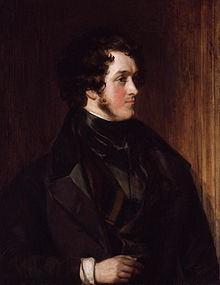
William Harrison Ainsworth
The novelist was sure to have cut quite the dash at his own party: He was tall, slim and dark, with a fondness for stylish clothes that earned him the description dandy. From the Oxford Dictionary of National Biography: "Lady Blessington, whose salon he attended, said he and Count D'Orsay were the two handsomest men in London."

In a passage accepted as autobiographical, a character in one of Ainsworth's novels says, "Some people told me I was handsome, and my tailor (excellent authority, it must be admitted) extolled the symmetry of my figure, and urged me to go into the Life Guards."

  
Ainsworth was at perhaps the zenith of his career in 1840. He was a friendly rival to Dickens; in fact, his 1839 novel Jack Shepard outsold Oliver Twist in early editions, and Ainsworth had recently replaced Dickens as editor of Bentley's Miscellany, the predominant fiction magazine.


The rivalry with Dickens would not last; nor would the friendship. Dickens would become a colossus as Ainsworth slowly sank into oblivion. His 39 historical novels, all of them romances and adventures, were astoundingly popular with the reading public of Victorian England, but not with the critics. Although Ainsworth was himself a genial and generous man, he was often on the receiving end of literary volleys almost hysterical in their dislike. When his books no longer sold as well, he had no circle of supporters to buoy him. Quite the opposite. One writer said of him in 1870: "Let us start with an opinion fearlessly expressed as it is earnestly felt, that the existence of this writer is an event to be deplored." Ainsworth was still alive when this sentiment was published, and in reduced circumstances.

That dazzling night at Royal Tunbridge Wells,  Ainsworth, mercifully, could not know that his books would go out of print, that fellow writers such as Edgar Allan Poe would describe his prose as "turgid pretension."

Yet he is not without a legacy. The book celebrated that night, The Tower of London: A Historical Romance, triggered a new kind of interest in William the Conqueror's castle keep. It was an interest that deepened through the Victorian age, and is part of the reason visitors pour into the Tower, to the tune of  2 million a year.


Ainsworth was born on February 4, 1805, in Manchester, as the city became the center of the industrial movement. Thomas Ainsworth was a prominent lawyer and pressured his oldest son to follow him in that profession, which he did for a time, but without much enthusiasm. There was a younger son, Thomas Gilbert Ainsworth, who at university suffered a "brain fever" and was incapicitated by mental illness his entire life.

Two years after the father died, Ainsworth, newly married, published his first novel, the romance Sir John Chiverton. It brought him to the attention of Walter Scott, who befriended Ainsworth but privately referred to him as an "imitator." His next two books, the historical novels Rockwood and Jack Schepard, both featuring famous outlaws, were tremendous successes. Yet some criticized the romanticizing of criminals, a complaint Dickens was also hearing with Oliver Twist.

 It was time to try something different.

When Ainsworth, along with his illustrator, George Cruikshank, researched the Tower of London, it was far from the smoothly operating tourism operation of today. It had been two centuries since the last monarch, Charles II, resided there. Dickens wrote: "Once a fortress, a royal residence, a court of justice and a prison, {the Tower} is now a government storehouse and armory." An outbreak of disease caused by poor water supply (and blamed on the filthy moat) killed three men of the garrison.

A visitor in 1851 wrote:


"Every one must be struck with the incivility and want of accommodation therein. Upon entering the gates this afternoon I found some hundreds of persons, male and female, huddled together, striving to obtain tickets from a window under a portico where no two persons can pass abreast, and the scene there reminded me of what might be expected at the gallery entrance of a theatre on boxing night. After waiting just one hour we obtained our tickets and were ordered into what is called the ante or refreshment room. This room is about 12ft. by 18ft., with a counter containing ginger pop, buns, &c., immediately behind which are two waterclosets (I understand recently erected). I will not attempt to describe the stench one had to contend with, the place being completely crammed with persons waiting their turns or numbers to be called, but merely add that this room seems to be the resort of pickpockets, two ladies having been eased of their purses, containing some pounds, during the half hour I was present therein."


Ainsworth opened the door to a more illustrious period in the Tower's history. It's true that the novel's prose is melodramatic ("heaving bosoms," "piercing black eyes" and "sinister smiles") and the pages are crowded with Gothic characters (not one or two but three supporting characters who are giants--and a dwarf!) along with august personages of the past. But Ainsworth's diligent research brings to life the grounds, the kitchens, the passageways, the prison cells and the beautiful chapels of the Tower. He made full, imaginative use of the Tower of London, as a setting for a story of high drama.  And Cruikshank's 40 engravings and 58 woodcuts play their suggestive part.


Cruikshank's depiction of Lady Jane Grey


And in the center of it all is Lady Jane Grey, a character of undeniable pathos, surrounded by conspiracies. Ainsworth invests the Spanish ambassador, Simon Renard, with the malevolent abilities of a Blofeld straight from Bond. Northumberland is formidable indeed.There is an energy to the book, and an eerie, even frightening atmosphere. The rack, the Scavenger's Daughter and the infamous Little Ease are all present and accounted for.


The current official Historical Royal Palaces Tower of London "fact sheet" on torture emphasizes how little actual torture has taken place within its walls: "Myth-making reached its peak in the 19th century, spurred on by novelists who wished to evoke the Tower of London in its former days as an ancient fortress and stronghold e.g. Ainsworth’s The Tower of London." Ainsworth may have put the devices of torture to Gothic uses, but they were very much present in the 16th century. Ironically, government-approved torture of prisoners ebbed during the reigns of Edward VI, Jane Grey, and Mary, only to rise to highest levels during reign of Elizabeth.


After The Tower of London, Ainsworth's career went on for more than thirty years. The characters in his books were not dimensional; bosoms continued to heave and black eyes to snap. R.H. Horne, Dickens' friend and collaborator, described Ainsworth as "a reviver of old clothes" whose novels are "generally dull except when revolting." Punch satirized Ainsworth as an aging Tudoresque dandy with the caption "The Greatest Axe-and-Neck Romancer of Our Time."


By the time of the Punch jab, Ainsworth, a widower, was responsible for his mentally ill brother. He had accepted a government pension because...he needed it. A year after a dinner in his honor in Manchester, arguably the only place where he was still esteemed, William Harrison Ainsworth died at the age of 77.

But the Tower felt the lingering impact of Ainsworth. In the foreword of his book, he had called for the opening to the public of Beauchamp Tower, the place of imprisonment of the Lady Jane Grey, where she is thought to have written on the wall of her cell. The cause was taken up by powerful patrons, including Prince Albert. Beauchamp was restored by architects and made available to visitors; other buildings were opened too.


Ainsworth's influence, as explained in The Tower of London: The Official Illustrated History:


"In The Tower of London: A Historical Romance, the Tower was first and foremost the setting for an endless series of heart-rending events and foul play. The author tells of dungeons though in fact the Tower has very few basement rooms and of a time when Tower Hill boasted a scaffold and "its soil was dyed with the richest and best blood in the land.” Such fantasies, backed by the relentless march of the romantic movement, helped create and fuel an ever-increasing demand to see and experience such events.”
No matter how much the novel's violence veers into fantasy, the faintly menacing image of the Tower that draws the throngs of the curious today was created in part by William Harrison Ainsworth. He was the greatest neck-and-axe romancer of his time...and perhaps of ours too.

----------------------------------------------------------------