One of the challenges in writing my 16th century trilogy is how many buildings are lost. Not just the abbeys, either. In The Tapestry, Joanna Stafford spends one-third of the book at the palace of Whitehall, which burned to the ground in 1698.
In my post on English Historical Fiction Authors, I share some of my research into the lost beauty of Whitehall. Go here to read.
Official blog for historical novelist Nancy Bilyeau, author of the Joanna Stafford trilogy, Dreamland, The Blue, and The Orchid Hour
Monday, August 10, 2015
Sunday, August 9, 2015
"In Lone Magnificence, a Ruin Stands": Tintern Abbey
By Nancy Bilyeau
This post is the next in a series on the monastic ruins of England. In the first installment I wrote about Furness Abbey in Cumbria; in the second I wrote about Thetford Priory in Norfolk. I launched this project with my post on English Historical Fiction Authors: "Listening to Blackfriars." And now I move the series to a treasure of Wales...
On the Welsh bank of the River Wye, Tintern Abbey, founded in 1131, soars to the sky nearly six hundreds years after the last monks departed. It survived the Edwardian Wars, the Bubonic plague, even the destruction of the monasteries--roofless, yes, and crumbling in many places, but far more intact than most other medieval abbeys. Tintern has proved a potent force of inspiration for writers, painters, and musicians, ranging from poet William Wordsworth to metal band Iron Maiden--not to mention Alan Ginsberg!
THE FOUNDING: Walter de Clare, lord of Chepstow and a relation of the Bishop of Winchester, founded Tintern Abbey. The De Clares were a vigorous, often violent Norman family that jostled for power from the time of William the Conqueror up to the early 14th century. When Walter, abbey founder, died childless, his nephew Gilbert De Clare assumed control of his lands, becoming the first Earl of Pembroke while earning the nickname Strongbow for his soldiering, mostly on behalf of King Stephen during the war over succession with his cousin, Queen Mathilda.
Tintern was the second Cistercian abbey to be established in England; its monks arrived from Blois in France. Over the next century, the high point in England's history of monasticism, Tintern's land holdings grew rapidly. Thanks to the patronage of Roger Bigod, earl of Norfolk, the monastery was blessed with a large, ornate church, following a cruciform plan. More than 200 feet long, it was built in red sandstone in the Gothic style.
THE ORDER: The Cistercians, also known as the White Monks, were formed with the goal of reform. They were very popular--by the year 1200 there were more than 500 Cistercian abbeys in Europe.
THE GLORY: The beauty of Tintern was a source of great pride to the surrounding countryside. Because its location was somewhat isolated, the abbey did not suffer any attacks during King Edward I's brutal conquest of Wales in 1282. Other monasteries thought to be sheltering Welsh leaders were damaged.
Tintern might have come under the protection of Gilbert de Clare, Earl of Hertford and Gloucester and commander of the king's forces for a time. Because of the family's connection to Tintern, it is possible the "Red Earl"--so named for his red hair and dangerous temper-- ordered the abbey left alone. The Red Earl was a noble perpetually scheming and fighting and changing sides. He supported Simon de Montfort instead of Henry III, but betrayed him and later became young King Edward I's greatest champion, eventually marrying one of his daughters. Undoubtedly guilty of horrific murders, he often spoke of a desire to go on Crusade to the Holy Lands. In his 50s, he fought so bitterly with another nobleman over a land dispute, he was briefly imprisoned. De Clare was most definitely a creature of the medieval age.
After the battles in Wales were over, Tintern's renown grew. In 1326 Edward II, the son of the Red Earl's patron-turned-punisher, spent two nights there.
It was not a king or a nobleman but a disease that dealt Tintern its most serious blow. In 1348 or 1349 the Bubonic Plague reached Wales, killing one-third of the population. Wrote Welsh poet Jean Geuthin:
THE DISSOLUTION: When Henry VIII broke with Rome and set loose the laws that dissolved the monasteries, some of the abbots and priors, monks and friars, resisted and incurred the wrath of the king. Tintern was not one of them. On Sept. 3, 1536, Abbot Wyche surrendered the abbey and all of its lands. If a monastery was in or near London, it was likely to be transformed into a home for a nobleman close to the king. But no one took Tintern as a home. All valuables were taken and the roofs were stripped for their lead.
THE LEGACY: Few visited Tintern and no one much cared about its history until the Romantic movement, keen for picturesque ruins, discovered the abbey. Just about the time Turner painted the monastery, William Wordsworth in 1798 wrote the much-admired "Lines Composed a Few Miles Above Tintern Abbey":
"...These beauteous forms,
Through a long absence, have not been to me
As is a landscape to a blind man's eye:
But oft, in lonely rooms, and 'mid the din
Of towns and cities, I have owed to them
In hours of weariness, sensations sweet,
Felt in the blood, and felt along the heart;
And passing even into my purer mind,
With tranquil restoration: -- feelings too
Of unremembered pleasure: such, perhaps,
As have no slight or trivial influence
On that best portion of a good man's life..."
Tintern Abbey became a popular destination, inspiring other poets, novelists, painters, and scholars. Parties especially liked to go at night to see the torchlight dance off the soaring walls.
The crown purchased the land from its owner, the duke of Somerset, in 1901 and the buildings were better maintained.
In 1967 Allen Ginsberg took an acid trip at Tintern and wrote a poem dedicated to "clouds passing through skeleton arches."
But of all the dedications to Tintern, perhaps the one least predictable by its medieval monks and lords was the band Iron Maiden, in its video for the song "Can I Play with Madness." It makes excellent use of the ruins site: http://www.youtube.com/watch?v=ocFxQjPeyiY
To learn more about visiting Tintern Abbey, now owned by Cadw, go here.
---------------------------------------------------------------------------------------
"In lone magnificence a ruin stands" is contained in The Ruins of Netley Abbey, by 18th century poet George Keate.
---------------------------------------------------------------------------------------
Nancy Bilyeau is writing a thriller trilogy set in 16th century England during the Dissolution of the Monasteries. The first novel, The Crown, published by Simon&Schuster in North America and Orion in the United Kingdom, was on the short list of the Crime Writers' Association's Ellis Peters Historical Dagger Award in 2012. The second novel, The Chalice, won Best Historical Mystery from the RT Reviews.
![]() |
| Tintern Abbey |
Tintern Abbey
On the Welsh bank of the River Wye, Tintern Abbey, founded in 1131, soars to the sky nearly six hundreds years after the last monks departed. It survived the Edwardian Wars, the Bubonic plague, even the destruction of the monasteries--roofless, yes, and crumbling in many places, but far more intact than most other medieval abbeys. Tintern has proved a potent force of inspiration for writers, painters, and musicians, ranging from poet William Wordsworth to metal band Iron Maiden--not to mention Alan Ginsberg!
THE FOUNDING: Walter de Clare, lord of Chepstow and a relation of the Bishop of Winchester, founded Tintern Abbey. The De Clares were a vigorous, often violent Norman family that jostled for power from the time of William the Conqueror up to the early 14th century. When Walter, abbey founder, died childless, his nephew Gilbert De Clare assumed control of his lands, becoming the first Earl of Pembroke while earning the nickname Strongbow for his soldiering, mostly on behalf of King Stephen during the war over succession with his cousin, Queen Mathilda.
![]() |
| A view of the abbey church |
THE ORDER: The Cistercians, also known as the White Monks, were formed with the goal of reform. They were very popular--by the year 1200 there were more than 500 Cistercian abbeys in Europe.
THE GLORY: The beauty of Tintern was a source of great pride to the surrounding countryside. Because its location was somewhat isolated, the abbey did not suffer any attacks during King Edward I's brutal conquest of Wales in 1282. Other monasteries thought to be sheltering Welsh leaders were damaged.
![]() |
| Gilbert De Clare |
After the battles in Wales were over, Tintern's renown grew. In 1326 Edward II, the son of the Red Earl's patron-turned-punisher, spent two nights there.
It was not a king or a nobleman but a disease that dealt Tintern its most serious blow. In 1348 or 1349 the Bubonic Plague reached Wales, killing one-third of the population. Wrote Welsh poet Jean Geuthin:
Monasteries were hit the hardest of all, with their enclosed populations. Once the disease entered, it was likely to annihilate one and all. Tintern needed a great many monks to maintain it because of its size, and between the plague and a gradual decline in vocations, it was never the same thriving abbey after the year 1400."We see death coming into our midst like black smoke, a plague which cuts off the young, a rootless phantom which has no mercy or fair countenance. Woe is me of the shilling in the arm-pit; it is seething, terrible, wherever it may come, a head that gives pain and causes a loud cry, a burden carried under the arms, a painful angry knob, a white lump. It is of the form of an apple, like the head of an onion, a small boil that spares no-one. Great is its seething, like a burning cinder, a grievous thing of an ashy colour. It is an ugly eruption that comes with unseemly haste. It is a grievous ornament that breaks out in a rash. The early ornaments of black death.’
A plague doctor
THE DISSOLUTION: When Henry VIII broke with Rome and set loose the laws that dissolved the monasteries, some of the abbots and priors, monks and friars, resisted and incurred the wrath of the king. Tintern was not one of them. On Sept. 3, 1536, Abbot Wyche surrendered the abbey and all of its lands. If a monastery was in or near London, it was likely to be transformed into a home for a nobleman close to the king. But no one took Tintern as a home. All valuables were taken and the roofs were stripped for their lead.
THE LEGACY: Few visited Tintern and no one much cared about its history until the Romantic movement, keen for picturesque ruins, discovered the abbey. Just about the time Turner painted the monastery, William Wordsworth in 1798 wrote the much-admired "Lines Composed a Few Miles Above Tintern Abbey":
![]() |
| William Wordsworth |
Through a long absence, have not been to me
As is a landscape to a blind man's eye:
But oft, in lonely rooms, and 'mid the din
Of towns and cities, I have owed to them
In hours of weariness, sensations sweet,
Felt in the blood, and felt along the heart;
And passing even into my purer mind,
With tranquil restoration: -- feelings too
Of unremembered pleasure: such, perhaps,
As have no slight or trivial influence
On that best portion of a good man's life..."
Tintern Abbey became a popular destination, inspiring other poets, novelists, painters, and scholars. Parties especially liked to go at night to see the torchlight dance off the soaring walls.
![]() |
| Painting by J.M.W. Turner |
But of all the dedications to Tintern, perhaps the one least predictable by its medieval monks and lords was the band Iron Maiden, in its video for the song "Can I Play with Madness." It makes excellent use of the ruins site: http://www.youtube.com/watch?v=ocFxQjPeyiY
To learn more about visiting Tintern Abbey, now owned by Cadw, go here.
---------------------------------------------------------------------------------------
"In lone magnificence a ruin stands" is contained in The Ruins of Netley Abbey, by 18th century poet George Keate.
---------------------------------------------------------------------------------------
Nancy Bilyeau is writing a thriller trilogy set in 16th century England during the Dissolution of the Monasteries. The first novel, The Crown, published by Simon&Schuster in North America and Orion in the United Kingdom, was on the short list of the Crime Writers' Association's Ellis Peters Historical Dagger Award in 2012. The second novel, The Chalice, won Best Historical Mystery from the RT Reviews.
Tuesday, August 4, 2015
Stalwarts & Spies: The Throckmortons and the Dawn of the English Catholic
By Nancy Bilyeau
![]() |
| Coughton Court, home of the Throckmortons |
Late one November night in 1583, a group of “gentlemen of no mean credit and reputation”—in other words, agents working for Sir Francis Walsingham, secretary to Queen Elizabeth I—banged on the door of a London house. Their sudden arrival threw the occupant of the house into a panic. His name was Sir Francis Throckmorton and he was at that very moment upstairs, using a cipher to disguise his letter to the woman who posed a mortal threat to Elizabeth: Mary, Queen of Scots, her second cousin. Deposed from her own throne in 1567, Mary was being held in genteel confinement in an English manor house, the object of a series of rescue attempts. Walsingham, the spymaster, worked tirelessly to thwart all of them.
Highly incriminating letters and papers were found during their search. Throckmorton, 29 years old, a devout Catholic, had composed a list of other Catholic gentlemen and nobles who could be counted on to rise up against their Protestant queen, Elizabeth, when the time came for a coup and replace her with Mary. He also wrote a list of ports and harbors ideal for an invasion by a French army led by the Duke of Guise, Mary’s relative.
![]() |
| The young Mary Queen of Scots, from a drawing made in France |
A portrait that has been attributed to Sir Francis Throckmorton
This was not the last time the name “Throckmorton” surfaced in a plot against a Protestant English ruler. In 1605, a servant to Robert Catesby, a key conspirator in the Gunpowder Plot and the son of Anne Throckmorton, rode directly to the Throckmorton estate, Coughton Court, to tell a group of Catholics, including two Jesuit priests, of Guy Fawkes’ arrest in the plan to blow up King James I and his Parliament. He said those Fawkes plotted with were now running for their lives.
These failed English conspiracies in support of Mary Queen of Scots (ranging from the fourth Duke of Norfolk’s efforts to marry the Scottish queen to Anthony Babington’s plot to murder Elizabeth), along with the infamous Gunpowder Plot, formed a strong impression in some minds that Catholics were conspiratorial and dangerous, controlled by France, Spain and, of course, the Pope. These fears hardened into bigotry throughout the 17th century. The despicable Titus Oates, who fabricated the “Popish plot” against Charles II and brought about at least 15 executions, wouldn’t have been possible without the Gunpowder Plot. Moreover, the Glorious Revolution and the arrival of the Hanovers—the direction the country took that leads us to today—were born, in large part, from fear of what James II, a Catholic king, would do. Those fears originated in the 16th century.
Before Sir Francis Throckmorton plunged into violent plotting, his family had made a far different sort of impact in England, one of service to the crown and country. To best understand the Throckmortons, who’ve popped up in so many interesting times and places in the reigns of the Tudors and Stuarts, we must take a closer look at the patriarch, Sir George Throckmorton, Sir Francis’s grandfather, a strong-minded man who had a blunt conversation with Henry VIII and Thomas Cromwell that is well known even today.
George Throckmorton was born in 1489, two years before Henry VIII, the king who was to wreak such havoc in his life. His father, Robert Throckmorton, was a landowner, soldier and a courtier who did well under the new Tudor regime. Coughton Court was already in Throckmorton possession. In 1501, George married an heiress, Katherine Vaux. They had, incredibly, 19 children, including seven sons who lived to adulthood. His rise in the kingdom was steady: George served the king in the French war; he was knighted in 1516; he attended the Field of Cloth of Gold; he was made a justice of the peace in Warwickshire. By 1529 he was a member of Parliament and worked for Cardinal Thomas Wolsey, alongside a lawyer who would one day make his mark: Thomas Cromwell.

The people who attended the court of Henry VIII in the late 1520s and early 1530s would be amazed, perhaps dumbfounded, by today’s adoration of Anne Boleyn. During the time that the king struggled for his divorce, most of the nobility, as well as the commons, had enormous respect for Catherine of Aragon, both for her royal status as the daughter of Isabelle and Ferdinand, and for the gracious, brave and pious manner in which she carried out her duties as queen of England.
As for Anne Boleyn, she had little support beyond members of her own family, Cromwell and Thomas Cranmer, later archbishop of Canterbury. Henry VIII insisted in his communications with the Pope that Anne was a chaste and respectable woman. Both the nobility and the common people did not see her that way. According to Edward Hall in his contemporary History of England, “Surely the most of the lay people of England, which knew not the law of God, sore murmured at the matter and much the more, because there was a gentlewoman in the court called Anne Boleyn.” There were murmurings, a few shouts in the street as the king passed by, but of course most people were too afraid to tell the king what they thought of his intended new marriage.
Until George Throckmorton.
It was the royal divorce that changed everything for him. From the beginning, Throckmorton was known to be someone who did not support the king’s wish to rid himself of his first wife. Throckmorton was respected in Parliament. His views carried weight. Cromwell, who had replaced Wolsey as chief royal councilor, was busy crafting legislation intended to weaken the Pope’s control of England and, step by step, make Henry VIII the supreme head of the Church of England. Throckmorton attempted to block that legislation.
In 1532, the king summoned Throckmorton to an audience with himself and Thomas Cromwell. There he was asked to support the divorce. As Throckmorton himself recalled in a later document, “I told Your Grace I feared if ye did marry Queen Anne, your conscience would be more troubled at length, for it is thought that ye have meddled with the mother and the sister.”
The king answered, “Never with the mother.” Which is almost certainly true; the rumors that Henry VIII slept with Elizabeth Boleyn were scurrilous.
Cromwell jumped in to say, “Nor never with the sister either, and therefore put that thought out of your mind.” This is most certainly not true. Henry VIII had an affair of some duration with Mary Boleyn.
Although his facts were not all straight, George Throckmorton told his sovereign with all honesty that he did not believe that the sister of a discarded mistress was an appropriate queen of England and that his conscience would be troubled if Henry married Anne. He was certainly not alone. But he is the only Englishman known to have voiced this opinion to the king’s face.
While this was definitely not what Henry VIII wanted to hear, Throckmorton wasn’t punished directly. He did become distinctly less favored by the king. It’s possible Cromwell delivered a warning, for Throckmorton promised in writing to “live at home, serve God and meddle little.” With Parliament out of session, Throckmorton retreated to Coughton Court.
Queen Anne didn’t last long, beheaded on trumped-up charges of treason and adultery in 1536. Before Henry VIII had her executed, he declared his marriage to Anne Boleyn null and void, based on his “affinity” to her sister Mary. That warning by Throckmorton came to pass, although in the most cynical fashion imaginable.
If Throckmorton, along with others who had supported Catherine of Aragon and now cared deeply about the fate of Princess Mary, thought that the kingdom would return to how things used to be, they were greatly mistaken. Henry VIII didn’t return to the Catholic fold even after Anne, a religious reformer, was dead and replaced by Jane Seymour, who favored traditional ways. For one thing, the Cromwell-engineered Dissolution of the Monasteries was pouring thousands of pounds into the royal treasury. If Henry VIII returned to obedience to the Pope, he’d have to stop demolishing the abbeys, ejecting the nuns and monks, and seizing the valuables and property. That was the last thing he wanted to do.
The Pilgrimage of Grace, another 16th century turning point in defining which side you were on, took Throckmorton farther down the road of opposition to Henry VIII. It was a rebellion that sprang up in the North of England opposing the kingdom’s religious reformers, joined by men and women from every level of society.
![]() |
The king ordered his nobility and gentry to come to the aid of the Crown, bringing armed men, and Throckmorton did so with 300. Nonetheless, he was arrested in early 1537, charged with making copies of the rebels’ demands and expressing willingness to join their side. He denied disloyalty but was sent to the Tower of London. One of this sons later wrote that Throckmorton’s “foes gaped to joint his neck.” The family’s connections did all they could, including his wife’s pleas for help to her half-brother Sir William Parr (uncle of the later Queen Catherine Parr). For months, his life hung in the balance.
George Throckmorton, not interested in martyrdom, announced that he was reading the New Testament and perceived the error of his ways, his “great blindness.” It’s unclear what factor was the deciding one. But during a period in which men who were closer in blood and friendship to Henry VIII—and had committed lesser crimes—met the fate of the ax on Tower Hill, George Throckmorton was released from the Tower of London.
This time he did live at home and “meddle little,” focusing on rebuilding his spectacular home, Coughton Court.
But how he served God is less clear. Throckmorton believed in his heart in the values of the traditional Catholic. His own father, Robert Throckmorton, devoted time and sums of money to his parish church and had, most unusually for the 16th century, gone on a Pilgrimage to the Holy Land. He died in Rome on his way to Jerusalem in 1518.
Eamon Duffy is at the forefront of modern writers who argue that in the early 16th century traditional worship was not a corrupt and decaying system but a vital one. This is what the Throckmorton father and son believed. And it is the value system that George passed on to his many descendants. Until Henry VIII decided to break with Rome over a thwarted divorce, the kingdom was going in a certain direction. The king swerved onto a new path. The Throckmortons—and other families such as the Howards—kept going in the original direction.
Another possible factor in George Throckmorton’s traditional stance was sympathy for the fate of his aunt, Elizabeth. She was the abbess of a house of Poor Clares in Cambridgeshire. A woman of intellect, she exchanged letters with the famous humanist, Erasmus. After her abbey was destroyed, Elizabeth, more than 60 years old, went to live at Coughton, perhaps bringing one or two nuns with her who had nowhere else to go. She also brought a “dole-gate,” through which help was given to the local poor, and upon which her name was carved.
The practice of the Throckmortons’ “staunch” Catholic faith went in and out of fashion, depending on the Tudor ruler. After Cromwell was executed, religious traditionalists felt a little safer in England. The reign of Edward VI was so difficult that some left the country to live in exile. Mary’s reign was a brief respite. George’s seventh son, Sir John, was active in her Parliament and a witness to the queen’s will.
During the reign of her successor, Elizabeth I, the Throckmortons fell into a defensive position again and a “priest hole” was built in Coughton Court, where priests could hide during inspections. The family became “recusants,” those who refused to attend Anglican services and paid heavy fines for it. People who could not pay the fines were imprisoned. With their money, the Throckmortons avoided that humiliation. Some became Protestants, most famously Sir Nicholas Throckmorton, a skilled courtier.
The patriarch, George Throckmorton, had died in his bed in 1552. His grandson was not so lucky.
Sir Francis Throckmorton, born in 1554, was a son of Sir John, the witness of Queen Mary’s will. Because of the increasingly cold climate for Catholics in England, he left England after receiving an Oxford education and studying law at the Inner Temple. In France he was drawn into a conspiracy against Elizabeth, aimed at her overthrow and replacement by the Scottish queen. Once returned to England, Throckmorton would coordinate with Bernardino de Mendoza, the Spanish ambassador in the English court.
![]() |
| Elizabeth I |
This was a time of escalating violence, as both sides took steps against the other. Pope Pius V, enraged with Elizabeth's political and financial support of Protestant factions in the Netherlands and elsewhere that threatened the Catholic powers, excommunicated the queen, calling her a "servant of crime." Jesuit priests, some of them English by birth, sneaked into England. Some of them swore it was to minister to those who wanted to continue to practice their Catholic faith. But certainly others were trying to destabilize the kingdom and make it easier to overthrow Elizabeth. In response, Walsingham strengthened his spy network. When he caught conspirators, they were often turned over for extraction of information to the Tower of London and the merciless hands of Sir Richard Topcliffe, an undoubted sadist. (See my blog post "The Rack Seldom Stood Idle/")
![]() |
| Sir Francis Walsingham, the queen's spymaster |
When Throckmorton returned to the country of his birth, it was with a purpose that could not be more dangerous. Did the young man understand the possible consequences if he failed? We don't know--but failure arrived within the year. He came under suspicion and Walsingham had him watched for six long months, taking note of his co-conspirators, before dropping the net. As a contemporary document put it: Suspicion of Throckmorton "grew first upon secret intelligence given to the Queen's Majesty, that he was a privy conveyor and receiver of letters from the Scottish queen. Upon which information, nonetheless, divers months were suffered to pass on, before he was called to answer for the matter."
Once he'd rolled up the Throckmorton operation, Walsingham urged action against Ambassador Mendoza, who was expelled from England. It was spycraft worthy of today's TV series Homeland.
Ironically, Sir Francis Throckmorton's treasonous action set in motion not the accession to the English throne of Mary Queen of Scots but her own arrest and death, and later war with Spain. Walsingham was able to use the Throckmorton Plot to persuade a reluctant Queen Elizabeth to authorize the Bond of Association. This was a document obliging all people who signed it to execute any person who attempted to usurp Elizabeth’s throne. The bond was used as a legal precedent to kill the Scottish queen after the failure of the Babington plot in 1586. King Philip of Spain was enraged by the ejection of his ambassador and Mendoza was not replaced. That scandal, coupled with the death of Mary Queen of Scots, pushed Philip to declare war on Elizabeth I in 1588 and set sail his armada.
Fortunately, George Throckmorton has happier legacies. His granddaughter, Muriel, married Thomas Tresham, and is the ancestress of Diana Spencer, princess of Wales.
![]() |
| Another Throckmorton nun -- in the 18th century |
And Coughton Court, which Sir George loved so much, is a popular place for visitors, enthralling all who see it with its Tudor history, including the spectacular turreted gatehouse built by Sir George and the “dole-hole” that Elizabeth Throckmorton brought with her after her abbey was demolished. Six hundred years after the first Throckmorton took possession, the family still lives there—and thrives.
-----------------------------------------------------------
Saturday, August 1, 2015
Edward Kelley: The Man Who Talked to Angels
By Nancy Bilyeau
In the riveting 2015 film The Witch, set in New England in 1630, it's difficult to tell what is real and what is not. But there does come a time when beings who may or may not be witches speak a strange language. It is otherworldly.
The film's director, Robert Eggers, has said that the language spoken in that section is Enochian. Which means that the work of two men born in the 16th century, John Dee and Edward Kelley, found its way into a 21st century film. In the Enochian language, script is written right to left, with a 21-letter alphabet, and was, the Tudor-era men insisted, revealed to them by angels in occult sessions.
John Dee is a famous man, a scholar and seer who advised Elizabeth I and built one of the greatest libraries of the century. Edward Kelley is a darker figure, and one more directly responsible for the Enochian texts.
Here is his story:
The Life of a Necromancer
In 1591, a lone Englishman of middle age and cropped ears, Edward Kelley, was confined in the castle of Hrad Krivoklat, built forty kilometers west of Prague in the 12th century and possessing a Gothic chapel known for its statues of the twelve apostles. Also of note was a statue of Jesus at the altar, flanked by angels with golden wings.
It was Holy Roman Emperor Rudolf II who commanded that Edward Kelley be held in this castle, which began functioning as a prison a few decades earlier. Kelley had a decision to make. He was no doubt forbidden to avail himself of the castle chapel while mulling his choice. But if he had, those winged angels might have carried special significance to him. Perhaps they would have comforted him.
Or perhaps not.
After months of imprisonment, Kelly was due to be released but for a single purpose. To perform magic of the lucrative kind. The emperor expected much of the man who came to Prague with the renowned John Dee in 1586. Rudolf had favored him, enriched him, spoiled him. The English commoner even held an imperial title: He was Sir Edward Kelley of Imamyi, "Baron of Bohemia," and he lived in high style in Prague.
Why did this bounty rain down on Kelly? Because Rudolf, an emotionally erratic Hapsburg obsessed with art, philosophy and magic, was convinced that Kelley possessed a secret of alchemy. There had been tantalizing glimpses of his power. However, Kelly had not come through as yet with what the emperor sought. He'd been arrested for dueling. But it was believed the true reason for his imprisonment was to force him to produce what Prague wanted to see.
While deciding what to do, Kelley reflected. This is only speculation--but might not these be the turning points that flitted through his mind:
March 1582: John Dee, scholar, astrologer, mathematician, physician, and philosopher, was in residence at his house, Mortlake, when a knock at the door produced a young man who called himself Edward Talbot, in the company of a Dee friend, Mr. Clerkson. Talbot was a name used by Edward Kelley.
They had arrived at a prestigious address. Dee had a unique relationship with Queen Elizabeth. He was her personal astrologer--Dee selected her date of coronation--and adviser, but their meetings were discreet and their communications guarded. Courtiers at the pinnacle of her court--Robert Dudley and Christopher Hatton--also believed in Dee. But endorsement could not be open because Dee's methods skirted heresy. During the reign of Elizabeth's half-sister, Mary I, he was arrested under suspicion of casting the horoscopes of Queen Mary and Princess Elizabeth with an eye to predicting the succession. This was treason. He managed to exonerate himself, and found favor with Elizabeth but she did not financially reward him to the extent that he wished. Money worries dogged Dee for his entire life.
As for "Talbot," he was born in St. Swithin's, Worcester on August 1, 1555, according to a discovered astrological chart. Kelley may or may not have attended Oxford. He always wore his hair long or donned a monk's cowl or cap with hanging flaps to conceal the fact that his ears were missing. It was said he had been pilloried for "coining" (forging or adulterating coins) and lost his ears as punishment.
Mr. Clerkson brought Kelley to Dee because he had heard that the Queen's conjurer was in need of a new "skryer," or crystal gazer. Such men were not uncommon. "Almost every parish, and apparently several aristocratic households, boasted a 'cunning man,' who for the price of a beer or a bed would summon spirits or tell fortunes," says The Queen's Conjurer: the Science and Magic of Dr. John Dee, Adviser to Elizabeth I.
Dee had lofty motives for wanting to communicate with spirits of the other world: to elevate and unite mankind in an era of religious wars, hunger and disease. He sought to understand the universe. On his next visit to Mortlake, Kelley gave him what sounds like a winning audition. After looking into one of Dee's crystals for a quarter of an hour, Kelley said he'd made contact with an angel named Uriel, "the angel of light." Uriel had a number of messages for Dee.
Kelley was hired.
1583: A boat sailed from England, carrying Dee, Kelley and their respective families. Destination: Poland. Dee had a much younger wife named Jane and small children; Kelley had recently married a widow with children. The trip was paid for by Albert Laski, a Polish count who came to England as an envoy to Elizabeth and was introduced to Dee and Kelley by Robert Dudley, earl of Leicester. Laski was a known dabbler in the occult, and soon spent much of his time at Mortlake.
Dee and Kelley had been focusing a tremendous amount of time on their "conferences" with angels. Kelley acted as medium, and Dee pondered the communications, which had to be decoded. The language that the various angels--Uriel was joined by Michael as well as other celestials--used was "Enochian." These were the pure words God spoke to Adam, before the Fall. Dee sought to decode the entire language and capture the wisdom of the angels in a book.
In recent weeks, the angels, through Kelley as medium, had begun to urge Dee to leave England, at the same time that Laski was making his offer. Dee was also worried that Elizabeth's support of his work was wavering. Rumors abounded that Dee and Kelley were practicing necromancy, which was communication with the dead. Dee did not want to clarify to anyone that it was actually angels they spoke to. Not yet. So it was time to leave England.
March 1587: Dee and Kelley, full of dread, were summoned to appear before the papal nuncio Germanico Malaspina, bishop of San Severo, in Prague, the cosmopolitan city of Bohemia.
The last four years had been difficult ones. Laski ran out of money almost the instant they arrived in Poland, and the two men and their families wandered through Central Europe, conducting their "actions" with the angels as they sought aristocratic sponsors.
They finally were given permission to present themselves in Prague, where Emperor Rudolf held court. Although Rudolf was intensely interested in magic, his court was dominated by papal and counter-Reformation forces. It was a treacherous climate. Dee had managed to obtain an audience with the reclusive Rudolf but that didn't prevent him from falling under suspicion of necromancy again. It also didn't help that Rudolf's uncle, King Philip II, was planning to declare war on Elizabeth I and all English Protestants were anathema.
Dee acquitted himself well under questioning by Bishop Malaspina, professing himself a pious man who would never cause religious discord in Prague or traffic in the black arts. Then it was Kelley's turn to speak. What he chose to say was astounding:
May 1587: Dee and Kelley found a new sponsor: the wealthy Bohemian noble Vilem Rozmberk. He had a passion for alchemy and had set up several laboratories for experiments--Dee and Kelley now had one of their own. Although Dee was less than enthusiastic, Kelley threw himself into this work. Alchemy was the quest to transform base metals into noble ones--silver and gold--through the Philosopher's Stone, a legendary elixir.
Kelley had brought with him from England a mysterious red powder he said he'd discovered buried in the ground. As a demonstration before dignitaries visiting the laboratory, Kelley dropped a speck of it into mercury held in a crucible. To all who witnessed it, shimmering gold appeared. Soon the news spread across Prague, Europe and even back to England: Kelley had discovered the Philosopher's Stone and could produce gold.
Now the balance of power between Dee and Kelley shifted. Dee wanted Kelley to communicate with the angels and obtain the wisdom of the universe. But his skryer wanted to focus on the alchemy experiments that were earning him fame. This was the time, when the angels communicated something new and shocking: Dee and Kelley must share wives.
With great reluctance, Dee's young wife slept with Kelley. Nine months later, Theodorus Dee was born. In 1589, the Dees returned to England. Kelley would never see them again.
--------------------------------------------------------------------------
It was not long after Dee's departure that Kelley reached his height of riches and renown. The Emperor's interest in alchemy went deeper than filling the imperial treasury. Rudolf was as unusual a ruler as Elizabeth I. He never married, recoiled from religious mania, and maintained a cautious stance among war-crazed relatives. "Wise hesitation" is what his supporters called it. His enemies found him inert and unfit to rule a Catholic empire.
One aspect of Rudolf's personality was fear of death. Alchemy's ultimate promise was immortality. He threw money, property and titles at Kelley, but there was a catch. The Englishman must deliver. He must turn base metal into gold. Despite his tantalizing experiments, Kelley could not prove his abilities to the emperor's satisfaction.
And so Kelley was imprisoned in Hrad Krivoklat. After his release, he was again given a chance to perform successful alchemic experiments. He failed. Kelley tried to flee Prague, but was captured and jailed in another imperial castle.
One day, faced with the demand that he prove his powers, he made his decision.
It is said that Edward Kelley died in 1598 after he crawled out of a Bohemian prison window and fell to the ground. Other reports say he survived to see 1600, but maintained a low profile.
He is considered a charlatan today, someone who was able to convince wise and astute people of mystical abilities ... until his tricks ran out.
But that is incorrect. Edward Kelley did perform an act of alchemy. It was on himself.
------------------------------------------------------------------------------------
Nancy Bilyeau is the author of a trilogy of Tudor mysteries, published by Simon & Schuster and nine foreign countries: The Crown, The Chalice and The Tapestry.
In the riveting 2015 film The Witch, set in New England in 1630, it's difficult to tell what is real and what is not. But there does come a time when beings who may or may not be witches speak a strange language. It is otherworldly.
The film's director, Robert Eggers, has said that the language spoken in that section is Enochian. Which means that the work of two men born in the 16th century, John Dee and Edward Kelley, found its way into a 21st century film. In the Enochian language, script is written right to left, with a 21-letter alphabet, and was, the Tudor-era men insisted, revealed to them by angels in occult sessions.
John Dee is a famous man, a scholar and seer who advised Elizabeth I and built one of the greatest libraries of the century. Edward Kelley is a darker figure, and one more directly responsible for the Enochian texts.
Here is his story:
The Life of a Necromancer
![]() |
| Hrad Krivoklat |
It was Holy Roman Emperor Rudolf II who commanded that Edward Kelley be held in this castle, which began functioning as a prison a few decades earlier. Kelley had a decision to make. He was no doubt forbidden to avail himself of the castle chapel while mulling his choice. But if he had, those winged angels might have carried special significance to him. Perhaps they would have comforted him.
Or perhaps not.
![]() |
| Edward Kelly, from a 19th c drawing |
Why did this bounty rain down on Kelly? Because Rudolf, an emotionally erratic Hapsburg obsessed with art, philosophy and magic, was convinced that Kelley possessed a secret of alchemy. There had been tantalizing glimpses of his power. However, Kelly had not come through as yet with what the emperor sought. He'd been arrested for dueling. But it was believed the true reason for his imprisonment was to force him to produce what Prague wanted to see.
While deciding what to do, Kelley reflected. This is only speculation--but might not these be the turning points that flitted through his mind:
March 1582: John Dee, scholar, astrologer, mathematician, physician, and philosopher, was in residence at his house, Mortlake, when a knock at the door produced a young man who called himself Edward Talbot, in the company of a Dee friend, Mr. Clerkson. Talbot was a name used by Edward Kelley.
![]() |
| John Dee |
As for "Talbot," he was born in St. Swithin's, Worcester on August 1, 1555, according to a discovered astrological chart. Kelley may or may not have attended Oxford. He always wore his hair long or donned a monk's cowl or cap with hanging flaps to conceal the fact that his ears were missing. It was said he had been pilloried for "coining" (forging or adulterating coins) and lost his ears as punishment.
![]() |
| Elizabeth I, Dee's patron |
Kelley was hired.
1583: A boat sailed from England, carrying Dee, Kelley and their respective families. Destination: Poland. Dee had a much younger wife named Jane and small children; Kelley had recently married a widow with children. The trip was paid for by Albert Laski, a Polish count who came to England as an envoy to Elizabeth and was introduced to Dee and Kelley by Robert Dudley, earl of Leicester. Laski was a known dabbler in the occult, and soon spent much of his time at Mortlake.
Dee and Kelley had been focusing a tremendous amount of time on their "conferences" with angels. Kelley acted as medium, and Dee pondered the communications, which had to be decoded. The language that the various angels--Uriel was joined by Michael as well as other celestials--used was "Enochian." These were the pure words God spoke to Adam, before the Fall. Dee sought to decode the entire language and capture the wisdom of the angels in a book.
In recent weeks, the angels, through Kelley as medium, had begun to urge Dee to leave England, at the same time that Laski was making his offer. Dee was also worried that Elizabeth's support of his work was wavering. Rumors abounded that Dee and Kelley were practicing necromancy, which was communication with the dead. Dee did not want to clarify to anyone that it was actually angels they spoke to. Not yet. So it was time to leave England.
![]() |
| Dee & Kelley, raising the dead? |
The last four years had been difficult ones. Laski ran out of money almost the instant they arrived in Poland, and the two men and their families wandered through Central Europe, conducting their "actions" with the angels as they sought aristocratic sponsors.
Dee acquitted himself well under questioning by Bishop Malaspina, professing himself a pious man who would never cause religious discord in Prague or traffic in the black arts. Then it was Kelley's turn to speak. What he chose to say was astounding:
"It seems to me that, if one looks for counsel or remedy that might bring about a reformation in the whole church, the following will be good and obvious. While there are some shepards and ministers of the Christian flock who, in their faith and in their works, excel all others, there are also those who seem devoid of the true faith and idle in their good works. Their life is so odious to the people and sets so pernicious an example that by their own bad life they cause more destruction in the Church of God than they could ever repair by their most elaborate, most long and most frequent discourses. And for that reason their words do not carry the necessary conviction and are wanting in profitable authority."The papal representative remained calm. But he said later, privately, that he had wanted to "throw Kelley from a window"--a common way to resolve conflict in Prague. For a time Kelley and Dee were able to evade arrest or formal censure. But eventually the emperor turned on them. The order came to leave Prague within six days.
![]() |
| Vilem Rozmberk |
Kelley had brought with him from England a mysterious red powder he said he'd discovered buried in the ground. As a demonstration before dignitaries visiting the laboratory, Kelley dropped a speck of it into mercury held in a crucible. To all who witnessed it, shimmering gold appeared. Soon the news spread across Prague, Europe and even back to England: Kelley had discovered the Philosopher's Stone and could produce gold.
Now the balance of power between Dee and Kelley shifted. Dee wanted Kelley to communicate with the angels and obtain the wisdom of the universe. But his skryer wanted to focus on the alchemy experiments that were earning him fame. This was the time, when the angels communicated something new and shocking: Dee and Kelley must share wives.
With great reluctance, Dee's young wife slept with Kelley. Nine months later, Theodorus Dee was born. In 1589, the Dees returned to England. Kelley would never see them again.
--------------------------------------------------------------------------
![]() |
| Emperor Rudolf II |
One aspect of Rudolf's personality was fear of death. Alchemy's ultimate promise was immortality. He threw money, property and titles at Kelley, but there was a catch. The Englishman must deliver. He must turn base metal into gold. Despite his tantalizing experiments, Kelley could not prove his abilities to the emperor's satisfaction.
And so Kelley was imprisoned in Hrad Krivoklat. After his release, he was again given a chance to perform successful alchemic experiments. He failed. Kelley tried to flee Prague, but was captured and jailed in another imperial castle.
One day, faced with the demand that he prove his powers, he made his decision.
It is said that Edward Kelley died in 1598 after he crawled out of a Bohemian prison window and fell to the ground. Other reports say he survived to see 1600, but maintained a low profile.
He is considered a charlatan today, someone who was able to convince wise and astute people of mystical abilities ... until his tricks ran out.
But that is incorrect. Edward Kelley did perform an act of alchemy. It was on himself.
------------------------------------------------------------------------------------
Nancy Bilyeau is the author of a trilogy of Tudor mysteries, published by Simon & Schuster and nine foreign countries: The Crown, The Chalice and The Tapestry.
Tuesday, July 28, 2015
The Truth About Katherine Howard
By Nancy Bilyeau
Katherine Howard is the dirty joke of the Tudor era.
The second of Henry VIII's wives to be executed, she is a tragic figure, but there is not the same level of outrage over her fate. Many who have studied the life of Anne Boleyn believe that the charges of adultery and incest and treasonous conspiracy were false, concocted by Thomas Cromwell to free Henry VIII of a woman he had come to hate. Queen Katherine, some 30 years younger than her ailing and obese husband, took lovers before and after her marriage, it is commonly believed. She was guilty.
Wasn't she?
I believe that Katherine Howard was guilty but not of what you may think. Whether she was unchaste before marriage is not her chief crime. Her struggles to hide her premarital past from her husband and his councillors--and her mysterious meetings, perhaps adulterous, with Thomas Culpepper after her marriage--were just the excuse seized on to effect her removal.
It could be argued that her alleged misdeeds were echoes of the mistakes in judgment Anne Boleyn made, in her flirtatious banter with Henry Norris and Francis Weston. Queen Anne was the victim of a politically motivated coup, and I would argue that her cousin Katherine Howard was too.
To read the books written about Katherine Howard is to plunge into a vat of scorn, contempt and disgust: "empty headed," "good time girl" and "juvenile delinquent."
There has, recently, been a shift of opinion. In his excellent book Katherine Howard: A New History, Conor Byrne makes a convincing case that Katherine, whose mother died when she was very young and whose father was the black sheep of the Howards, was the victim of sexual predators while living with her step-grandmother, the Dowager Duchess of Norfolk. And Thomas Culpepper's attentions may have veered into blackmail.
In this post, though, I would argue that the crime she was actually guilty of—the reason Katherine Howard died—was not her morals, or lack of. It was her effectiveness as queen. She was the wife that Henry VIII was visibly most besotted with, according to contemporary records: his "affection was so marvellously set upon her." And, most critically, she was more than a mere plaything. She was the effective center of a power base.
What? people scream. But Catherine was promiscuous, frivolous, semi-literate, immature, grasping and heedless, right? That's what the miniseries depict and the books all agree on, even those that are supposedly sympathetic.
I would like to present some facts of Catherine's life and reign as Queen.
* Within the span of not more than six months, she was able to convince Henry VIII that she should be his next queen, rather than his mistress, even though he was married to his fourth wife, Anne of Cleves, when he "first set eyes upon her." Jane Seymour is credited with shrewd managing of Henry VIII in similar circumstances. But Jane displaced a wife who was most likely pregnant when she began her relationship with King Henry, and is not known to have balked at Anne Boleyn's execution to make way for her. Katherine, in contrast, replaced a queen who never consummated her arranged marriage, and Anne of Cleves received a divorce and large settlement, not the axe. Moreover, Katherine went to great lengths to treat her predecessor, Anne of Cleves, with kindness and respect in public after the divorce.
* Margaret Pole, Countess of Salisbury, was more than 60 years old when arrested and confined in the Tower of London, charged with treason. Henry VIII considered her son, Reginald Pole, his greatest enemy, but the religious scholar lived in Italy and France, safe from the English king's grasp. So the king wiped out his family: brother, nephew and, finally, mother. Her imprisonment was not only terrifying but physically rigorous. Katherine arranged to have a set of warm clothes sent to Margaret Pole in the Tower, including a satin-lined nightgown, shoes, and slippers. It was an act of incredible bravery.
* Katherine persuaded her husband to pardon at least three people who could easily have been executed were it not for her intervention, including Thomas Wyatt. In 1541, Wyatt was arrested and sent to the Tower of London, accused of corresponding with Cardinal Pole, and referring to the prospect of Henry VIII's death. Katherine's actions led to his freedom. This success sets her apart from Jane Seymour, who when she attempted to dissuade Henry VIII from dissolving the monasteries, was told never to meddle in his affairs, and from sixth wife Catherine Parr, who was very nearly arrested after haranguing the king over religion. Although considered a 16th century "bimbo," Katherine was an effective political player.
* Katherine managed a relationship with a man in ill health, possessing volatile emotions and holding high expectations of a wife. After a "honeymoon" of several months during which Henry VIII appeared rejuvenated, his health problems returned and he was often in pain--and highly irritable. Ambassador Eustace Chapuys reports rumors that Henry VIII refused to see his wife for a long stretch of days, and even considered divorce briefly. Rumors flew throughout the marriage that Katherine was pregnant, though it is unlikely she ever was. This must have been a source of considerable stress to Katherine, since the king continued to be obsessed with begetting male heirs. Yet Katherine was able to solidify her hold on the king's affections. When they returned from their progress in late October, the king proclaimed his wife a "jewel."
Less than two weeks later, Katherine was being investigated. What happened?
It is a story often told that Anne Boleyn said of Mary Tudor, her husband's daughter, that "she is my death and I am hers." As it happened, it was not her stepdaughter who killed Queen Anne. However, that same phrase could be used for Katherine Howard and Thomas Cromwell. She was his death. Many historians believe that Cromwell stalled in obtaining the king a divorce from Anne of Cleves because he didn't want a Howard queen, but that stalling was fatal.
Yet in a chilling way, Cromwell, executed on the wedding day of Henry VIII and Katherine Howard, was the cause of her death 20 months later.
The Duke of Norfolk and his heir, Henry Howard, Earl of Surrey, openly gloated over the destruction of Cromwell. Their ally, Stephen Gardiner, Bishop of Winchester, returned to the King's council and a leading role. But what is not often written about is how this faction tried to wipe out Cromwell's supporters. The arrest of Sir Thomas Wyatt was part of their "clean up operation," as was the arrest of Sir Ralph Sadler, Cromwell's protegee. (Sadler, too, was eventually released.)
Other Cromwell allies, like Thomas Wriothesley and Richard Rich, jumped to the winning side, no matter how they felt about the Howards, to survive. Thomas Audley, who had shared many of Cromwell's religious and political views, accommodated himself to the winners at court, but he was not fully trusted by Norfolk. Audley was lord chancellor, though--too useful to destroy. For now.
The man in the kingdom left most exposed was Thomas Cranmer, Archbishop of Canterbury. He was the only one to publicly lament the fall of Cromwell, in a distressed letter to the King himself. Some at court expected Cranmer to follow Cromwell into disgrace. But the Archbishop survived, protected (as much as one could be) by King Henry's esteem. He retreated from the forefront of court affairs.
Bishop Gardiner, Cranmer's triumphant rival, left the court in the fall of 1540 to represent England at a German meeting of many religious and state leaders determined to resolve the question of religion, including the Emperor Charles V and John Calvin. Gardiner had instructions from Henry VIII that should a way be found for the Pope to welcome England back into the fold, he should not rule out such a possibility. One can only imagine how Cranmer felt about this summit and his relief when the Diet of Regensburg failed in the summer of 1541. But there was no doubt that Gardiner would continue to lobby for a return to Rome.
In the coming year, the Howard-Gardiner faction did what they could to return the kingdom to the "True Faith" and repeatedly tried to move against former Cromwell allies. Those men they targeted must have been frightened. And frightened men make passionate enemies. It was unwise to alienate men who were capable of striking back. With the King entranced by his teenage Queen, the Howards felt invincible.
They weren't.
When Henry VIII and his Queen went on their historic progress to the North of England, three men were left behind. One was Thomas Cranmer. Another was Thomas Audley, with whom he had a friendship. The third was Edward Seymour, Earl of Hertford, who quietly shared their evangelical views and quite possibly worried that the Seymours were endangered, especially if Queen Katherine had children. There might have been occasions for this trio of men to meet and speculate about their future.
That is the moment when a man entered the picture who set the match leading to the horrible deaths of four people: Katherine Howard, Jane Boleyn, Thomas Culpepper, and Francis Dereham. His name was John Lascelles, and he was a fanatical evangelical, someone who would do anything for the Protestant cause. He had once served Thomas Cromwell. He hated Thomas Howard and Bishop Gardiner (he would die himself five years later, burned to death for heresy). His sister, Mary Hall, had served in the household of the dowager Duchess of Norfolk, and she saw and heard things about Katherine Howard's past. Scandalous things.
Lascelles found his way to the Cranmer-Seymour-Audley group and told them what he knew. The opponents of the Howards had found a fatal weakness. If they played this card, it could bring down the Howard faction, but it could also devastate King Henry. What should be done? Shortly after Cromwell was arrested, Katherine Howard had personally sent a note to Thomas Cranmer, reassuring him he was safe from harm. She was perhaps 20 years old when she returned with her doting husband from their northern progress; she had never done Cranmer any harm. But what if Lascelle's story were to reach the King's ears some other way?
On All Souls' Day, as King Henry left his devotionals in Hampton Court, his Archbishop of Canterbury handed him a letter and urged him to read it...
So ends Part One. In Part Two I will continue the story of Katherine Howard.
Katherine Howard is the dirty joke of the Tudor era.
The second of Henry VIII's wives to be executed, she is a tragic figure, but there is not the same level of outrage over her fate. Many who have studied the life of Anne Boleyn believe that the charges of adultery and incest and treasonous conspiracy were false, concocted by Thomas Cromwell to free Henry VIII of a woman he had come to hate. Queen Katherine, some 30 years younger than her ailing and obese husband, took lovers before and after her marriage, it is commonly believed. She was guilty.
Wasn't she?
![]() |
| A miniature portrait believed to show Katherine Howard, perhaps 18 when she married |
I believe that Katherine Howard was guilty but not of what you may think. Whether she was unchaste before marriage is not her chief crime. Her struggles to hide her premarital past from her husband and his councillors--and her mysterious meetings, perhaps adulterous, with Thomas Culpepper after her marriage--were just the excuse seized on to effect her removal.
It could be argued that her alleged misdeeds were echoes of the mistakes in judgment Anne Boleyn made, in her flirtatious banter with Henry Norris and Francis Weston. Queen Anne was the victim of a politically motivated coup, and I would argue that her cousin Katherine Howard was too.
![]() |
| Anne Boleyn, first cousin of Katherine Howard. |
To read the books written about Katherine Howard is to plunge into a vat of scorn, contempt and disgust: "empty headed," "good time girl" and "juvenile delinquent."
There has, recently, been a shift of opinion. In his excellent book Katherine Howard: A New History, Conor Byrne makes a convincing case that Katherine, whose mother died when she was very young and whose father was the black sheep of the Howards, was the victim of sexual predators while living with her step-grandmother, the Dowager Duchess of Norfolk. And Thomas Culpepper's attentions may have veered into blackmail.
In this post, though, I would argue that the crime she was actually guilty of—the reason Katherine Howard died—was not her morals, or lack of. It was her effectiveness as queen. She was the wife that Henry VIII was visibly most besotted with, according to contemporary records: his "affection was so marvellously set upon her." And, most critically, she was more than a mere plaything. She was the effective center of a power base.
What? people scream. But Catherine was promiscuous, frivolous, semi-literate, immature, grasping and heedless, right? That's what the miniseries depict and the books all agree on, even those that are supposedly sympathetic.
I would like to present some facts of Catherine's life and reign as Queen.
* Within the span of not more than six months, she was able to convince Henry VIII that she should be his next queen, rather than his mistress, even though he was married to his fourth wife, Anne of Cleves, when he "first set eyes upon her." Jane Seymour is credited with shrewd managing of Henry VIII in similar circumstances. But Jane displaced a wife who was most likely pregnant when she began her relationship with King Henry, and is not known to have balked at Anne Boleyn's execution to make way for her. Katherine, in contrast, replaced a queen who never consummated her arranged marriage, and Anne of Cleves received a divorce and large settlement, not the axe. Moreover, Katherine went to great lengths to treat her predecessor, Anne of Cleves, with kindness and respect in public after the divorce.
* Margaret Pole, Countess of Salisbury, was more than 60 years old when arrested and confined in the Tower of London, charged with treason. Henry VIII considered her son, Reginald Pole, his greatest enemy, but the religious scholar lived in Italy and France, safe from the English king's grasp. So the king wiped out his family: brother, nephew and, finally, mother. Her imprisonment was not only terrifying but physically rigorous. Katherine arranged to have a set of warm clothes sent to Margaret Pole in the Tower, including a satin-lined nightgown, shoes, and slippers. It was an act of incredible bravery.
* Katherine persuaded her husband to pardon at least three people who could easily have been executed were it not for her intervention, including Thomas Wyatt. In 1541, Wyatt was arrested and sent to the Tower of London, accused of corresponding with Cardinal Pole, and referring to the prospect of Henry VIII's death. Katherine's actions led to his freedom. This success sets her apart from Jane Seymour, who when she attempted to dissuade Henry VIII from dissolving the monasteries, was told never to meddle in his affairs, and from sixth wife Catherine Parr, who was very nearly arrested after haranguing the king over religion. Although considered a 16th century "bimbo," Katherine was an effective political player.
* Katherine managed a relationship with a man in ill health, possessing volatile emotions and holding high expectations of a wife. After a "honeymoon" of several months during which Henry VIII appeared rejuvenated, his health problems returned and he was often in pain--and highly irritable. Ambassador Eustace Chapuys reports rumors that Henry VIII refused to see his wife for a long stretch of days, and even considered divorce briefly. Rumors flew throughout the marriage that Katherine was pregnant, though it is unlikely she ever was. This must have been a source of considerable stress to Katherine, since the king continued to be obsessed with begetting male heirs. Yet Katherine was able to solidify her hold on the king's affections. When they returned from their progress in late October, the king proclaimed his wife a "jewel."
Less than two weeks later, Katherine was being investigated. What happened?
It is a story often told that Anne Boleyn said of Mary Tudor, her husband's daughter, that "she is my death and I am hers." As it happened, it was not her stepdaughter who killed Queen Anne. However, that same phrase could be used for Katherine Howard and Thomas Cromwell. She was his death. Many historians believe that Cromwell stalled in obtaining the king a divorce from Anne of Cleves because he didn't want a Howard queen, but that stalling was fatal.
Yet in a chilling way, Cromwell, executed on the wedding day of Henry VIII and Katherine Howard, was the cause of her death 20 months later.
The Duke of Norfolk and his heir, Henry Howard, Earl of Surrey, openly gloated over the destruction of Cromwell. Their ally, Stephen Gardiner, Bishop of Winchester, returned to the King's council and a leading role. But what is not often written about is how this faction tried to wipe out Cromwell's supporters. The arrest of Sir Thomas Wyatt was part of their "clean up operation," as was the arrest of Sir Ralph Sadler, Cromwell's protegee. (Sadler, too, was eventually released.)
![]() |
| Thomas Audley |
Other Cromwell allies, like Thomas Wriothesley and Richard Rich, jumped to the winning side, no matter how they felt about the Howards, to survive. Thomas Audley, who had shared many of Cromwell's religious and political views, accommodated himself to the winners at court, but he was not fully trusted by Norfolk. Audley was lord chancellor, though--too useful to destroy. For now.
![]() |
| Thomas Cranmer, Archbishop of Canterbury |
The man in the kingdom left most exposed was Thomas Cranmer, Archbishop of Canterbury. He was the only one to publicly lament the fall of Cromwell, in a distressed letter to the King himself. Some at court expected Cranmer to follow Cromwell into disgrace. But the Archbishop survived, protected (as much as one could be) by King Henry's esteem. He retreated from the forefront of court affairs.
Bishop Gardiner, Cranmer's triumphant rival, left the court in the fall of 1540 to represent England at a German meeting of many religious and state leaders determined to resolve the question of religion, including the Emperor Charles V and John Calvin. Gardiner had instructions from Henry VIII that should a way be found for the Pope to welcome England back into the fold, he should not rule out such a possibility. One can only imagine how Cranmer felt about this summit and his relief when the Diet of Regensburg failed in the summer of 1541. But there was no doubt that Gardiner would continue to lobby for a return to Rome.
![]() |
| Katherine's husband, Henry VIII |
In the coming year, the Howard-Gardiner faction did what they could to return the kingdom to the "True Faith" and repeatedly tried to move against former Cromwell allies. Those men they targeted must have been frightened. And frightened men make passionate enemies. It was unwise to alienate men who were capable of striking back. With the King entranced by his teenage Queen, the Howards felt invincible.
They weren't.
When Henry VIII and his Queen went on their historic progress to the North of England, three men were left behind. One was Thomas Cranmer. Another was Thomas Audley, with whom he had a friendship. The third was Edward Seymour, Earl of Hertford, who quietly shared their evangelical views and quite possibly worried that the Seymours were endangered, especially if Queen Katherine had children. There might have been occasions for this trio of men to meet and speculate about their future.
That is the moment when a man entered the picture who set the match leading to the horrible deaths of four people: Katherine Howard, Jane Boleyn, Thomas Culpepper, and Francis Dereham. His name was John Lascelles, and he was a fanatical evangelical, someone who would do anything for the Protestant cause. He had once served Thomas Cromwell. He hated Thomas Howard and Bishop Gardiner (he would die himself five years later, burned to death for heresy). His sister, Mary Hall, had served in the household of the dowager Duchess of Norfolk, and she saw and heard things about Katherine Howard's past. Scandalous things.
Lascelles found his way to the Cranmer-Seymour-Audley group and told them what he knew. The opponents of the Howards had found a fatal weakness. If they played this card, it could bring down the Howard faction, but it could also devastate King Henry. What should be done? Shortly after Cromwell was arrested, Katherine Howard had personally sent a note to Thomas Cranmer, reassuring him he was safe from harm. She was perhaps 20 years old when she returned with her doting husband from their northern progress; she had never done Cranmer any harm. But what if Lascelle's story were to reach the King's ears some other way?
On All Souls' Day, as King Henry left his devotionals in Hampton Court, his Archbishop of Canterbury handed him a letter and urged him to read it...
So ends Part One. In Part Two I will continue the story of Katherine Howard.
Saturday, July 25, 2015
William Harrison Ainsworth and the "Romancing" of the Tower of London
By Nancy Bilyeau
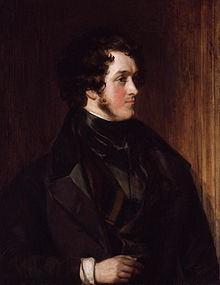
The host of this lavish affair was the famed 35-year-old novelist William Harrison Ainsworth. The occasion: the successful serialization over the last year of his fifth novel, The Tower of London: A Historical Romance, which told the story of the tragic Lady Jane Grey, beginning with her arrival by barge at the Tower to launch her nine-day-reign and ending with her decapitation on Tower Green on July 10, 1553.
On a December night in 1840, a sizable group of writers, editors, publishers, printers and illustrators gathered at the Sussex Hotel, in the fashionable town of Royal Tunbridge Wells, for a dinner party. It is possible that Charles Dickens, the young author of Oliver Twist and The Life and Adventures of Nicholas Nickleby, was invited to the party. Most definitely in attendance was George Cruikshank, the talented illustrator of Oliver Twist.
The host of this lavish affair was the famed 35-year-old novelist William Harrison Ainsworth. The occasion: the successful serialization over the last year of his fifth novel, The Tower of London: A Historical Romance, which told the story of the tragic Lady Jane Grey, beginning with her arrival by barge at the Tower to launch her nine-day-reign and ending with her decapitation on Tower Green on July 10, 1553.
![]() |
| William Harrison Ainsworth |
The novelist was sure to have cut quite the dash at his own party: He was tall, slim and dark, with a fondness for stylish clothes that earned him the description dandy. From the Oxford Dictionary of National Biography: "Lady Blessington, whose salon he attended, said he and Count D'Orsay were the two handsomest men in London."
In a passage accepted as autobiographical, a character in one of Ainsworth's novels says, "Some people told me I was handsome, and my tailor (excellent authority, it must be admitted) extolled the symmetry of my figure, and urged me to go into the Life Guards."
Ainsworth was at perhaps the zenith of his career in 1840. He was a friendly rival to Dickens; in fact, his 1839 novel Jack Shepard outsold Oliver Twist in early editions, and Ainsworth had recently replaced Dickens as editor of Bentley's Miscellany, the predominant fiction magazine.
The rivalry with Dickens would not last; nor would the friendship. Dickens would become a colossus as Ainsworth slowly sank into oblivion. His 39 historical novels, all of them romances and adventures, were astoundingly popular with the reading public of Victorian England, but not with the critics. Although Ainsworth was himself a genial and generous man, he was often on the receiving end of literary volleys almost hysterical in their dislike. When his books no longer sold as well, he had no circle of supporters to buoy him. Quite the opposite. One writer said of him in 1870: "Let us start with an opinion fearlessly expressed as it is earnestly felt, that the existence of this writer is an event to be deplored." Ainsworth was still alive when this sentiment was published, and in reduced circumstances.
That dazzling night at Royal Tunbridge Wells, Ainsworth, mercifully, could not know that his books would go out of print, that fellow writers such as Edgar Allan Poe would describe his prose as "turgid pretension."
Yet he is not without a legacy. The book celebrated that night, The Tower of London: A Historical Romance, triggered a new kind of interest in William the Conqueror's castle keep. It was an interest that deepened through the Victorian age, and is part of the reason visitors pour into the Tower, to the tune of 2 million a year.
Ainsworth was born on February 4, 1805, in Manchester, as the city became the center of the industrial movement. Thomas Ainsworth was a prominent lawyer and pressured his oldest son to follow him in that profession, which he did for a time, but without much enthusiasm. There was a younger son, Thomas Gilbert Ainsworth, who at university suffered a "brain fever" and was incapicitated by mental illness his entire life.
Two years after the father died, Ainsworth, newly married, published his first novel, the romance Sir John Chiverton. It brought him to the attention of Walter Scott, who befriended Ainsworth but privately referred to him as an "imitator." His next two books, the historical novels Rockwood and Jack Schepard, both featuring famous outlaws, were tremendous successes. Yet some criticized the romanticizing of criminals, a complaint Dickens was also hearing with Oliver Twist.
It was time to try something different.
When Ainsworth, along with his illustrator, George Cruikshank, researched the Tower of London, it was far from the smoothly operating tourism operation of today. It had been two centuries since the last monarch, Charles II, resided there. Dickens wrote: "Once a fortress, a royal residence, a court of justice and a prison, {the Tower} is now a government storehouse and armory." An outbreak of disease caused by poor water supply (and blamed on the filthy moat) killed three men of the garrison.
A visitor in 1851 wrote:
Ainsworth opened the door to a more illustrious period in the Tower's history. It's true that the novel's prose is melodramatic ("heaving bosoms," "piercing black eyes" and "sinister smiles") and the pages are crowded with Gothic characters (not one or two but three supporting characters who are giants--and a dwarf!) along with august personages of the past. But Ainsworth's diligent research brings to life the grounds, the kitchens, the passageways, the prison cells and the beautiful chapels of the Tower. He made full, imaginative use of the Tower of London, as a setting for a story of high drama. And Cruikshank's 40 engravings and 58 woodcuts play their suggestive part.
By the time of the Punch jab, Ainsworth, a widower, was responsible for his mentally ill brother. He had accepted a government pension because...he needed it. A year after a dinner in his honor in Manchester, arguably the only place where he was still esteemed, William Harrison Ainsworth died at the age of 77.
But the Tower felt the lingering impact of Ainsworth. In the foreword of his book, he had called for the opening to the public of Beauchamp Tower, the place of imprisonment of the Lady Jane Grey, where she is thought to have written on the wall of her cell. The cause was taken up by powerful patrons, including Prince Albert. Beauchamp was restored by architects and made available to visitors; other buildings were opened too.
----------------------------------------------------------------
Yet he is not without a legacy. The book celebrated that night, The Tower of London: A Historical Romance, triggered a new kind of interest in William the Conqueror's castle keep. It was an interest that deepened through the Victorian age, and is part of the reason visitors pour into the Tower, to the tune of 2 million a year.
Ainsworth was born on February 4, 1805, in Manchester, as the city became the center of the industrial movement. Thomas Ainsworth was a prominent lawyer and pressured his oldest son to follow him in that profession, which he did for a time, but without much enthusiasm. There was a younger son, Thomas Gilbert Ainsworth, who at university suffered a "brain fever" and was incapicitated by mental illness his entire life.
Two years after the father died, Ainsworth, newly married, published his first novel, the romance Sir John Chiverton. It brought him to the attention of Walter Scott, who befriended Ainsworth but privately referred to him as an "imitator." His next two books, the historical novels Rockwood and Jack Schepard, both featuring famous outlaws, were tremendous successes. Yet some criticized the romanticizing of criminals, a complaint Dickens was also hearing with Oliver Twist.
It was time to try something different.
When Ainsworth, along with his illustrator, George Cruikshank, researched the Tower of London, it was far from the smoothly operating tourism operation of today. It had been two centuries since the last monarch, Charles II, resided there. Dickens wrote: "Once a fortress, a royal residence, a court of justice and a prison, {the Tower} is now a government storehouse and armory." An outbreak of disease caused by poor water supply (and blamed on the filthy moat) killed three men of the garrison.
A visitor in 1851 wrote:
"Every one must be struck with the incivility and want of accommodation therein. Upon entering the gates this afternoon I found some hundreds of persons, male and female, huddled together, striving to obtain tickets from a window under a portico where no two persons can pass abreast, and the scene there reminded me of what might be expected at the gallery entrance of a theatre on boxing night. After waiting just one hour we obtained our tickets and were ordered into what is called the ante or refreshment room. This room is about 12ft. by 18ft., with a counter containing ginger pop, buns, &c., immediately behind which are two waterclosets (I understand recently erected). I will not attempt to describe the stench one had to contend with, the place being completely crammed with persons waiting their turns or numbers to be called, but merely add that this room seems to be the resort of pickpockets, two ladies having been eased of their purses, containing some pounds, during the half hour I was present therein."
Ainsworth opened the door to a more illustrious period in the Tower's history. It's true that the novel's prose is melodramatic ("heaving bosoms," "piercing black eyes" and "sinister smiles") and the pages are crowded with Gothic characters (not one or two but three supporting characters who are giants--and a dwarf!) along with august personages of the past. But Ainsworth's diligent research brings to life the grounds, the kitchens, the passageways, the prison cells and the beautiful chapels of the Tower. He made full, imaginative use of the Tower of London, as a setting for a story of high drama. And Cruikshank's 40 engravings and 58 woodcuts play their suggestive part.
![]() |
| Cruikshank's depiction of Lady Jane Grey |
And in the center of it all is Lady Jane Grey, a character of undeniable pathos, surrounded by conspiracies. Ainsworth invests the Spanish ambassador, Simon Renard, with the malevolent abilities of a Blofeld straight from Bond. Northumberland is formidable indeed.There is an energy to the book, and an eerie, even frightening atmosphere. The rack, the Scavenger's Daughter and the infamous Little Ease are all present and accounted for.
The current official Historical Royal Palaces Tower of London "fact sheet" on torture emphasizes how little actual torture has taken place within its walls: "Myth-making reached its peak in the 19th century, spurred on by novelists who wished to evoke the Tower of London in its former days as an ancient fortress and stronghold e.g. Ainsworth’s The Tower of London." Ainsworth may have put the devices of torture to Gothic uses, but they were very much present in the 16th century. Ironically, government-approved torture of prisoners ebbed during the reigns of Edward VI, Jane Grey, and Mary, only to rise to highest levels during reign of Elizabeth.
After The Tower of London, Ainsworth's career went on for more than thirty years. The characters in his books were not dimensional; bosoms continued to heave and black eyes to snap. R.H. Horne, Dickens' friend and collaborator, described Ainsworth as "a reviver of old clothes" whose novels are "generally dull except when revolting." Punch satirized Ainsworth as an aging Tudoresque dandy with the caption "The Greatest Axe-and-Neck Romancer of Our Time."
By the time of the Punch jab, Ainsworth, a widower, was responsible for his mentally ill brother. He had accepted a government pension because...he needed it. A year after a dinner in his honor in Manchester, arguably the only place where he was still esteemed, William Harrison Ainsworth died at the age of 77.
But the Tower felt the lingering impact of Ainsworth. In the foreword of his book, he had called for the opening to the public of Beauchamp Tower, the place of imprisonment of the Lady Jane Grey, where she is thought to have written on the wall of her cell. The cause was taken up by powerful patrons, including Prince Albert. Beauchamp was restored by architects and made available to visitors; other buildings were opened too.
Ainsworth's influence, as explained in The Tower of London: The Official Illustrated History:
"In The Tower of London: A Historical Romance, the Tower was first and foremost the setting for an endless series of heart-rending events and foul play. The author tells of dungeons though in fact the Tower has very few basement rooms and of a time when Tower Hill boasted a scaffold and "its soil was dyed with the richest and best blood in the land.” Such fantasies, backed by the relentless march of the romantic movement, helped create and fuel an ever-increasing demand to see and experience such events.”No matter how much the novel's violence veers into fantasy, the faintly menacing image of the Tower that draws the throngs of the curious today was created in part by William Harrison Ainsworth. He was the greatest neck-and-axe romancer of his time...and perhaps of ours too.
----------------------------------------------------------------
Subscribe to:
Posts (Atom)


01.jpg)