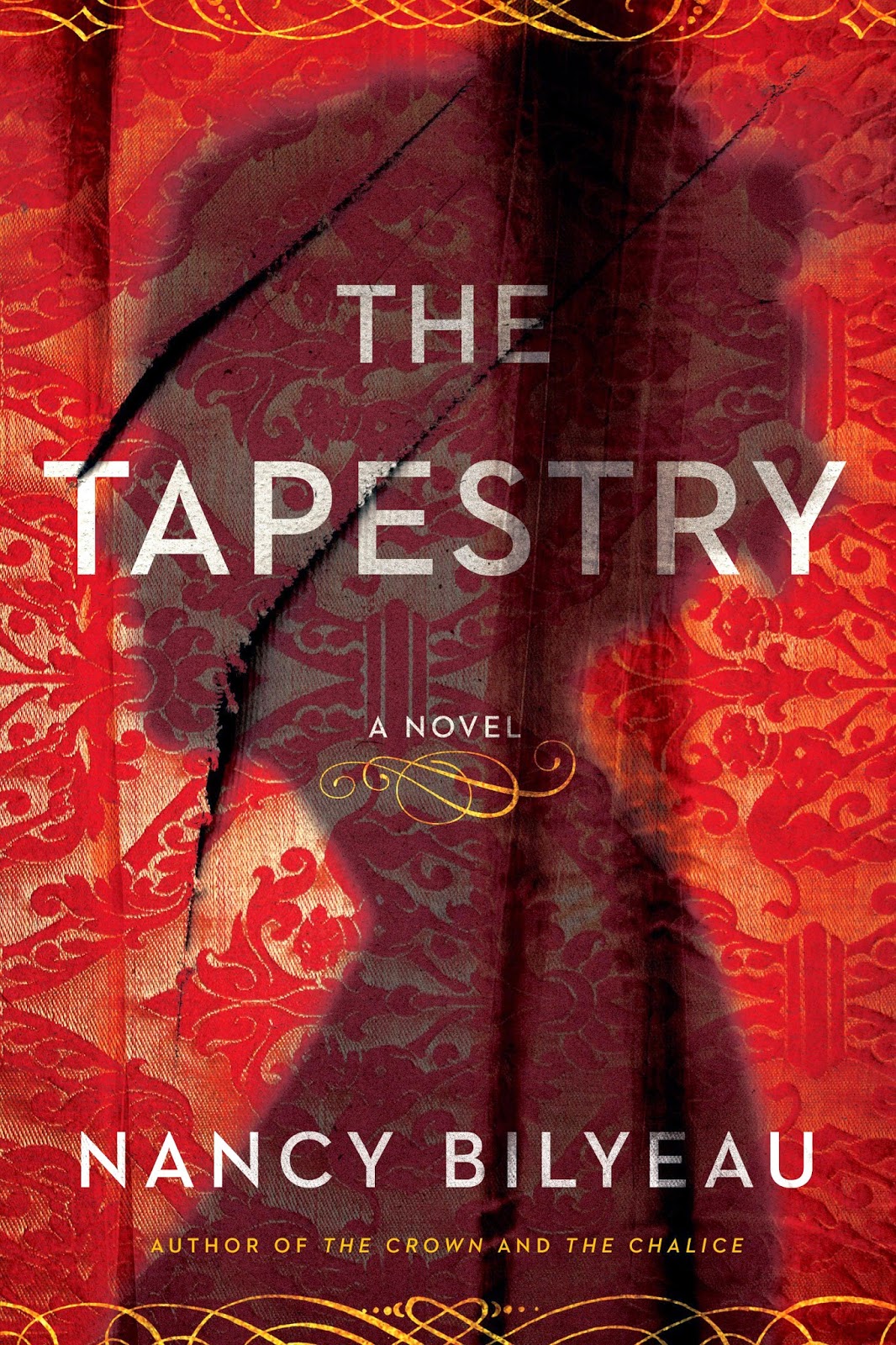
I am thrilled to share that as of an hour ago, The Tapestry went live on amazon UK with a pre-order link for the ebook: http://amzn.to/1EE811d
The book is on sale officially on April 24th. But pre-order it now!
Thank you, to all my wonderful readers in England, Ireland and Australia :)
Official blog for historical novelist Nancy Bilyeau, author of the Joanna Stafford trilogy, Dreamland, The Blue, and The Orchid Hour
Saturday, March 21, 2015
Friday, March 20, 2015
What Did They Think of the Eclipse of 1140?
One morning, instead of eating his breakfast, my 16-year-old son, who fancies himself a meteorologist (he has three weather sensors connected to the balcony), worked the TV remote, looking for stories on the solar eclipse. Seen only in a small part of Europe for a few moments, the moon did indeed eclipse the sun.
Sophisticated equipment is needed to look at an eclipse:
Later, I found this video on youtube of the eclipse as seen in Cornwall on March 20, 2015:
But it made me think of what it must have been like to see another eclipse which took place, eerily enough, on March 20th....but the year was 1140.
Here is what William of Malmsbury wrote about it:
Only seven years earlier, the chronicler John of Worcester wrote of another vanishing of the sun:
How much more will we understand another millennium from now about what makes the planets move and the sun darken?
---------------------------------------------------------------------------
Sophisticated equipment is needed to look at an eclipse:
Later, I found this video on youtube of the eclipse as seen in Cornwall on March 20, 2015:
But it made me think of what it must have been like to see another eclipse which took place, eerily enough, on March 20th....but the year was 1140.
Here is what William of Malmsbury wrote about it:
"There was an eclipse throughout England, and the darkness was so great that people at first thought the world was ending. Afterwards they realised it was an eclipse, went out, and could see the stars in the sky. It was thought and said by many, not untruly, that the king would soon lose his power."To the people of this time, it must have been an incomprehensible event, that could only be a portent of some tragedy.
Only seven years earlier, the chronicler John of Worcester wrote of another vanishing of the sun:
"In 1133 a darkness appeared in the sky throughout England. In some places it was only a little dark but in others candles were needed. ... The sun looked like a new moon, though its shape constantly changed. Some said that this was an eclipse of the sun. If so, then the sun was at the Head of the Dragon and the moon at its Tail, ... King Henry left England for Normandy, never to return alive."
---------------------------------------------------------------------------
Thursday, March 19, 2015
Supremacy and Survival: Book Review by Stephanie Mann
I'm excited to see that Stephanie Mann, author of the excellent book Supremacy and Survival, reviewed THE TAPESTRY, the third in my trilogy.
Stephanie is among those wistful that I'm not continuing the life and adventures of Joanna Stafford after the year 1541. She writes:
To read Stephanie's entire review, go here.
Stephanie is among those wistful that I'm not continuing the life and adventures of Joanna Stafford after the year 1541. She writes:
"I can't help thinking that Joanna's story should have another reason to go to Court so we can see her view of the end of Henry VIII's reign. She should be the witness of the last days of Henry VIII: the Prebendaries Plot, Katherine Parr bringing the three Tudor children together, the final Howard family fall, etc. Joanna Stafford is not just a fascinating character and actor in Bilyeau's fictional conspiracies, but she is a lens through which to view the Tudor Court and England after Henry VIII broke away from the Catholic Church, dissolved the monasteries and the friaries, and changed his subjects' religious lives."
To read Stephanie's entire review, go here.
Alison Weir Endorses THE TAPESTRY!
I'm ecstatic to report that Alison Weir, the bestselling author of more than a dozen biographies and historical novels, has contributed the following quote for THE TAPESTRY:
I've been reading Alison's work since The Princes in the Tower (1995) and consider her an inspiration. I believe I own every single one of her books--in hardcover. :) Several months ago I devoured her biography of Elizabeth of York.
We "met" over email three years ago, and she graciously recommended my novel THE CROWN, saying, "A stunning debut. One of the best historical novels I have ever read."
I'd love to re-post my interview with Alison as she was publishing her novel A Dangerous Inheritance. She's fascinating on Plantagenet and Tudor history. To read, go here.
"Nancy Bilyeau's passion for history infuses her books and transports us back to the dangerous world of Tudor England. Vivid characters and gripping plots are at the heart of this wonderful trilogy, and this third book will not fail to thrill readers. Warmly recommended!"
I've been reading Alison's work since The Princes in the Tower (1995) and consider her an inspiration. I believe I own every single one of her books--in hardcover. :) Several months ago I devoured her biography of Elizabeth of York.
We "met" over email three years ago, and she graciously recommended my novel THE CROWN, saying, "A stunning debut. One of the best historical novels I have ever read."
I'd love to re-post my interview with Alison as she was publishing her novel A Dangerous Inheritance. She's fascinating on Plantagenet and Tudor history. To read, go here.
Friday, March 13, 2015
THE TAPESTRY Will Be Published in the UK!
Very pleased to share the news that THE TAPESTRY found a UK publisher. It will be available as a print book in bookshops and libraries, and an ebook will be sold on Amazon as of March 24th.
It's been a long, difficult wait to find a publisher. It means so much to me because my three books are set in England and I love the country. I wrote the novels out of that love and fascination for Tudor England.
Turnaround Publishing is my new partner and I look forward to the adventure!
It's been a long, difficult wait to find a publisher. It means so much to me because my three books are set in England and I love the country. I wrote the novels out of that love and fascination for Tudor England.
Turnaround Publishing is my new partner and I look forward to the adventure!
Friday, March 6, 2015
A March Madness of Historical Fiction
According to the various online dictionaries, "March Madness" has many meanings:
"The period of the annual NCAA college basketball tournament, with the majority of the competition set in March." Source: dictionary.com No, that's not what I mean
"The month of the government of Canada's fiscal year end (March 31), when departments traditionally rush to spend the remainder of their budgets in order that they not experience budget reductions the next year." Source: wikipedia. That's really not what I mean
- "The main part of the breeding season of the European hare." Source: wikipedia Oh, come ON
"The most wonderful time of year." Source: urban dictionary Yes!For the purposes of this blog post, March Madness is a time when readers can be transported across centuries and across continents into the stories of five different women. Some are from history, some are fictional, but all are enthralling. :)
These five historical novels constitute a very special March madness. Among your choices, an empress, a queen, a fashion designer, a witch and a nun:
Lady of the Eternal City, by Kate Quinn. (Go to Quinn's website here.) Publishes March 3rd
Rome, 2nd Century: Elegant, secretive Sabina is the wife of Hadrian, Rome's brilliant and sinister Emperor, and she must struggle to keep the peace between her husband and the battered warrior Vix, who was her first love.
"An epic, sexy romp," Publishers Weekly
"A feast for historical readers," RT Reviews
India, 19th century: The story of Queen Lakshmi--India's Joan of Arc--who against all odds defied the mighty British empire. The novel is told from the viewpoint of Sita, the queen's most favored companion and most trusted soldier in the all-female army.
"Filled with fascinating historical details about a subject that is not often portrayed, the novel looks at both the rights of women and the conflict between the British army and India"-- Library Journal
"A riveting and addictive glimpse of that era"--Historical Novel Society
Mademoiselle Chanel, by C.W. Gortner (Go to Gortner's website here) Publishes March 17th
France, 20th century: A novel of the life of Coco Chanel, the ambitious, gifted laundrywoman's daughter who revolutionized fashion, built an international empire and became one of the most influential and controversial figures of the 20th century.
"Gortner brings history to life in a fascinating study of one woman's unstoppable ambition," Booklist
"In this deliciously satisfying novel, C.W. Gortner tells the rags-to-riches tale of how this brilliant, mercurial, self-created woman became a legend." -- Christina Baker Kline
The Witch of Painted Sorrows, by M.J. Rose (Go to Rose's website here.) Publishes March 17th
France, 19th century: A woman named Sabine flees to her grandmother's Paris mansion to escape an abusive husband, but what she finds there is even more menacing. Sabine explores the forbidden night world of Paris, discovering both an occult underworld and her true nature as artist and lover.
"Rose's new series offers her specialty, a unique and captivating supernatural angle, set in an intriguing belle epoque Paris, a perfect match for the author's lush descriptions, intricate plot, and mesmerizing storytelling" -- Kirkus
"A haunting tale of possession" -- Publishers Weekly
The Tapestry, by Nancy Bilyeau (Yes, this is me! And you can find my website home page here) Publishes March 24th
England, 16th century: Joanna Stafford, an aristocrat and former novice of the Dominican Order, is summoned to the court of King Henry VIII because of her talent at the tapestry weave. Struggling to stay ahead of a formidable enemy, she becomes entangled in court politics when she tries to free her beautiful young friend, Catherine Howard, from the king's tightening web.
"Up to her ears in court intrigues, religious persecutions, beheadings galore and Henry VIII's volatile nature, Joanna shines, remaining ever vigilant." -- Historical Novel Society
"Fans of Ken Follett will devour Nancy Bilyeau's novel of political treachery and courageous love, set amid the endlessly fascinating Tudor landscape." -- Erika Robuck
------------------------------------------------------------------------------------------------------------
Wednesday, March 4, 2015
The Last Nun of the Priory
By Nancy Bilyeau
One spring day in 1539, twenty-six women were forced to leave their home— the only home most had known for their entire adult lives. The women were nuns of the Dominican Order of Dartford Priory, in Kent. The relentless dissolution of the monasteries had finally reached their convent door. Having no choice, Prioress Joan Vane turned the priory over to King Henry VIII, who had broken from Rome.
What the women would do with their lives now was unclear. Because Dartford Priory surrendered to rather than defied the crown, some monies were provided. Lord Privy Seal Thomas Cromwell, the architect of the dissolution that poured over a million pounds into the royal treasury, had devised a pension plan for the displaced monks, friars and nuns. According to John Russell Stowe’s History and Antiquities of Dartford, published in 1844, Prioress Joan received “66 pounds, 13 shillings per annum.” She left Dartford and was not heard from again—it’s thought she lived with a brother.
Sister Elizabeth Exmewe, a younger, less important nun, received a pension of “100 shillings per annum.” This was the amount that most Dartford nuns received. The roaring inflation of the 1540s meant that such a pension would probably not be enough to live on after a few years—but there was never a question of its being adjusted.
Some of the thousands of monks and friars who were turned out of their monasteries in the 1530s became priests or teachers or apothecaries. But nuns—roughly 1,900 of them at the time of the Dissolution--did not have such options. “Those who had relatives sought asylum in the bosom of their own family,” wrote Stowe with 19th century floridity. Marriage was not an option. In 1539, the most conservative noble, the Duke of Norfolk, introduced to Parliament “the Act of Six Articles,” which forbade ex-nuns and monks from marrying. The act, which had the approval of Henry VIII, became law. The king did not want nuns in the priory but he did not want them to marry either. There was literally no place for them in England.
Sisters who could afford it immigrated to Catholic countries to search for priories that would take them in. Others lacking family support sank into poverty. Eustace Chapuys, the Spanish ambassador, wrote: “It is a lamentable thing to see a legion of monks and nuns who have been chased from their monasteries wandering miserably hither and thither seeking means to live; and several honest men have told me that what with monks, nuns, and persons dependent on the monasteries suppressed, there were over 20,000 who knew not how to live.”
Such wandering through England would not be the fate of Elizabeth Exmewe. Enough is known of her life from various sources to gain a picture of a determined woman.
Dartford Priory, founded by Edward III, drew women from the gentry and aristocracy, even one from royalty. Princess Bridget Plantagenet, youngest sister of Elizabeth of York, was promised to Dartford as a baby. She lived there from childhood until her death in 1517. Elizabeth Exmewe was typical of most of the other nuns—she was the daughter of a gentleman, Sir Thomas Exmewe. He was a goldsmith and “merchant adventurer,” serving as Lord Mayor of London.
It was common for brothers and sisters to enter monastic life together, though at separate places. Elizabeth’s brother, William Exmewe, was a Carthusian monk and respected scholar of Greek and Latin at the London Charterhouse. He was also one of the monks who in 1535 refused to sign the Oath of Supremacy to Henry VIII, despite intense pressure. The king had broken from the Pope because he could not get a divorce from Catherine of Aragon and marry Anne Boleyn. Once the king became head of the Church of England, it was imperative that all monks shift their loyalty to him. But Exmewe would not compromise his beliefs, and he was punished with a horrifying death: He was hanged, disemboweled while still alive and quartered.
No nun in England was executed besides Sister Elizabeth Barton, a Benedictine who prophesied against the king’s marriage to Anne Boleyn. Barton was arrested, tortured, tried, and hanged for it. Elizabeth Exmewe did not publicly criticize the king nor seek martyrdom. Four years after the death of her brother, she was turned out from Dartford Priory.
Historians studying the dissolution have noted a remarkable fact: in several cases, nuns attempted to live together in small groups after being forced from their priories. They were determined to continue their vocations, in whatever way they could. Elizabeth Exmewe shared a home in Walsingham with another ex-nun of Dartford. “They were Catholic women of honest conversation,” said one contemporary account. A half-dozen other Dartford refugees tried to live under one roof closer to Dartford. Meanwhile, Henry VIII had their priory demolished. He built a luxurious manor house on the rubble of the Dominican Order, although he’s not believed to have ever slept there. It became the home of his fourth wife, Anne of Cleves, after he divorced her in disgust in 1540.
Following the reign of Henry’s Protestant son, Edward VI, his Catholic daughter, Mary I, took the throne in 1553. Mary re-formed several religious communities as she struggled to turn back time in England and restore the “True Faith.” Elizabeth Exmewe and six other ex-nuns successfully petitioned Queen Mary to re-create their Dominican community at Dartford, which was vacant after the death of Anne of Cleves. They moved into the manor house, built on the home they left 14 years earlier, with two chaplains. The convent life they loved flourished again: the sisters spent their days praying, singing and chanting; gardening; embroidering; and studying.
But the restoration didn’t last long. When Mary died and her Protestant half-sister took the throne, one of Elizabeth’s goals was extinguishing the monastic flames. In 1559 Elizabeth’s first Reformation Parliament repressed all the re-founded convents and confiscated the land.
And so the Dartford nuns were ejected again, this time with no pensions. Mary’s widower, King Philip of Spain, heard of their plight, and paid for a ship to convey the nuns of Dartford and Syon Abbey to Antwerp, in the Low Countries. Paul Lee, in his book Nunneries, Learning and Spirituality in Late Medieval Society, has charted the sisters’ poignant journey after leaving their native land.
After a few months, a new home was secured for them. For the next ten years Elizabeth Exmewe lived “in the poor Dutch Dominican nunnery at Leliendal, near Zierikzee on the western shore of the bleak island of Schouwen in Zeeland.” Several of the English nuns were entering their eighties, with Elizabeth being the youngest. All suffered from illness and near poverty. The Duchess of Parma, hearing of their hardships, sent an envoy to the Dartford nuns. He wrote: “I certainly found them extremely badly lodged. This monastery is very poor and very badly built…. I find that these are the most elderly of the religious and the most infirm, and it seems that they are more than half dead. “ Despite his dire observances, the nuns themselves expressed pride in their convent. Their leader, Prioress Elizabeth Croessner, wrote a letter to the new pope, Pius IV, saying they strove to remain faithful to their vows and were interested in new recruits!
In the 1560s the nuns died, one by one, leaving only Elizabeth Exmewe and her prioress, Elizabeth Croessner. Destitute, the pair moved to Bruges and found another convent. They lived through a bout of religious wars, with Calvinists marching through the streets.
The onetime prioress of Dartford, Elizabeth Croessner, died in 1577. Now Elizabeth Exmewe, the daughter of a Lord Mayor and the sister of a Carthusian martyr, was the only one left of her Order. In 1585, she, too, perished in Bruges and was buried by Dominican friars with all honors. Elizabeth Exmewe is believed to have lived to 76 years of age.
---------------------------------------------------------
Nancy Bilyeau is the author of a trilogy of historical thrillers published by Simon & Schuster in North America and nine foreign countries. The main character is a Dominican novice. The Crown, published in 2012, was an "Oprah" pick. The Chalice, published in 2013, won the award for Best Historical Mystery last year. The Tapestry will be published on March 24, 2015.
Anyone interested in obtaining a review copy, please contact Nancy here.
---------------------------------------------------------
Nancy Bilyeau is the author of a trilogy of historical thrillers published by Simon & Schuster in North America and nine foreign countries. The main character is a Dominican novice. The Crown, published in 2012, was an "Oprah" pick. The Chalice, published in 2013, won the award for Best Historical Mystery last year. The Tapestry will be published on March 24, 2015.
Anyone interested in obtaining a review copy, please contact Nancy here.
Subscribe to:
Posts (Atom)


